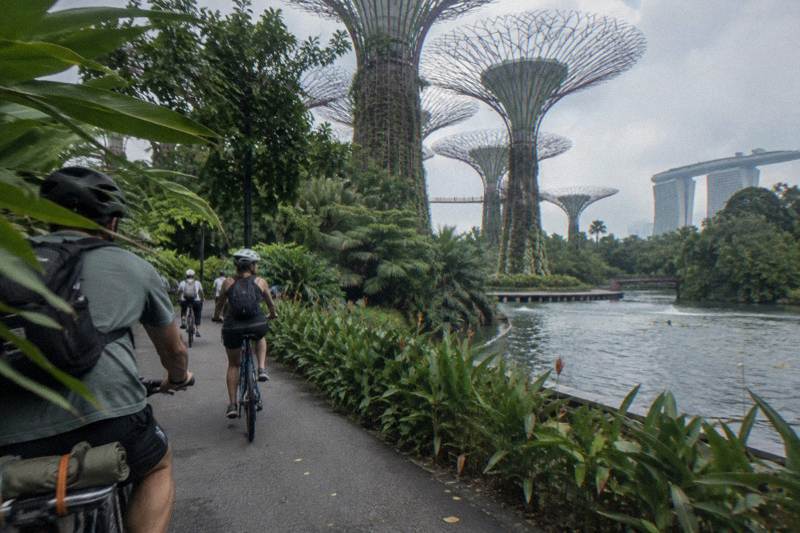
Cycling In Singapore In The Rain: What To Know Before You Go
Singapore clocks about 171 rain days a year, yet the showers that cause them often clear within the hour. Here is what that means for a visitor holding a bike tour booking and watching a grey forecast.
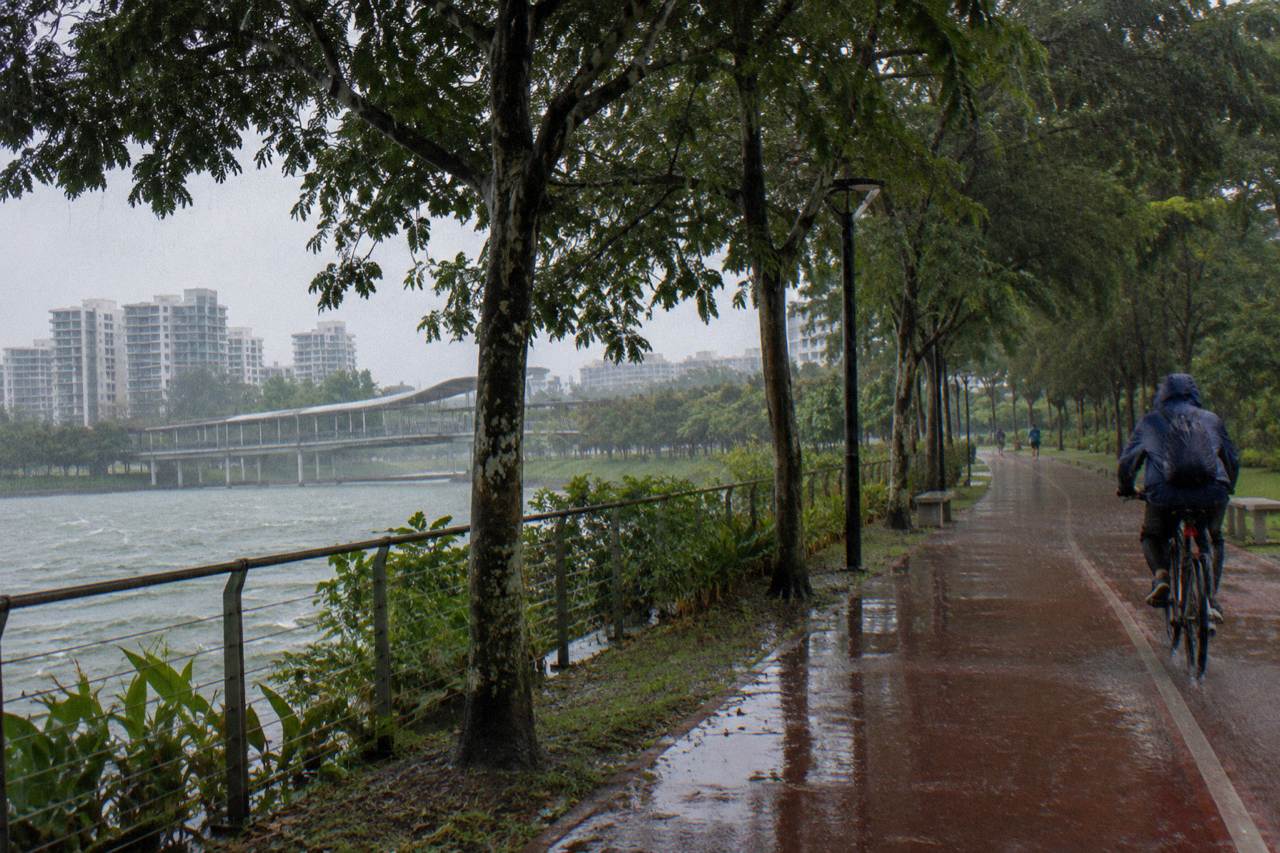
Short answer
Singapore averages about 171 rain days a year, with the wettest stretch from November to January. Guided bike tours mostly run rain or shine, several include a poncho or raincoat, and most bookings on the pages flagged here carry free cancellation, so a wet forecast rarely has to end the plan.
A rain day in Singapore is counted once 0.2 mm or more falls, and by that measure the island records about 171 of them each year. That sounds like a forecast for staying indoors, but it is not. The typical Singapore shower is a heavy, warm burst that dumps its water and moves on, and the tours collected here are built around exactly that rhythm. The Katong Food Ride, Meal Included from $96.05 per person describes itself as a rain or shine activity, which is the honest summary of how most operators here treat the weather.
For a visitor deciding whether to book, the question is rarely whether riding is possible in rain. It is whether the specific ride, the specific route and the specific season make it pleasant. This guide works through those questions in order.
How Many Rain Days Does Singapore Get Each Year?
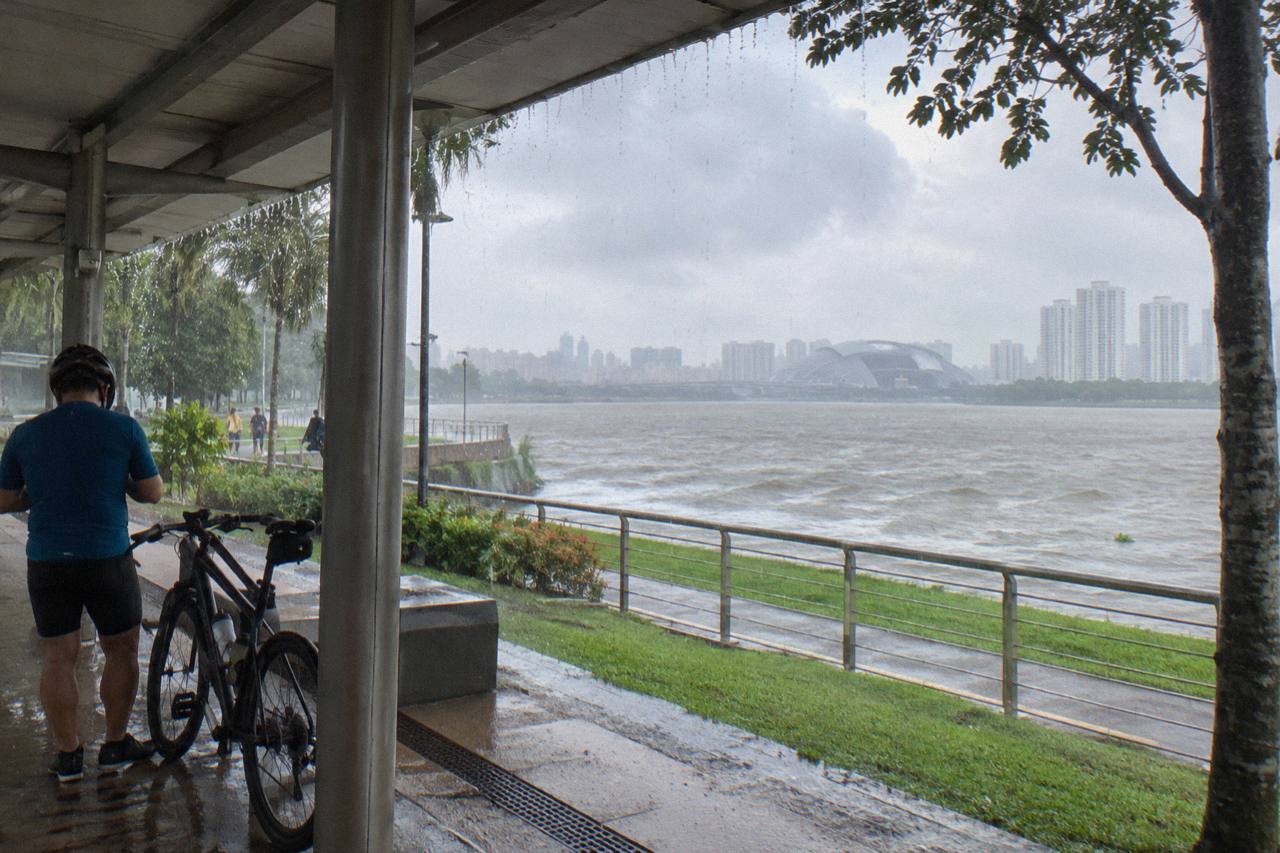
Singapore averages about 171 rain days a year under the official definition, where a rain day counts once 0.2 mm or more falls. Annual mean rainfall is 2113 mm, and the wettest stretch runs November to January, with December averaging 331.9 mm across 19.3 rain days. February is the driest month, at 105.1 mm across 8.5 rain days.
The Meteorological Service Singapore 1991 to 2020 normals for Changi give the full picture, and the numbers are worth reading once because they shape every cycling decision on the island. There is no dry season in the European sense. There is a drier stretch, roughly February into March, and a markedly wetter one from late October through January as the Northeast Monsoon settles in. Mean annual relative humidity sits at 82 percent, which means a rider who gets wet stays damp until the shower ends and the sun returns.
What the monthly averages hide is the shape of a Singapore rain day. The inter-monsoon months bring heavy early afternoons that clear by evening, while monsoon months can hold a grey, drizzling lid over the island for a day or two. A rider planning around the calendar rather than the clock should expect November and December to need the most flexibility, and a page like this one on the best time to cycle in Singapore goes deeper on that planning.
| Month | Mean temp C | Rainfall mm | Rain days | Sunshine h/day |
|---|---|---|---|---|
| Jan | 26.8 | 221.6 | 13.4 | 5.8 |
| Feb | 27.3 | 105.1 | 8.5 | 7.0 |
| Mar | 27.8 | 151.7 | 12.1 | 6.3 |
| Apr | 28.2 | 164.3 | 14.9 | 6.1 |
| May | 28.6 | 164.3 | 14.5 | 6.0 |
| Jun | 28.5 | 135.3 | 13.2 | 5.8 |
| Jul | 28.2 | 146.6 | 13.6 | 6.1 |
| Aug | 28.1 | 146.9 | 13.8 | 6.0 |
| Sep | 28.0 | 124.9 | 12.5 | 5.4 |
| Oct | 27.9 | 168.3 | 15.0 | 5.0 |
| Nov | 27.2 | 252.3 | 19.0 | 4.4 |
| Dec | 26.8 | 331.9 | 19.3 | 4.3 |
The climate normals are published by the Meteorological Service Singapore, and the same office tracks the monsoon transitions that decide whether a given week leans wet or merely warm. One more reported detail matters for comfort: heat advisories through late 2026 put daily maxima in the 33 to 35 C range on some days, so the rain that interrupts a hot ride is often as much relief as nuisance.
Singapore Rain Numbers For Cyclists
Meteorological Service Singapore 1991 to 2020 normals for Changi
- about 171rain days a yeara rain day counts once 0.2 mm or more falls
- 2113 mmannual mean rainfall
- 331.9 mmDecember rainfallacross 19.3 rain days, the wettest month
- 105.1 mmFebruary rainfallacross 8.5 rain days, the driest month
The chart reads plainly: December carries nearly three times the rainfall of February, and the rain day count climbs from under 9 in the driest month toward 19 in the wettest.
Can You Cycle In Singapore When It Is Raining?
Yes, most days. Rain in Singapore usually arrives as a heavy burst that passes within the hour rather than an all-day soak, and guided rides keep running through it. Several tours include a poncho or raincoat in the ticket itself, and the rides flagged on the booking page as free cancellation let a reader book now and still cancel without charge if the forecast turns.
The practical difference between a Singapore shower and a northern European one is duration and temperature. The rain is warm, so the discomfort is dampness rather than cold, and the surfaces drain fast. The Park Connector Network is engineered for exactly this: shared paths with red continuous surface lines, crossfall for drainage, and tree cover on many stretches that blunts the worst of a burst. Within twenty minutes of a downpour ending, the paths are busy again.
What the tour pages add is equipment. The 5-Hour Nature Ride from The Cycle Startup, from $84.04 per person and rated 5.0 across 37 reviews, lists a disposable poncho if raining among its inclusions, alongside the bike, helmet and bottled water. The Small Group, Max 10 Guests city ride from City Scoot, 4.8 across 74 reviews from $64.03 per person, includes a raincoat. The Full-Sized Bikes, Small Group ride, 5.0 across a substantial 1,559 reviews from $64.03 per person, carries a rain poncho in the ticket. Nobody on these rides is improvising with a bin liner.
Between them a reader can pick on price and duration rather than weather luck.
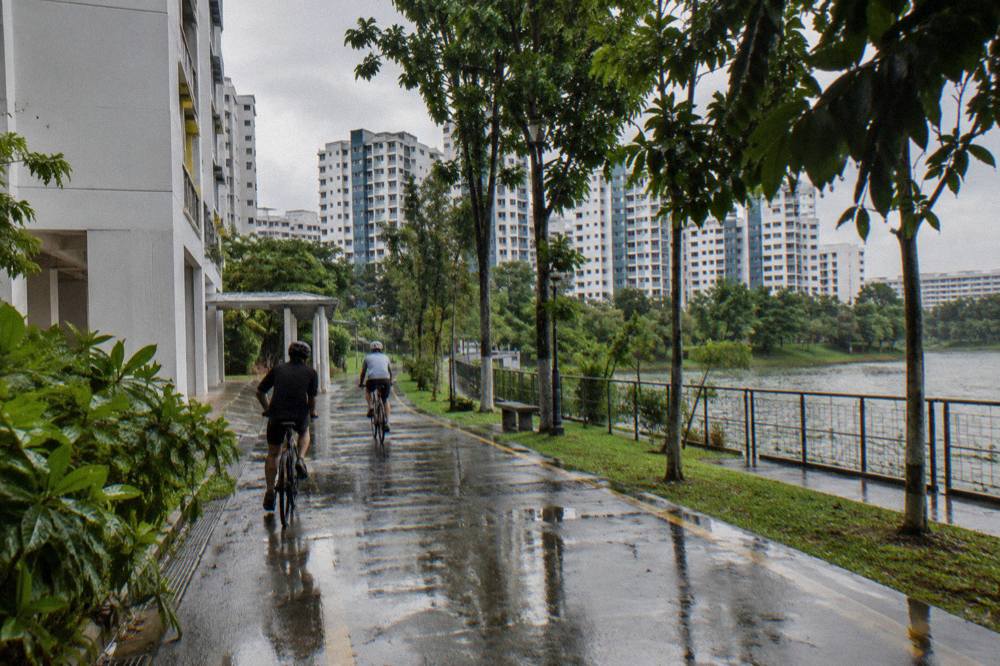
The group sizes matter in rain as well. A group capped at 10 or fewer moves faster when it stops under a shelter, and the smaller rides listed here tend to reposition quickly when a guide calls a pause. The Sunrise Ride, Local Breakfast caps at 5, which in practice means one decision for the whole group rather than a negotiation.
Do Guided Bike Tours Still Run In The Rain?
Most do. Several operators describe their rides outright as rain or shine activities and hand out ponchos when the weather closes in, so a wet departure usually means a wetter route, not a cancelled one. Where a tour carries free cancellation, the booking page shows it, so a reader watching the forecast can hold a slot and decide on the morning itself.
The rain or shine language is worth taking literally, because operators print it on the rides where it applies. The Lion City tour called Licensed Guide, Poncho Included, 5.0 across 6,579 reviews from $68.03 per person, states that its bike tour is a rain or shine activity. The Katong Food Ride, Meal Included and the Downtown Food Ride, Meal Included carry the same line. These are not casual promises: the rides were priced and scheduled on the assumption that Singapore rain is part of the product.
The escape hatch is cancellation. Every ride flagged in this article's tour pages carries free cancellation per its listing, which for a weather-anxious reader changes the booking decision from a gamble into a hold. Book the 4 hour slot, wake up to a wall of water, and the option remains open until the operator's stated cutoff.
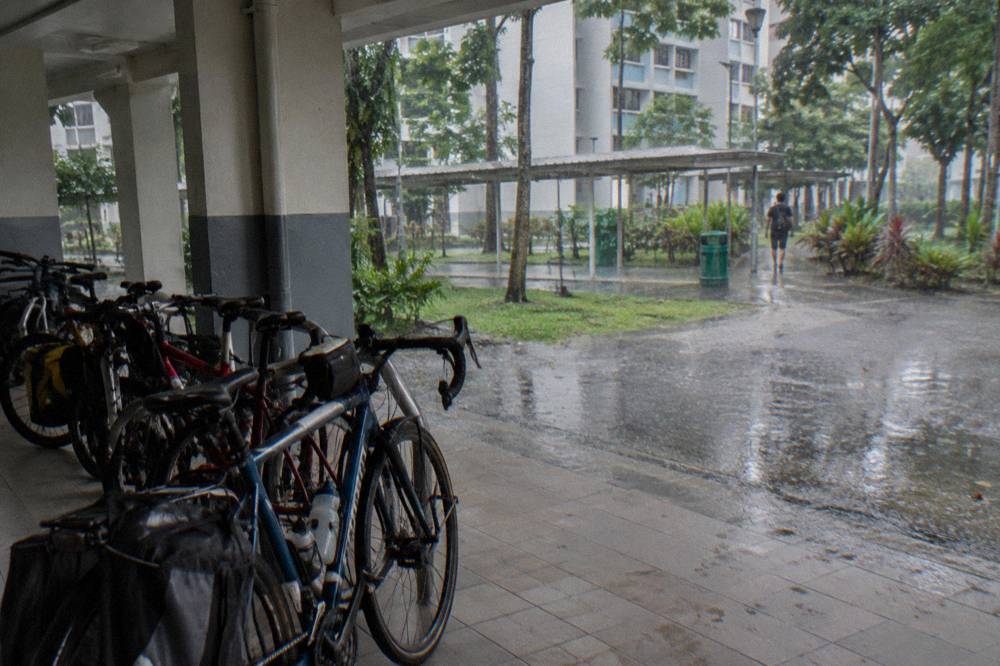
Food rides earn their place in a wet month for a structural reason: the itinerary contains a roof. A Katong or downtown route strings heritage shophouses and eating stops together, so a burst that lands mid ride becomes a longer lunch rather than a route change. On a pure sightseeing ride the same burst means standing under the nearest bus stop shelter.
The Private City Ride, 4 Hours from HR Assist takes the same logic further, from $160.08 per person with the total depending on group size. A private tour can wait out a downpour without stranding five strangers on a schedule, and the listing includes a poncho and bottled water. For a family or a small group visiting in December, that flexibility is what the price buys.
The 5-Hour Nature Ride is the natural companion pick for a reader who wants greenery rather than city blocks. It starts at GoCycling @ Punggol Park, runs with a group max of 4, and includes helmet, bandana, bottled water and the disposable poncho already mentioned. At 5 hours it is the longest ride in this set, so it rewards a morning start on a day when the radar is quiet.
Which Paths And Parks Hold Up Best In Wet Weather?
The Park Connector Network is the backbone. NParks marks shared paths with red continuous lines, dots red lines into Attention Zones near crossings and bus stops where riders slow and give way, and maintains over 350 km of connectors island wide. Boardwalks, the Henderson Wave Bridge and the four gazetted nature reserves bar bicycles entirely, rain or shine.
Path type matters more in rain than in dry weather, because surface and drainage decide how a route behaves fifteen minutes into a burst. NParks describes its connector path types in detail: shared paths carry everyone at up to 25 km/h, while segregated stretches split pedestrians from riders and drop the pedestrian side to walking pace. The red dotted Attention Zones are the wet weather detail to internalise, because painted surfaces and bridge decks near crossings are where grip fades first.
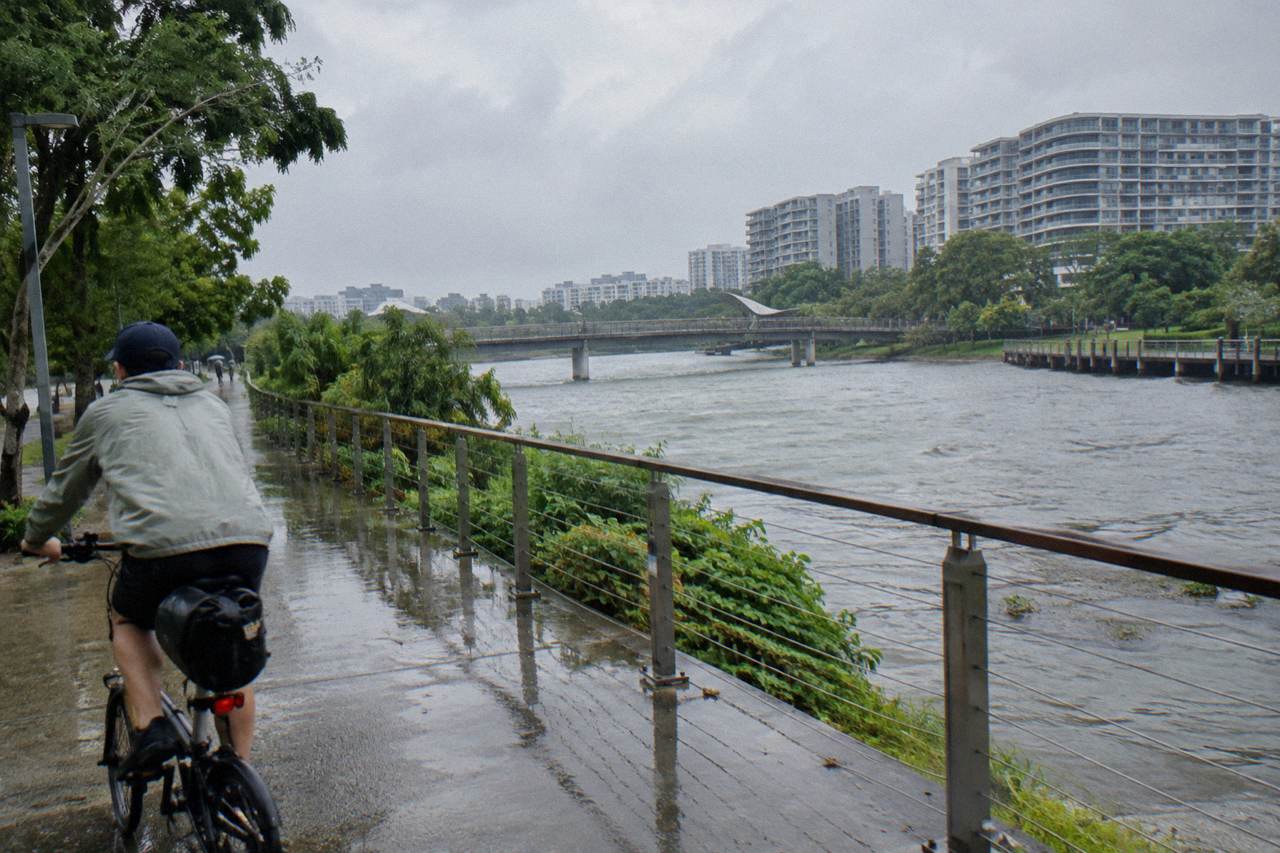
Closures are part of the picture in a monsoon season. NParks notices list sections of the Bedok and Tampines park connectors closed for MRT and construction works, the Punggol Point Park closure for upgrading into 2027, and a Rail Corridor South section between Henderson Road and Spooner Road closed for trail works until mid 2027. None of that is permanent, and the connector network reroutes around most of it, but a rider planning a long independent loop in the last quarter of the year should check the notices rather than assume.
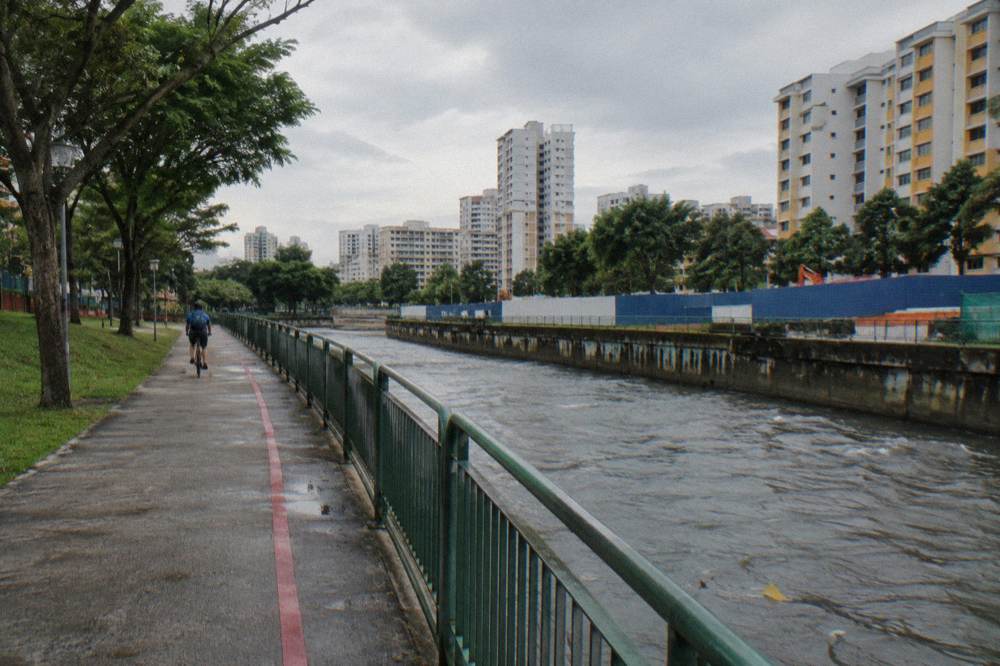
Pulau Ubin behaves differently. The island's wetlands and dirt tracks are at their most atmospheric after rain, and the Private Pulau Ubin Ride, from $96.05 per person with a 5.0 rating across 153 reviews, covers the trails with a private guide. But NParks notices for Ubin also carry a flood risk advisory, and the Coastal Loop boardwalk at Chek Jawa has a section closed for maintenance into 2027, so a wet week is the wrong week to improvise far from the main village.
For a full treatment of the mainland network itself, the page on the Singapore park connector network maps the loops and their access points, and the Round Island Route guide covers the 150 km plan of which Phase 1, 75 km across the eastern half, is open today.
- Jan222 mm
- Feb105 mm
- Mar152 mm
- Apr164 mm
- May164 mm
- Jun135 mm
- Jul147 mm
- Aug147 mm
- Sep125 mm
- Oct168 mm
- Nov252 mm
- Dec332 mm
Rain-days run from 8.5 (driest month) to 19.3 (wettest month).
What Should You Wear And Pack For A Rainy Ride?
Pack a light rain shell, quick dry clothing and shoes with grip, plus a dry bag for phone and wallet. Lights matter more than the rain itself: LTA rules require a front white light and a rear red light after dark, and NParks advises a helmet and lights kept on for night riding on the connectors. A towel in a locker bag earns its space.
The clothing logic for a warm rain climate is the reverse of a cold one. The goal is not to stay dry, which is losing work, but to dry fast afterwards. A cotton shirt that soaks through at the first burst stays heavy and chafes for the rest of the ride, while a quick dry top is presentable again within an hour of sunshine. The operator pages typically note that helmets are provided or available on request, so the packing list is short.
| Item | Why it matters in Singapore rain |
|---|---|
| Light rain shell or poncho | Blocks the burst without trapping heat and humidity |
| Quick dry top and shorts | Dries within an hour once the shower passes |
| Shoes with grip, or sandals | Painted paths and bridge decks get slippery when wet |
| Dry bag for phone and wallet | Keeps documents usable through a soaking |
| Front white and rear red light | Required by LTA rules after dark, monsoon storms arrive early |
| Small towel | Comfort at the food stop, not just at the hotel |
Rain gear aside, the bigger question of how safe Singapore's roads and paths are for cyclists is answered in our guide to cycling safety in Singapore, from helmet laws to monsoon hazards.
The rule on lights comes straight from LTA's rules and code of conduct for riders, which also covers the behaviors that matter most on a wet path: give way to pedestrians, slow near bus stops and junctions, and walk the device in crowded areas. A reader wanting the full clothing breakdown by season and time of day will find it in the guide on what to wear cycling in Singapore.
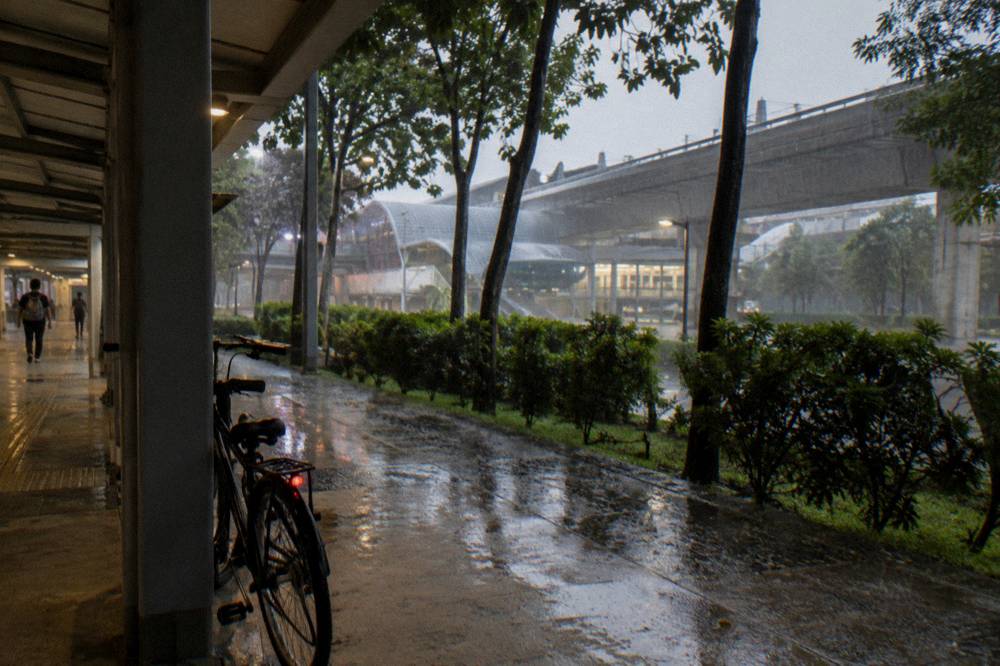
One habit distinguishes experienced local riders from visitors: they check the radar, not the sky. An afternoon convective shower announces itself forty minutes out as a building cloud line, and the tours that start at 8 or 9 in the morning usually beat it. That timing logic is exactly why the sunrise and breakfast rides exist, and why night rides into Marina Bay have become a format of their own, a point expanded in the Singapore night cycling guide.
Is It Safe To Ride A Bike In Singapore Rain?
Reasonably, within limits. The legal maximum is 25 km/h on shared and cycling paths and 10 km/h on footpaths, and since 1 July 2025 bicycles are barred from Pedestrian-Only Paths entirely, with first offences carrying penalties of up to $2,000 and/or three months. Slow down on wet paint, dismount at No Riding signs, and shelter from lightning rather than pushing through it.
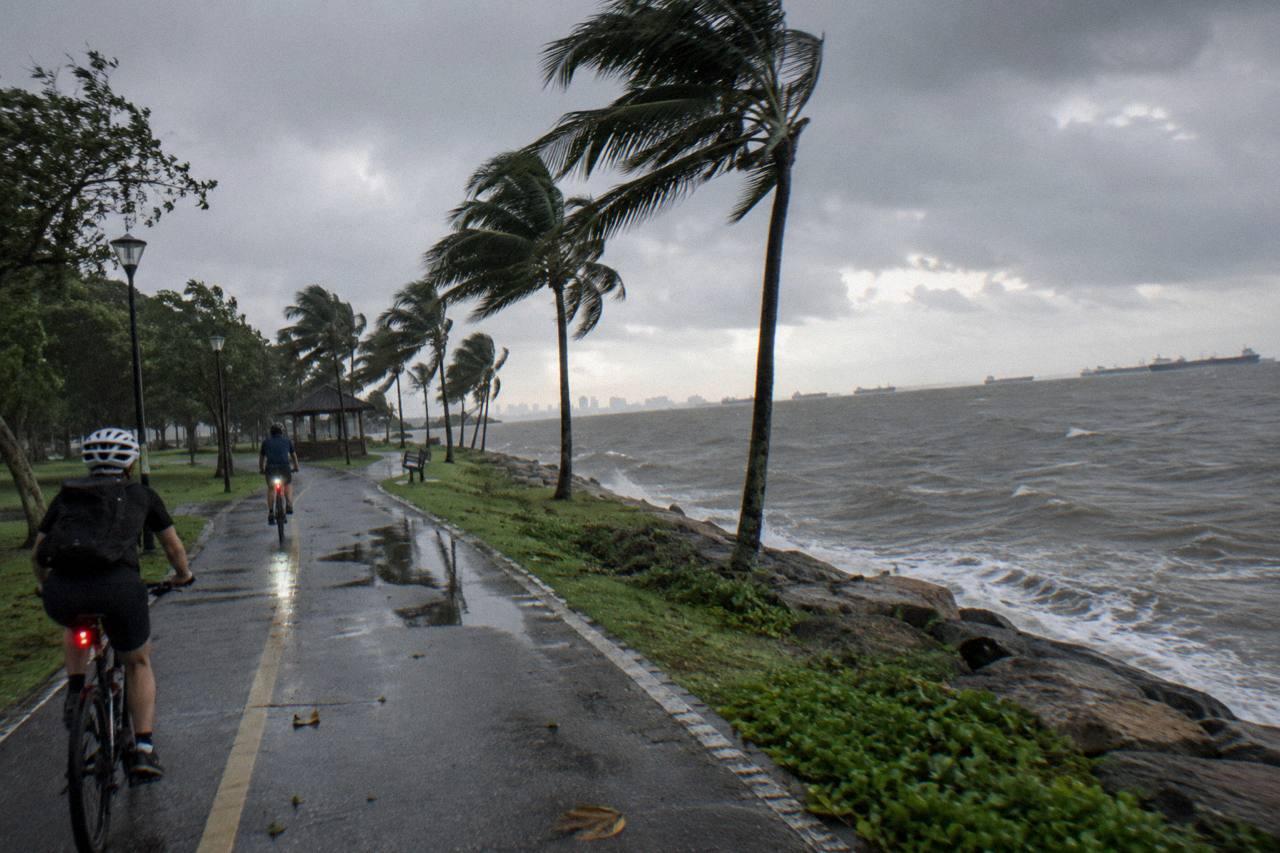
The speed limits are the part of Singapore riding law a visitor most often does not know. The 25 km/h cap on shared paths reflects normal cycling speed rather than a safety panic, and the 10 km/h footpath limit exists for the stretches where a route dips past shopfronts. On a wet surface the sensible move is to ride under the limit, not at it, because the stopping distance that matters is the one on painted line work and metal bridge decks.
| Path type | Rider speed | Wet weather note |
|---|---|---|
| Cycling path, red or dark grey surface | Max 25 km/h | Watch paint and leaves after a burst |
| Shared path, cyclist and pedestrian markings | Max 25 km/h | Give way, extra space in rain |
| Footpath | Max 10 km/h | Bicycles allowed only where not barred |
| Pedestrian-Only Path beside a cycling path | No bicycles | Enforcement since 1 July 2025 |
| Road, excluding expressways and tunnels | Road speed limit | Helmet legally required |
The Pedestrian-Only Path rule is newer and stricter than most visitors expect. Since 1 July 2025, footpaths beside dedicated cycling paths across areas including Tampines, Punggol and Clementi have been converted, marked with pedestrian logos, and enforcement by Active Mobility officers began the same day, with first offences carrying up to $2,000 and/or three months under the stated approach. The penalty figure belongs to this offence alone. A guided tour rider rarely meets the problem, because licensed guides route on the connectors, but it is the reason an independent rider should not detour onto a footpath to dodge a shower.
Lightning is the one weather event no rule set makes safe. Equatorial storms produce frequent strikes, and the right response is the unglamorous one: get off the bike, get inside a shelter, and wait. Monsoon months also bring localised flash flooding on low lying roads, which is precisely what the NParks flood advisory for Pulau Ubin is about. Emergency services on Ubin are reached on 999 or 995, and the NParks helpline is 1800 471 7300.
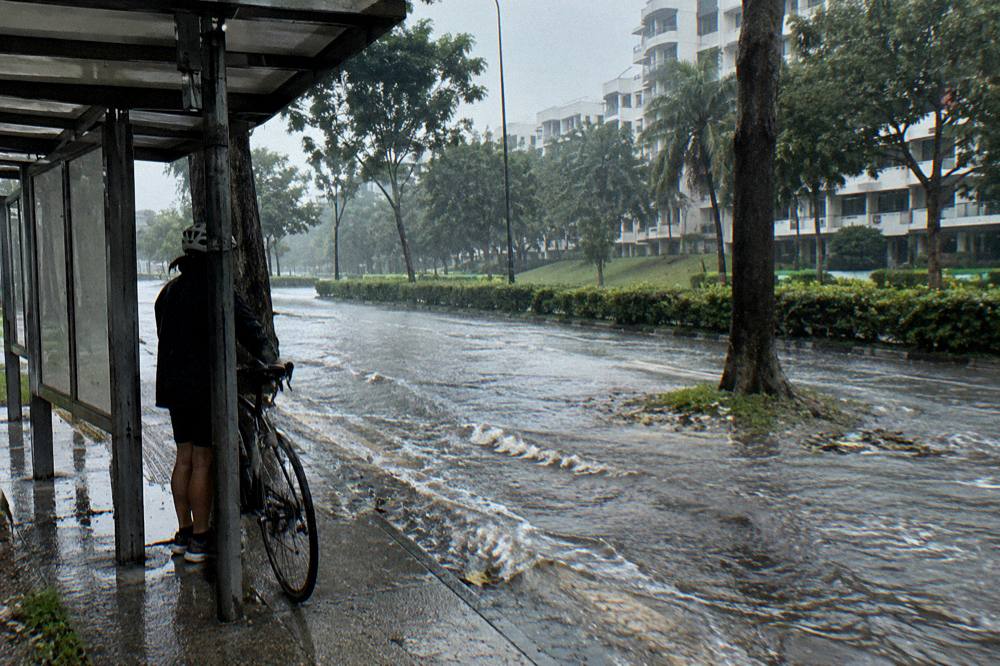
A helmet deserves a line of its own. It is legally required for riding on roads, and NParks advises protective gear on the connectors too. Most tours in these pages include a helmet or provide one on request, and several riders who skip one on a dry day choose differently when the path is slick.
Should You Book Anyway Or Wait For A Dryer Day?
Book, and pick the tour that gives the rain somewhere to go. Short rides slot between showers, food tours pause under a roof, and free cancellation holds the slot while the forecast settles. The Katong Food Ride from $96.05 per person runs rain or shine with snacks and foods included, and 337 reviewers rate it 5.0.
The worst outcome for a visitor is not a wet ride, it is a lost one: waiting for a perfect forecast in a month that averages 19 rain days, and running out of trip. The riders who enjoy Singapore in the wet season are the ones who book the shorter, food anchored formats early in their stay, keep one fallback day at the end, and let free cancellation absorb the risk.
Two of the trio make that case on price. The Marina Bay Night Ride, 2 Hours, from $48.02 per person with a rain poncho included and 4.9 across 598 reviews, is short enough that a shower simply becomes part of the light show. The River Route via F1 Track, 2 hours from $47 per person with 14 reviews so far, covers the river and bay on a compact loop that is easy to rebook on another evening.
The Full-Sized Bikes, Small Group ride suits the reader who wants the classic 4 hour city format with the rain poncho already in the ticket, from $64.03 per person, 5.0 across 1,559 reviews, with a licensed English speaking guide and a group capped at 15.
Every ride Singapore Bike Tours covers in these pages runs on a regular, non-electric bike with the bicycle included, from the $47 river loop to the $224.11 full day private ride with food, so the rain question is never complicated by a motor. The choice reduces to duration, shelter and start time, and those are all readable off the booking page in under a minute.
Common Questions About Cycling In Singapore In The Rain
Do Bike Tours In Singapore Get Cancelled When It Rains?
Rarely. Several operators state outright that their ride is a rain or shine activity and include a poncho or raincoat in the ticket. A torrential burst may pause a tour under a shelter for twenty minutes, and tours carrying free cancellation can be cancelled per the terms on the booking page, but a grey morning is not by itself a cancellation.
How Many Days A Year Does It Rain In Singapore?
About 171 rain days a year, where a rain day counts once 0.2 mm or more falls. Annual mean rainfall is 2113 mm. The wettest stretch is November to January, averaging 19 or more rain days per month, and February is the driest month at 8.5 rain days.
What Do I Wear For Cycling In Singapore In The Rain?
Quick dry clothing rather than waterproofs, a light rain shell or poncho, shoes with grip for wet paint and bridge decks, and a dry bag for phone and wallet. Lights front and rear are required after dark under LTA rules, and most tours provide a helmet or one on request.
Is It Safe To Ride In Singapore When The Path Is Wet?
Yes, within the limits. Shared and cycling paths cap riders at 25 km/h and footpaths at 10 km/h, and since 1 July 2025 bicycles are barred from Pedestrian-Only Paths beside cycling paths, with first offences up to $2,000 and/or three months. Slow near Attention Zone markings, and shelter indoors during lightning rather than riding through it.
Which Month Is Best To Avoid Rain While Cycling In Singapore?
February into early March is statistically the driest window, with February averaging 105.1 mm of rain against December's 331.9 mm. Even then, rain days never reach zero, so the honest plan in any month is a short or food anchored tour plus free cancellation rather than a forecast hunt.
Does Pulau Ubin Close When It Rains?
No, but it carries the island's own notices. NParks posts a flood risk advisory for Ubin, a section of the Coastal Loop boardwalk at Chek Jawa is closed for maintenance into 2027, and signs direct cyclists to dismount on steeper slopes. Guided Ubin rides such as the Private Pulau Ubin Ride, from $96.05 per person, include the two way island ferry and skip the queue.