Is It Safe To Cycle In Singapore?
A practical safety assessment of cycling in Singapore: path rules, helmet and light laws, Pedestrian-Only Paths, heat and rain, and how guided bike tours handle the risks.
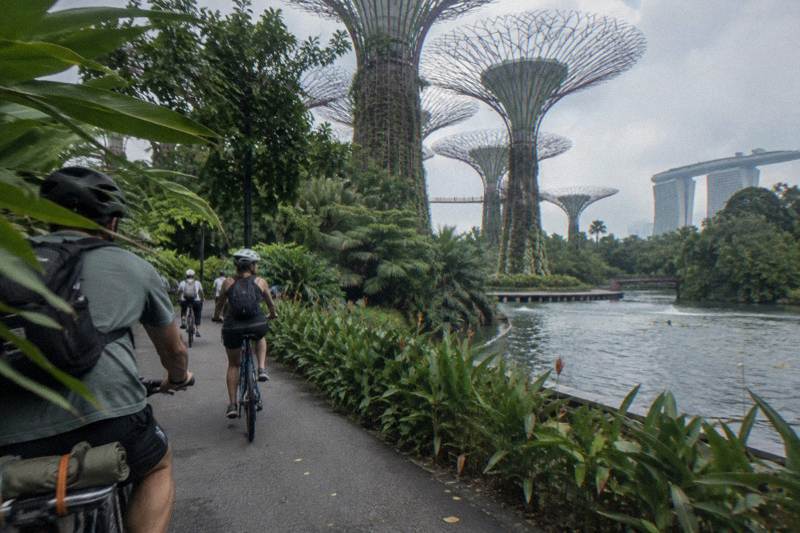
Cycling in Singapore is safe by regional standards, and safer than most visitors expect. The city runs more than 350 km of park connectors, keeps bicycles off expressways by law, and since 1 July 2025 has been physically separating bicycles from pedestrians on converted footpaths. The Lion City Bike Tour Of Singapore, a 4-hour guided ride rated 5.0 across 6,579 reviews, has operated in this environment long enough to prove the point commercially.
That said, safe here is conditional. The hazards that actually hurt cyclists in Singapore are heat exhaustion, sudden tropical downpours, and riding where the rules say a bicycle does not belong. All three are avoidable, and this article walks through each one, plus what the law requires, where you may ride, and how guided tours manage the risks for you.
Yes, cycling in Singapore is broadly safe, and the safety is engineered rather than incidental. Bicycles are banned from expressways and tunnels, shared paths are capped at 25 km/h by law, dedicated cycling paths run beside major park connectors, and the penalties for riding on a Pedestrian-Only Path reach $2,000 and/or three months in jail for a first offence. The dangers that remain are environmental: heat, rain and haze, not hostile traffic. Since that heat and humidity is the main thing you need to prepare for, our guide on what to wear when cycling in Singapore covers the clothing, helmets and rain gear that make a ride comfortable.
“Fantastic trip! Collin and his wife Samantha were amazing. If you like getting off the beaten path, which is otherwise challenging to do in Singapore for visitors, this is the trip for you! You will need to be a little bit bicycle fit as, while it is almost completely level, it is a bit of a long trek! So very worth it, though! I’m so glad I didn’t miss this. You will be too! thanks guys!”
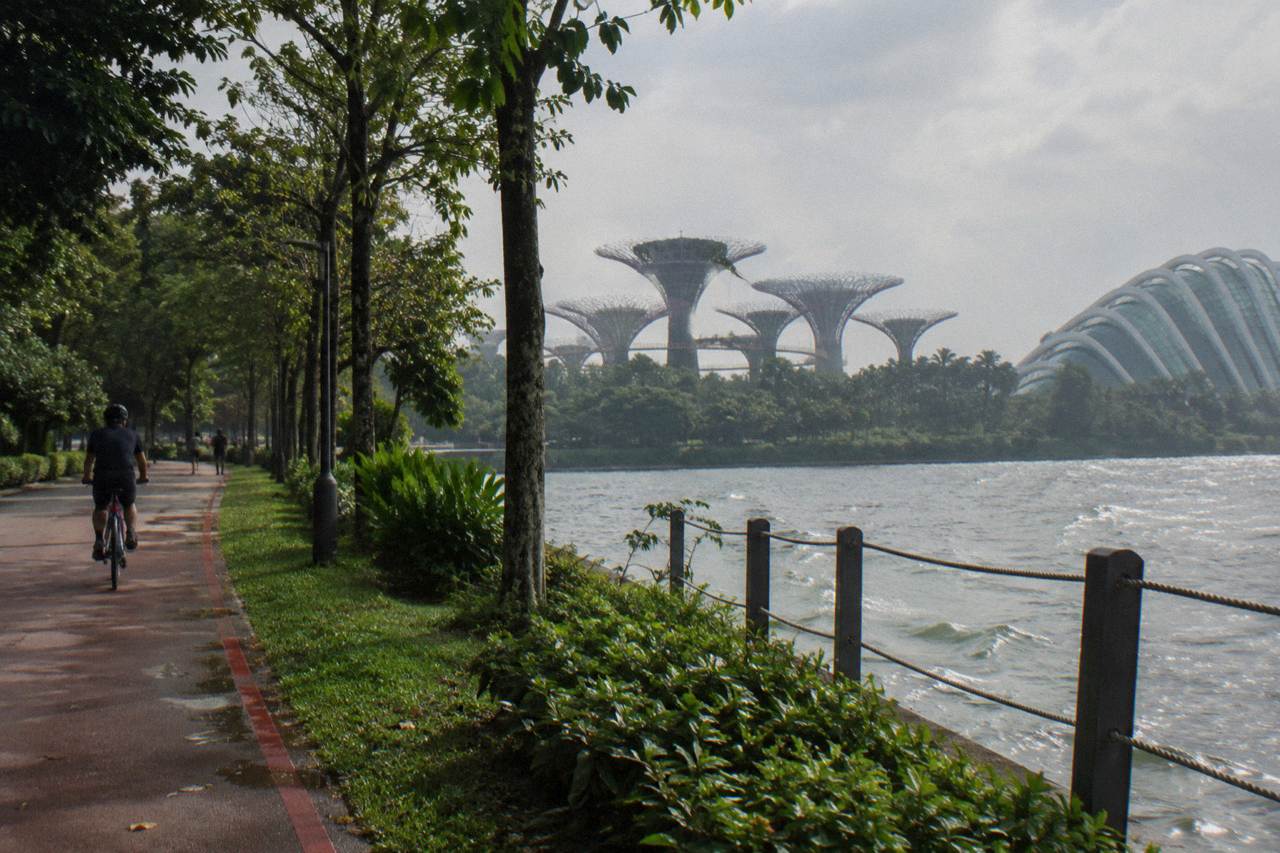
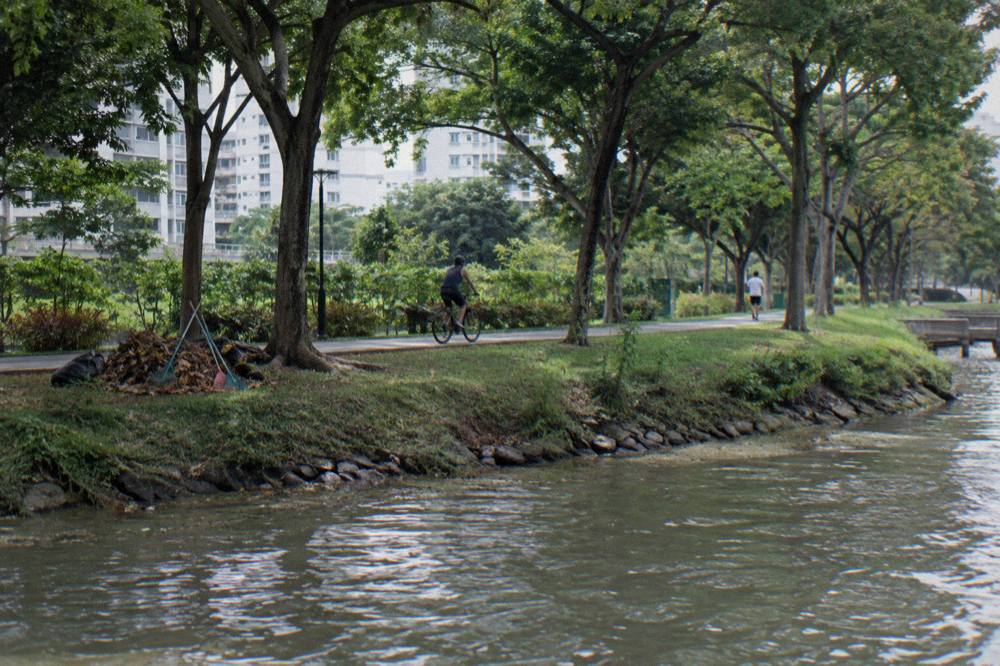
The structural reason Singapore feels safe on a bike is separation. The NParks Park Connector Network threads car-free green corridors through the entire island, and the network keeps growing. On the road network, the Land Transport Authority has been converting footpaths that run alongside dedicated cycling paths into Pedestrian-Only Paths, which pushes bikes onto purpose-built lanes instead of leaving them to fight for space with pedestrians. A visitor on a guided ride experiences almost none of this friction, because the routes are pre-selected and the guide handles the judgment calls.
The enforcement picture supports the safety picture. Police were reported to have issued summonses to about 650 cyclists in the second half of 2025, mostly for failing to obey traffic signals or to wear helmets on the road. That number cuts both ways: it shows riding on the road without a helmet is treated as a real offence, and it shows the scale of enforcement attention given to cyclist behaviour in a city of nearly six million people.
For a first-time visitor, the honest framing is this. Singapore is safe to cycle in the way a well-run kitchen is safe to cook in: the system is designed to protect you, but the heat is real, the rain is real, and ignoring the rules removes the protection.
The guided options covered here make that easy. The Lion City Bike Tour Of Singapore supplies the bicycle, a licensed local guide and a poncho, from $68.03 per person, with a group capped at 12. The Small Group, Max 10 Guests ride from City Scoot adds a helmet, bottled water and a raincoat into the price, from $64.03 per person and rated 4.8 across 74 reviews.
What Rules Keep A Cyclist Safe In Singapore?
The core rules are a 25 km/h cap on cycling and shared paths, 10 km/h on footpaths, a mandatory helmet on roads, front white and rear red lights after dark, and no mobile phone in hand while riding. Bicycles are prohibited from expressways, road tunnels and selected viaducts, and from Pedestrian-Only Paths since 1 July 2025.
The Active Mobility Act, in force since May 2018, is the governing law, and LTA's code of conduct sets out the details every rider should know. The path-type speed limits matter most for a visitor: a cycling path or shared path carries a 25 km/h maximum, and a plain footpath drops that to 10 km/h. On the road, bicycles follow the road's own speed limit and must ride as close as practicable to the far left edge, single file on single-lane roads and during bus lane operating hours, otherwise two abreast.
The helmet rule is narrower than many visitors assume. A helmet is mandatory when cycling on the road, full stop. On park connectors and shared paths, NParks advises a helmet rather than requiring one, and rental operators on Pulau Ubin recommend renting or bringing one. Guided tour operators in the city largely follow the same logic: most include a helmet or supply one on request; check the listing for your route.
Lights are non-negotiable after dark: front white, rear red. Groups on roads are limited to five bicycles in single file, or ten riding two abreast where conditions allow, and groups should keep roughly 30 m apart. Handheld phone use while riding is an offence, and after any accident the rider must stop, help, exchange particulars and report to police.
Two further points are worth their own paragraph. First, the Pedestrian-Only Path scheme: footpaths sitting next to dedicated cycling paths, in areas including Tampines, Punggol, Sengkang, Yishun and Clementi, now carry signage marking them for pedestrians only. Bicycles and non-motorised personal mobility devices are prohibited, and enforcement began on 1 July 2025. Second, shared bikes: park only in designated zones and scan the zone QR code to end the trip, because failing to do so can get a rider banned by the operator.
Path Types And Speed Limits
| Path type | Who may use it | Speed limit | Typical marking |
|---|---|---|---|
| Cycling path | Cyclists, PMD and PAB riders | 25 km/h | Red or dark grey surface, cyclist logo |
| Shared path | All park users, cyclists and pedestrians together | 25 km/h | Cyclist and pedestrian logos, red continuous lines |
| Footpath | Pedestrians and cyclists where not converted | 10 km/h | Unmarked path beside roads and in housing estates |
| Pedestrian-Only Path | Pedestrians only, no bicycles or PMDs | Not applicable | Pedestrian logo and signage beside a cycling path |
| Road | Bicycles, no expressways or tunnels | Road speed limit | Obey signals, ride near left edge, helmet mandatory |
The practical reading of that table: almost every situation a visitor meets is covered by one of five clear categories, and the markings on the ground tell you which one you are in. That clarity is the single biggest safety asset Singapore has compared with cities where bicycles share ambiguous space with everything else.
Where Can You Ride A Bicycle In Singapore?
Legally, a bicycle may ride on roads except expressways, tunnels and selected viaducts, on cycling paths, on shared paths, and on footpaths that have not been converted to Pedestrian-Only Paths, at 10 km/h or less. Off-limits are expressways, the four gazetted nature reserves, Henderson Waves, the Forest Walk, and most boardwalks.
The where question is really a network question, and the network is the Park Connector Network, or PCN. NParks describes a system of shared and segregated paths linking parks, rivers and coastlines island-wide, with red-lined shared paths, segregated stretches where pedestrians get their own lane, and red dotted Attention Zones at bus stops, crossings, playgrounds and toilets where cyclists must slow and give way. Etiquette published by NParks is simple: keep left except when overtaking, give way to pedestrians, look out at attention zones.
The Round Island Route deserves a mention as the flagship: a planned continuous 150 km connector that is part of a 360 km island-wide recreational network, with Phase 1 already covering 75 km across the eastern half, from Rower's Bay past the Singapore River to Berlayer Creek, including two cycling bridges at Changi Bay. A rider on the eastern coast can move long distances without touching a live road.
The prohibited list is where tourists get caught out. NParks does not allow cycling or PMD use in Bukit Timah Nature Reserve, the Central Catchment, Sungei Buloh Wetland Reserve or Labrador Nature Reserve, on Henderson Waves, on the Forest Walk at Telok Blangah Hill Park, in the Singapore Botanic Gardens, in Thomson Nature Park, and on boardwalks including the mangrove walk at Pasir Ris Park and the boardwalk at Coney Island. On Pulau Ubin, signs direct cyclists to dismount and push on steeper slopes, and a section of the Coastal Loop boardwalk at Chek Jawa has been closed for maintenance with completion expected in April 2027.
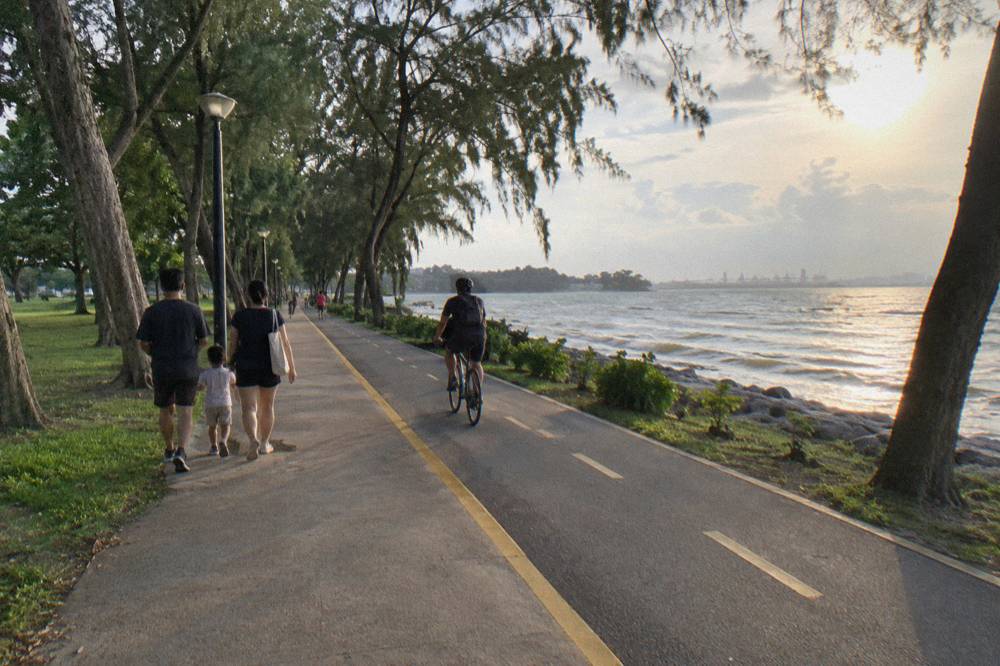
For planning a route around these constraints, the Singapore Park Connector Network guide maps the corridors, and the Singapore Cycling Routes overview sorts them by difficulty and scenery. A rider who stays on the PCN and treats Attention Zones as slow-down zones has engineered away most of the traffic risk.
Is The Weather A Safety Risk In Singapore?
Yes, and it is the biggest one. The climate is hot and wet year-round, with a mean annual temperature near 28 C and annual rainfall of 2113 mm across roughly 171 rain days. Heat and rain are the main risks to prepare for, so timing and hydration matter more than route choice.
The numbers come from the Meteorological Service Singapore 1991 to 2020 normals for Changi, and they are worth reading as safety data. November and December are the wettest months, 252.3 mm and 331.9 mm of rain respectively, with about 19 rain days each. February is the driest at 105.1 mm. May is the hottest month by 24-hour mean at 28.6 C. Daily maxima hover in the low 30s all year, and humidity averages 82 percent, which is what turns a warm day into a dangerous one for a rider working a bike.
- Jan222 mm
- Feb105 mm
- Mar152 mm
- Apr164 mm
- May164 mm
- Jun135 mm
- Jul147 mm
- Aug147 mm
- Sep125 mm
- Oct168 mm
- Nov252 mm
- Dec332 mm
Rain-days run from 8.5 (driest month) to 19.3 (wettest month).
The practical consequences are predictable. Ride early or ride after about four in the afternoon rather than midday. Carry more water than feels reasonable, because the combination of heat and humidity drives sweat loss faster than thirst signals it. Sunscreen and a brimmed hat at stops matter. Operators who run outdoor tours here adapt to this automatically: the Sunrise Ride, Local Breakfast tour from Punggol, a 3 to 4 hour ride with breakfast, bottled water and a souvenir included, from $48.02 per person, exists precisely because the pre-dawn and early-morning window is the comfortable one, and it carries a group capped at 5.
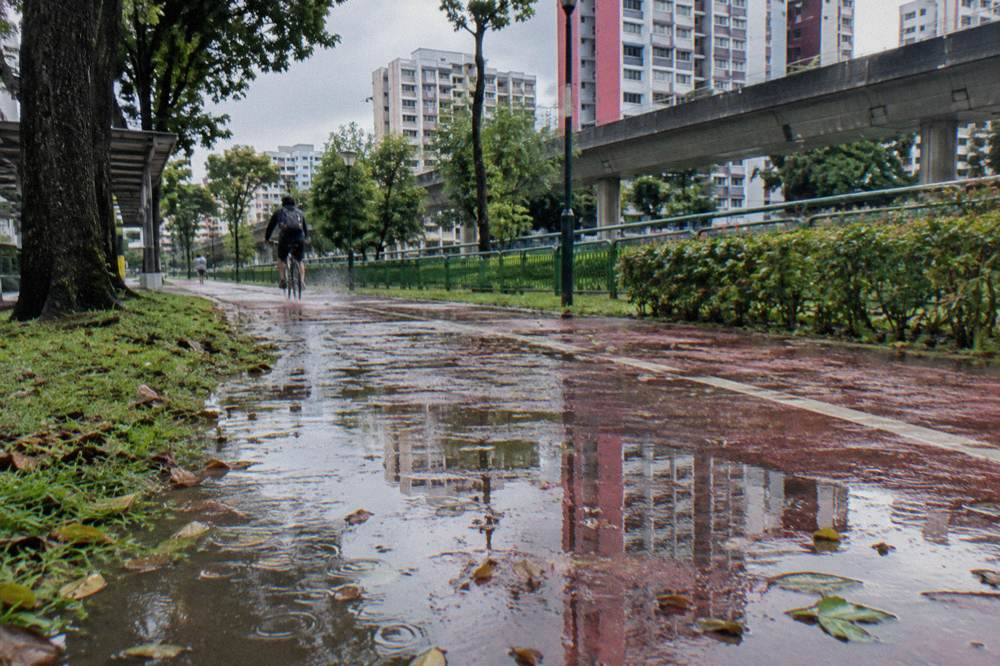
Rain deserves respect rather than fear. A tropical downpour is intense, brief and often localised, and the correct response is shelter, not speed. Most of the city tours here include a poncho or raincoat in the price, which tells you how routine rain is: the tours run rain or shine, and the gear list is built around it. The cycling in Singapore in the rain guide covers the tactics in detail.
Haze is a secondary, seasonal concern. The prevailing pattern is that slight to moderate haze is common in Southwest Monsoon months and in light-wind inter-monsoon periods, and severe transboundary episodes can cut visibility sharply. Check the air quality index on the day, and treat a high reading as a reason to shorten a ride, not cancel one.
Is It Safe To Cycle In Singapore At Night?
Night riding in Singapore is generally safe and in some ways safer than daytime riding: traffic thins, temperatures drop toward the 24 C nighttime low, and the law requires front white and rear red lights after dark. The Marina Bay Night Ride, 2 hours with lights, guide and storage lockers, is rated 4.9 across 598 reviews and exists because demand supports it.
“Alfie was an outstanding tour guide, making the ride effortless while we sampled delicious Malaysian, Chinese, and Indian cuisine. His deep knowledge of Singapore made the experience truly memorable.”
The legal baseline for night riding is lights and reflectors, and the safety baseline is the same. Singapore's roads are lit, the waterfront promenades around Marina Bay and the Singapore River are well lit after dark, and the night skyline is the whole draw. The risks that change at night are visibility of surface hazards, distracted pedestrians in entertainment districts, and your own fatigue if you rode all day.
A guided night tour strips most of that out. The Marina Bay Night Ride, Small Group, from $48.02 per person with a group capped at 15, runs 2 hours with a licensed guide, bottled water and a rain poncho if needed, and the operator provides storage lockers at the shop during the ride. For a visitor who wants the lit-city experience without route-finding at night, that is the format that matches. The Singapore night cycling guide covers self-guided options for riders who prefer their own pace.
How Do Guided Bike Tours Handle Safety In Singapore?
Guided tours concentrate the safety advantages: a licensed guide who knows the legal routes, a maintained bicycle included in the price, helmets where the route touches roads, water and rain gear as standard, and small group caps that keep the ride controllable. Group sizes across the city rides covered here run from 4 to 15, and each tour's booking page states free cancellation.
The group-size numbers matter more than they look like they would. The Sunrise Ride caps at 5, the Light To Night ride caps at 8, the Katong and Downtown food rides cap at 8, the Lion City tour caps at 12, and the Lets Go Tour rides cap at 15. A group of 8 moves through an Attention Zone differently from a group of 30: the guide can see everyone, hold the pace down, and stop the line at crossings. Singapore's on-road rule of five bicycles in single file also makes small groups legally simpler to manage than large ones.
What Guided Tours Include
| Tour | Meets At | Duration | Group cap | Bike | Helmet | Water or rain gear | From, per person |
|---|---|---|---|---|---|---|---|
| Lion City Bike Tour Of Singapore | Republic Avenue, Marina Bay | 4 hours | 12 | Included | On request | Poncho included | $68.03 |
| Full-Sized Bikes, Small Group | Lets Go Tour Singapore | 4 hours | 15 | Included | Included | Snack, drink, water, poncho | $64.03 |
| Small Group, Max 10 Guests | Esplanade Mall, Raffles Avenue | 4 hours | 10 | Included | Included | Water and raincoat | $64.03 |
| Bikeable City Ride | North Bridge Road | 4 hours | 15 | Included | Included | Helmet and guide, food excluded | $64.03 |
| 5-Hour Nature Ride | GoCycling @ Punggol Park | 5 hours | 4 | Included | Included | Helmet, water, bandana, poncho | $84.04 |
| Sunrise Ride, Local Breakfast | Punggol Field | 3 to 4 hours | 5 | Included | Included | Water, poncho, breakfast, souvenir | $48.02 |
Read that table as a safety specification, because that is what it is. The 5-Hour Nature Ride from The Cycle Startup, rated 5.0 across 37 reviews, caps its group at 4, includes the helmet, and routes through green corridor riding rather than dense streets. The Sunrise Ride adds breakfast, which sounds like hospitality until you have ridden in Singapore heat and understood that food and water are safety equipment here. The tours that exclude insurance and lunch say so plainly on their booking pages, which is the kind of disclosure a safety-minded reader should expect.
One point of honesty about the review pools. Several of these rides are new or small-listing products with single-digit review counts, and their 5.0 ratings reflect a handful of guests, not a tested consensus. The Lion City tour's 5.0 across 6,579 reviews and the Full-Sized Bikes tour's 5.0 across 1,559 reviews are the ratings with real statistical weight behind them. Treat everything else as promising rather than proven.
Common Questions About Cycling Safety In Singapore
Is It Safe To Cycle In Singapore?
Yes, broadly. The city separates bikes from pedestrians on converted paths, caps shared-path speed at 25 km/h, bans bicycles from expressways, and actively enforces cyclist behaviour. The main dangers are heat, sudden rain and riding on paths reserved for pedestrians, all of which are manageable with timing, hydration and route choice.
Do I Need To Wear A Helmet When Cycling In Singapore?
A helmet is legally mandatory when cycling on the road. On park connectors and shared paths, NParks advises a helmet but does not require one. Most guided tours here include a helmet or supply one on request; check the listing. No fine amount for riding without one is published in the sources here.
Can You Cycle On The Footpath In Singapore?
Only on footpaths that have not been converted to Pedestrian-Only Paths, and at 10 km/h or less. Since 1 July 2025, footpaths that sit beside a dedicated cycling path carry Pedestrian-Only status, and riding a bicycle on them carries penalties of up to $2,000 and/or three months for a first offence. Standalone footpaths and shared paths are unaffected.
Is It Safe To Cycle In Singapore In The Rain?
Riding in heavy rain is not advisable, but rain here is typically intense and short. The standard practice is to shelter until it passes, and city tour operators run rain or shine with ponchos included in the price. November and December average about 19 rain days each, so a flexible schedule beats a fixed one in the wet season.
Is It Safe To Cycle In Singapore At Night?
Yes, with lights. Front white and rear red lights are legally required after dark, road lighting is good, and the Marina Bay night tours run regularly with strong review pools behind them, including one rated 4.9 across 598 reviews. Cool nighttime temperatures near 24 C also make evening riding physically easier than midday.
Is Cycling In Singapore Safe For Beginners And Children?
The park connector network is well suited to beginners, with flat, continuous, car-free paths and slow-down zones at crossings. Guided tours reinforce that: the smallest group caps run at 4 and 5 riders, and several operators keep durations to 2 or 3 hours, which is about the right effort budget for a new or young rider in this climate.
“My guide was Jason, a Singaporean with lots of knowledge of his country's history and who takes you to all major sights using pleasant and safe bicycle shortcuts. Morning was not too hot and Jason always stopped at shaded spots for his explanations. We passed plenty of restrooms and the best ice cream vendor in town!”
The verdict, stated once more without hedging: Singapore is a safe place to cycle, and it is made safe by rules, path design and enforcement rather than by luck. A visitor who rides in the cooler hours, keeps to the cycling paths, wears a helmet on road segments and stops for the afternoon rain will find the city one of the most forgiving cycling environments in Asia. A visitor who ignores those four things will find out why the rules exist.
For a first-time visitor, a guided ride is the lowest-friction way to get all of this at once. The best time to cycle in Singapore guide helps with the timing decision, and the cycling rules for visitors guide covers the legal fine print. Booking a seat on a tour like the Lion City ride through Singapore Bike Tours puts a licensed local guide between you and every judgment call in this article, which is what most safety-minded riders actually want. Check availability