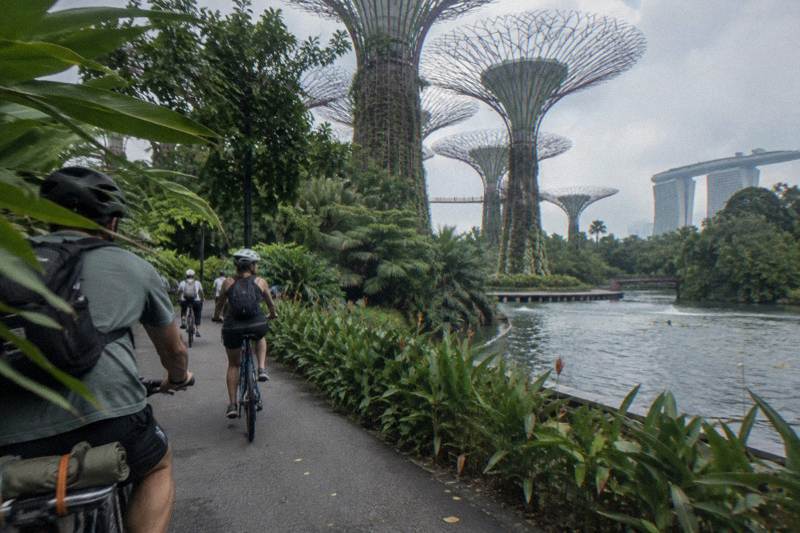
What To Wear Cycling In Singapore's Heat
Singapore is warm enough to cycle in a t-shirt every month of the year, but the humidity, the sun and the near-daily chance of a shower shape what actually works on a bike. Here is what to wear, what to pack and what a guided ride already hands you.
Short answer
Wear loose, light-coloured, breathable clothing, sunscreen and sunglasses; pack a poncho, because rain falls on roughly 19 days in November and rides run rain or shine. Helmets are required by law on roads and included or available on request with most guided rides. Book morning slots to dodge the midday heat.
Heat is the first thing a cyclist notices in Singapore. The mean daily maximum temperature at Changi sits between 30.5 and 32.4 C in every single month of the year, and the mean annual relative humidity runs at 82 percent, so sweat does not evaporate the way it does in a dry summer city. What to wear on a bike here is less about surviving cold or a proper winter, and more about managing three things at once: heat, sun, and the near-daily chance of a heavy shower that passes within the hour.
None of this requires specialist clothing. The rides covered on Singapore Bike Tours are relaxed, guided city and park outings on regular bicycles, not races, and the operators plan their routes and paces around the equatorial climate rather than pretending it away. The Lion City ride from Bike Around Tour Singapore, for example, runs four hours from $68.03 per person with a licensed local guide, and it includes a disposable poncho because the operator describes the tour as a rain or shine activity. Clothing that would feel right on a summer errand back home will serve well here, with a few deliberate adjustments.
This guide walks through those adjustments one by one: the fabrics and colours that handle the heat, the helmet and footwear question, the rain plan, what changes for night riding, how the monsoon rhythm affects your bag, and what a guided ride already includes so you do not overpack.
What Should You Wear Cycling In Singapore's Heat?
Dress for heat and humidity rather than sunshine: a loose, breathable, light-coloured short-sleeve top, shorts or flexible trousers, sunglasses and sunscreen. The Changi climate normals put the mean daily maximum at 30 to 32 C in every month, and the rides here are slow-paced city outings, so heavy athletic kit made for cooler climates is unnecessary.
The numbers behind the advice come from the Meteorological Service Singapore 1991 to 2020 climate normals for Changi, the official reference series for the island. May is the hottest month on that record with a 24-hour mean of 28.6 C; December and January are the coolest at 26.8 C, which tells you the entire year sits inside a two-degree band. The daily range is narrow too: mean daily minima never fall below 24.3 C, so an early start does not buy you cool air in the way it would in a temperate city. What an early start buys instead is weaker sun, and that matters more.
Fabric does most of the work. Loose, light-coloured cotton or a thin synthetic blend lets air move and reflects rather than absorbs the sun, which is why the classic Singapore cycling uniform on the park connectors is a plain dry-fit shirt and shorts rather than padded lycra. Dark colours absorb heat visibly within minutes of standing still at a traffic light. Sunglasses are worth more than their fashion value here, because glare off the water around Marina Bay and the straight morning sun along the coastal paths are real; a brimmed cap under the helmet also helps if the sun angle is low.
The sun, not the temperature, is the thing to plan around. Sunshine runs 5 to 7 hours per day on the normals, peaking in February at 7.0 hours, and the tours that put in real distance, like the four-hour Full-Sized Bikes, Small Group ride from Lets Go Tour Singapore (from $64.03 per person, rated 5.0 across 1,559 reviews), spend stretches fully exposed on quayside paths. Sunscreen applied before the ride, a refill in the bag, and a dry shirt to change into afterwards cover most of the risk. Dehydration is the other one: bottled water is included on the rides that include drinks, but a personal bottle in addition is cheap insurance.
- Bike23 of 23
- Guide19 of 23
- Drinks14 of 23
- Helmet11 of 23
- Meal or food stop8 of 23
A listing that does not mention an item is not counted as leaving it out.
A simple time-of-day table keeps the choices straight:
| Time of day | What the air feels like | Sensible kit |
|---|---|---|
| Morning start, 7 to 10 | Mean minima 24.3 to 25.7 C, sun climbing | Light top, shorts, sunglasses, sunscreen before departure |
| Midday | Mean maxima 30.5 to 32.4 C, high glare off water and glass | Light colours, cap or visor under helmet, extra water |
| Afternoon shower | Heavy, brief, then steamy again | Poncho over the top, nothing absorbent on the bike |
| After dark | Little cooling, mean 24 to 26 C overnight | Light layer, white front and red rear lights, reflective details |
One more point worth making early: hats and helmets. A cap under a helmet is common here, but a helmet alone heats up less than most visitors expect, because the vents and the moving air do their job. The discomfort reputation comes from standing still, which a moving guided ride mostly avoids.
Do You Need A Helmet And Covered Shoes On A Singapore Bike Tour?
A helmet is required by law when riding on roads in Singapore, and NParks advises one on the park connectors; every ride covered here includes a bicycle, and most include a helmet, though a few ask for it in advance. Closed, grippy shoes are the practical choice for a city tour.
The legal side is simple. LTA's active mobility rules state that cyclists and their pillions must wear a suitable protective helmet when riding on roads, and enforcement of exactly that rule was stepped up in early 2026. On park connectors, helmets are advised rather than mandated: NParks cycling guidance recommends protective gear including a helmet. Since guided rides mix park paths with road crossings and sometimes road stretches, a helmet is the correct default for all of them, and the tour operators largely treat it that way.
What varies is whether the helmet is in the ticket or on request. The Small Group, Max 10 Guests city ride from City Scoot lists a helmet as included, alongside bottled water, a raincoat and bag storage, from $64.03 per person with a 4.8 rating across 74 reviews. The Lion City ride from Bike Around Tour Singapore, four hours from $68.03 per person and rated 5.0 across 6,579 reviews, includes the bicycle and a disposable poncho, with a helmet available by contacting the operator or indicating it as a special request, so a traveler who wants one in hand says so at booking. The four-hour Heritage Highlights ride from Heritage Journey Singapore (from $76, nine reviews so far) takes the same approach: helmets in size M or L are listed, with a request to arrive 20 minutes early for bike fitting.
Footwear deserves a sentence of honesty rather than a rule. Nothing in the Singapore regulations requires closed shoes on a bicycle, and sandals are common on the park connectors. But a guided city ride involves pedals, stopping traffic, and occasionally a foot down fast on wet tarmac, so closed, grippy shoes beat flip-flops on every route here, and the food-focused rides, where you dismount and walk through wet market floors and hawker centres, reinforce the point. Riders who plan their own road rides can read the wider picture in the guide to Singapore cycling rules for visitors.
What each ride actually includes, drawn from each operator's own inclusions, is worth a table:
| Ride | Helmet | Also included |
|---|---|---|
| Lion City ride, Bike Around Tour Singapore | On request at booking | Bicycle, disposable poncho, licensed local guide |
| Full-Sized Bikes, Small Group | Included | Bottled water, rain poncho, one local snack and drink, bag storage |
| Small Group, Max 10 Guests | Included | Bottled water, raincoat, bag storage in the shop |
| 5-Hour Nature Ride | Included | Free bandana, bottled water, disposable poncho if raining |
| Marina Bay Night Ride, 2 Hours | Included | Bottled water, rain poncho, small bag storage |
The pattern in that table is the useful takeaway: across the city rides here, the helmet, the water and the rain layer are mostly handled, and what the rider brings is sunscreen, shoes and a dry shirt.
What Do You Wear When It Rains On A Singapore Cycling Tour?
Wear a poncho rather than a hooded rain jacket that traps humid air, and keep everything quick-drying; the rides here run rain or shine, several include a disposable poncho, so the rain plan matters more than the rain forecast. November to January is the wettest stretch, with about 19 rain days in November alone.
Rain in Singapore is heavy, warm and usually short. The climate normals put November at 252.3 mm of rain across about 19 rain days and December at 331.9 mm across 19.3, while February, the driest month, still averages 105.1 mm. A shower that flattens you for 20 minutes is normal; a day that rains continuously is not. Tour operators plan around this, and several state plainly that the ride is a rain or shine activity, which means the question is not whether you will ride in rain but whether you will be comfortable doing it.
- Jan222 mm
- Feb105 mm
- Mar152 mm
- Apr164 mm
- May164 mm
- Jun135 mm
- Jul147 mm
- Aug147 mm
- Sep125 mm
- Oct168 mm
- Nov252 mm
- Dec332 mm
Rain-days run from 8.5 (driest month) to 19.3 (wettest month).
The answer to that is layering philosophy, not fabric heroics. A poncho drapes over you and the bag, vents at the sides, and packs to nothing when the sun returns; a sealed rain jacket keeps the rain out and the sweat in, which in 82 percent humidity can be a worse trade. Everything under it should dry fast: avoid heavy denim, cotton hoodies and anything that holds water. Feet get wet regardless of shoes in a downpour, which is a second argument for closed shoes with grip rather than anything that turns slippery. The deeper dive into wet-weather riding lives in the guide to cycling in Singapore in the rain.
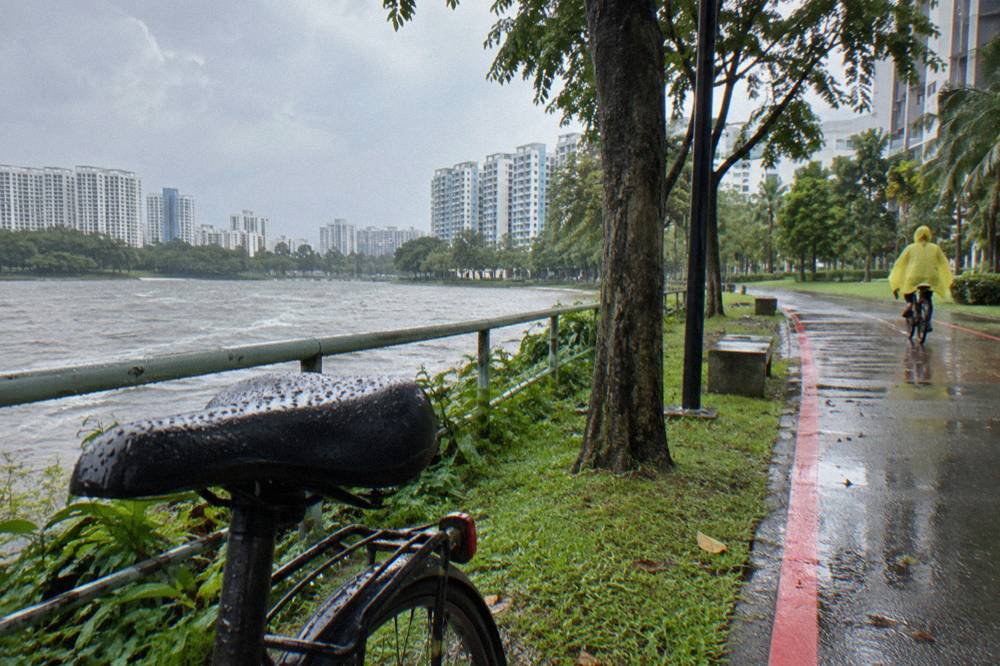
The operators lean into this. The 5-Hour Nature Ride from The Cycle Startup, from $84.04 per person with a 5.0 rating across 37 reviews, runs with a maximum of four riders and includes a disposable poncho for when it rains, plus a helmet and bottled water. The Small Group, Max 10 Guests ride includes a proper raincoat rather than a poncho. The Katong Food Ride from Bike Around Tour Singapore lists the tour as rain or shine as well. In other words, the disposable rain layer is usually in the price already, and packing a better one is a comfort upgrade, not a necessity.
The seasonal rhythm is worth one table because it changes what lives permanently in your bag:
| Season on the climate record | Months | Rain character | What changes in your kit |
|---|---|---|---|
| Northeast monsoon | December to early March | Wettest period, heaviest in November to January | Poncho packed every day, dry shirt mandatory |
| First inter-monsoon | Late March to May | Afternoon showers, hot | Sun protection moves up the priority list |
| Southwest monsoon | June to September | Generally drier, slight to moderate haze possible | Sunglasses and water take over from rain gear |
| Second inter-monsoon | October to November | Generally wetter than the first | Poncho returns, waterproof bag for electronics |
That is the whole seasonal wardrobe decision, honestly: the poncho spends June to September near the bottom of the bag and November to January near the top.
What Should You Wear For Night Cycling Around Marina Bay?
Light-coloured clothing plus a white front light and a red rear light, which the rules require after dark; the Marina Bay night ride runs two hours from $48.02 per person, is rated 4.9 across 598 reviews, and includes helmet, poncho and bottled water.
Night is the most comfortable time to ride in Singapore and the one with an actual legal clothing requirement. The temperature barely drops after dark, so the same light kit works, but the air stops feeling like a wall and the city does the lighting for you. The rules side is explicit: riders on public paths and roads must display a white front light and a red rear light in the dark, with a rear red reflector an acceptable alternative on the back. On a guided ride the operator carries lights where the route demands them, but a small clip light is cheap and removes any doubt for the ride back to the hotel afterwards.
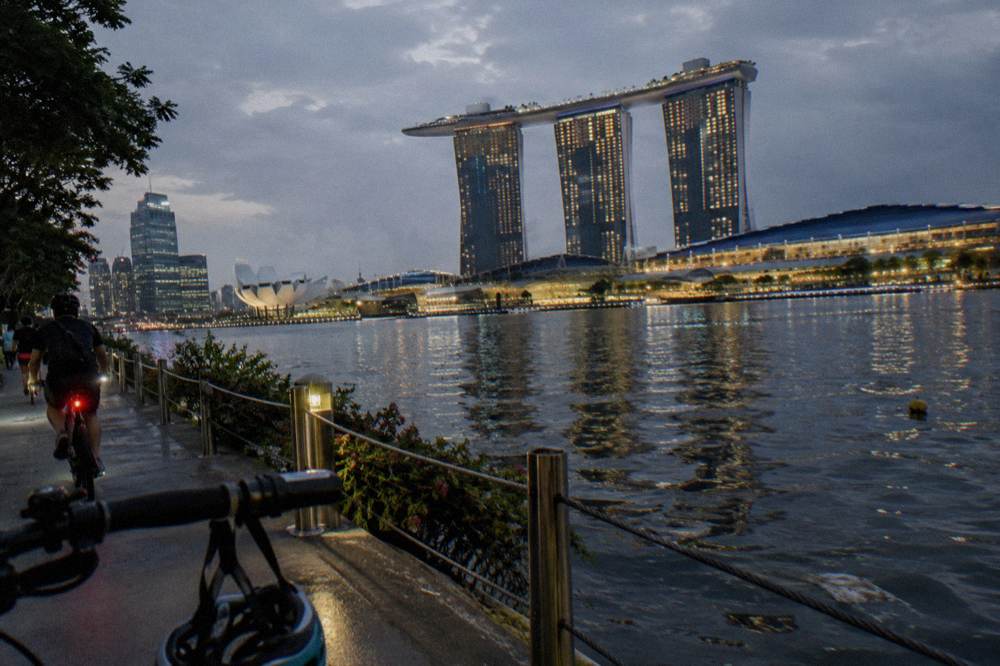
The Marina Bay Night Ride, 2 Hours from Lets Go Tour Singapore covers this exact use case: two hours from $48.02 per person, rated 4.9 across 598 reviews, meeting at the operator's shop with a maximum of 15 riders, and including the bicycle, helmet, bottled water and a rain poncho if needed. Light-coloured or reflective details on clothing are the sensible choice, and the light layer matters again because the guides do stop the group for photos across the water, which means standing still in the open while the ride is paused.
Clothing-wise, night riding is the least demanding scenario on this page. Shorts and a t-shirt, a light layer against the breeze off the bay, closed shoes, and nothing white you would mourn if a tire kicks up residual road grime. More route detail and stop timing lives in the Singapore night cycling guide.
The night option also solves the clothing problem for travelers who only have late-afternoon hours free: the heat penalty of an evening slot is far smaller than the midday one, and no extra kit is needed beyond the lights the rule requires.
How Do Singapore's Seasons Change What You Wear On A Bike?
Almost nothing changes: every month is warm, the mean temperature never drops below 26.8 C and never exceeds 28.6 C, so layers stay home. What shifts is rain: November to January is the wettest period and February the driest month, so the poncho in the bag matters more than the jersey on your back.
Singapore sits one degree north of the equator, which deletes the seasonality most visitors are dressing for and replaces it with a monsoon rhythm. The full monthly picture from the Meteorological Service Singapore 1991 to 2020 normals for Changi, the series that governs every temperature and rain figure on this page, is below.
| Month | Mean temp C | Mean daily max C | Rainfall mm | Rain days |
|---|---|---|---|---|
| Jan | 26.8 | 30.6 | 221.6 | 13.4 |
| Feb | 27.3 | 31.5 | 105.1 | 8.5 |
| Mar | 27.8 | 32.2 | 151.7 | 12.1 |
| Apr | 28.2 | 32.4 | 164.3 | 14.9 |
| May | 28.6 | 32.3 | 164.3 | 14.5 |
| Jun | 28.5 | 31.9 | 135.3 | 13.2 |
| Jul | 28.2 | 31.4 | 146.6 | 13.6 |
| Aug | 28.1 | 31.4 | 146.9 | 13.8 |
| Sep | 28.0 | 31.6 | 124.9 | 12.5 |
| Oct | 27.9 | 31.8 | 168.3 | 15.0 |
| Nov | 27.2 | 31.2 | 252.3 | 19.0 |
| Dec | 26.8 | 30.5 | 331.9 | 19.3 |
Singapore Rides: Price, Duration, Rating
| Tour | Price | Duration | Rating |
|---|---|---|---|
| Lion City ride, Bike Around Tour Singapore | from $68.03 per person | four hours | 5.0 across 6,579 reviews |
| Full-Sized Bikes, Small Group, Lets Go Tour Singapore | from $64.03 per person | four-hour | 5.0 across 1,559 reviews |
| Small Group, Max 10 Guests, City Scoot | from $64.03 per person | - | 4.8 across 74 reviews |
Two wardrobe conclusions fall straight out of that table. First, the shirt you choose in April works in December; there is no month that needs a jacket, and the only additions all year are rain and sun gear. Second, the wettest riding months are November to January, which is high season for visitors, so travelers arriving then should treat the poncho as part of the outfit rather than an emergency item. The trade-offs of month-by-month booking, beyond clothing, are laid out in the guide to the best time to cycle in Singapore.
The sunrise option is the seasonal counterpart worth naming, because it attacks the sun problem directly. The Sunrise Ride with Local Breakfast from Punggol Field runs 3 to 4 hours from $48.02 per person, with a maximum of five riders, and includes breakfast, a helmet, bottled water, a souvenir and a disposable poncho; it is a new-enough outing that only three reviews sit on the booking page so far. Riding before the sun is fully up means lighter UV exposure, cooler tarmac and the same light clothing.
Haze is the one climate wildcard that touches clothing slightly. The climate record notes that slight to moderate haze is common in Southwest Monsoon and light-wind inter-monsoon months, and current reporting describes PSI in the moderate range with showers suppressing regional smoke. For a cyclist, that means sunglasses earn their place beyond glare, and anyone sensitive to air quality prefers morning slots, but no special clothing is called for.
What Should Go In Your Bag For A Cycling Day In Singapore?
Sunscreen, sunglasses, a small towel, a dry shirt for after the ride, and cash or a card for a hawker stop; every ride covered here includes the bicycle, most include bottled water, and several operators offer bag storage, so a small backpack is enough.
The bag question answers itself once you see what the operators carry. Bag storage is listed as included on the Small Group, Max 10 Guests ride (safe keeping in the shop), on the Full-Sized Bikes, Small Group ride (complimentary, during the tour), and on the Marina Bay night ride (small lockers at the shop). The Heritage Highlights ride goes furthest: a 10 L pannier mounted on the bike for your belongings, from $76 per person with nine reviews so far. Between storage and mounted panniers, the practical bag is small.
What goes in it follows the rest of this page: sunscreen reapplied rather than applied once, a second layer of sun protection, the poncho from November to January, electronics in a dry pouch if the sky looks loaded, and money for the food stops that half these rides build in. The Bike and Bites ride from Lets Go Tour Singapore, three hours from $79.24 per person and rated 4.9 across 282 reviews, includes shared local bites that the operator describes as a cultural introduction rather than a full meal, so appetite space in the plan is wise. The full-day private ride from Singapore City Explorers, 7 to 8 hours from $224.11 per person with the total depending on group size, includes lunch, bottled water and a helmet, which turns the bag list into sunscreen, poncho and a camera.
A bring-versus-included table closes the packing question:
| Item | Bring it yourself | Included on the rides here |
|---|---|---|
| Bicycle | No | Included on every ride |
| Helmet | Optional personal one | Included or on request on the city rides |
| Bottled water | Extra in midday heat | Included where drinks are listed |
| Rain layer | A better one, Nov to Jan | Disposable poncho or raincoat on several rides |
| Sunscreen | Yes | Not included |
| Bag storage | Small backpack is enough | Offered on several city rides |
| Dry shirt | Yes for after the ride | Not included |
Footwear, one last time, because the food rides make the argument: dismounting at a hawker centre in sandals after two hours of pedaling is possible, and doing it in closed, grippy shoes is simply better.
The clothing story in Singapore is short because the climate is honest about itself. Every month is hot, every month can rain, the sun is strong when it is out, and the operators have already put the helmet, the water and the poncho into the price on most of the rides here. Dress lightly, pack small, start early if you can, and let the guide carry the rest.
Common Questions About Cycling Clothing In Singapore
What Should I Wear Cycling In Singapore's Heat?
Loose, light-coloured, breathable clothing: a dry-fit or cotton short-sleeve top and shorts, sunglasses and sunscreen. The mean daily maximum is 30.5 to 32.4 C in every month, so no jacket or warm layer is ever needed, and heavy athletic kit only traps the humidity.
Do I Need A Helmet On A Guided Bike Tour In Singapore?
A helmet is required by law when riding on roads, and NParks advises one on the park connectors. Most city rides here include one in the ticket, and those that do not, like the Lion City ride, provide one on request at booking.
Can I Wear Sandals Or Flip-Flops On A Singapore Cycling Tour?
Nothing in the rules bans open shoes, and sandals are common on the park connectors. Closed, grippy shoes are the better choice on a guided ride, because wet tarmac, pedal contact and busy hawker stops all reward proper soles.
What Happens If It Rains During My Bike Tour In Singapore?
The ride goes ahead: several operators state that their tours are rain or shine activities, and disposable ponchos are included on a number of them. Typical Singapore rain is heavy and brief, so the poncho goes on, the ride pauses or continues, and the sun usually returns within the hour.
What Should I Wear For Night Cycling In Singapore?
The same light clothing as the day, with a white front light and a red rear light, which the rules require after dark. Light-coloured or reflective details help, and no extra warm layer is needed because overnight temperatures stay around 24 to 26 C.
Do I Need To Bring My Own Water And Raincoat On A Guided Ride?
Usually not. Bottled water is included on the rides that list drinks, and disposable ponchos or raincoats are included on several, including the Small Group Max 10 ride and the 5-Hour Nature Ride. Extra water is still wise in the midday heat, and a personal poncho is a comfort upgrade in the November to January wet season.