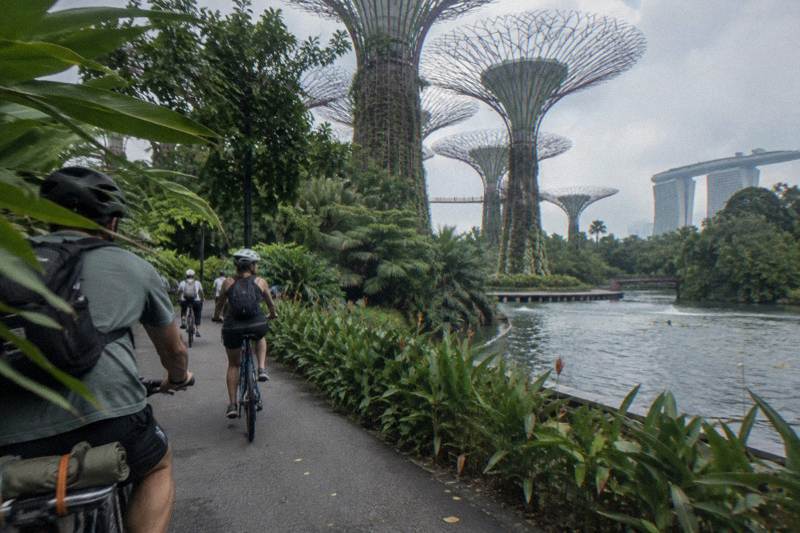
Singapore Cycling Rules For Visitors: LTA Active Mobility Basics
Singapore runs its paths and roads on a written rule set, the Active Mobility Act, and most of it is friendlier than visitors expect. Here is what the law asks of a cyclist, where each rule applies, and where a guided ride takes the guesswork out.
Short answer
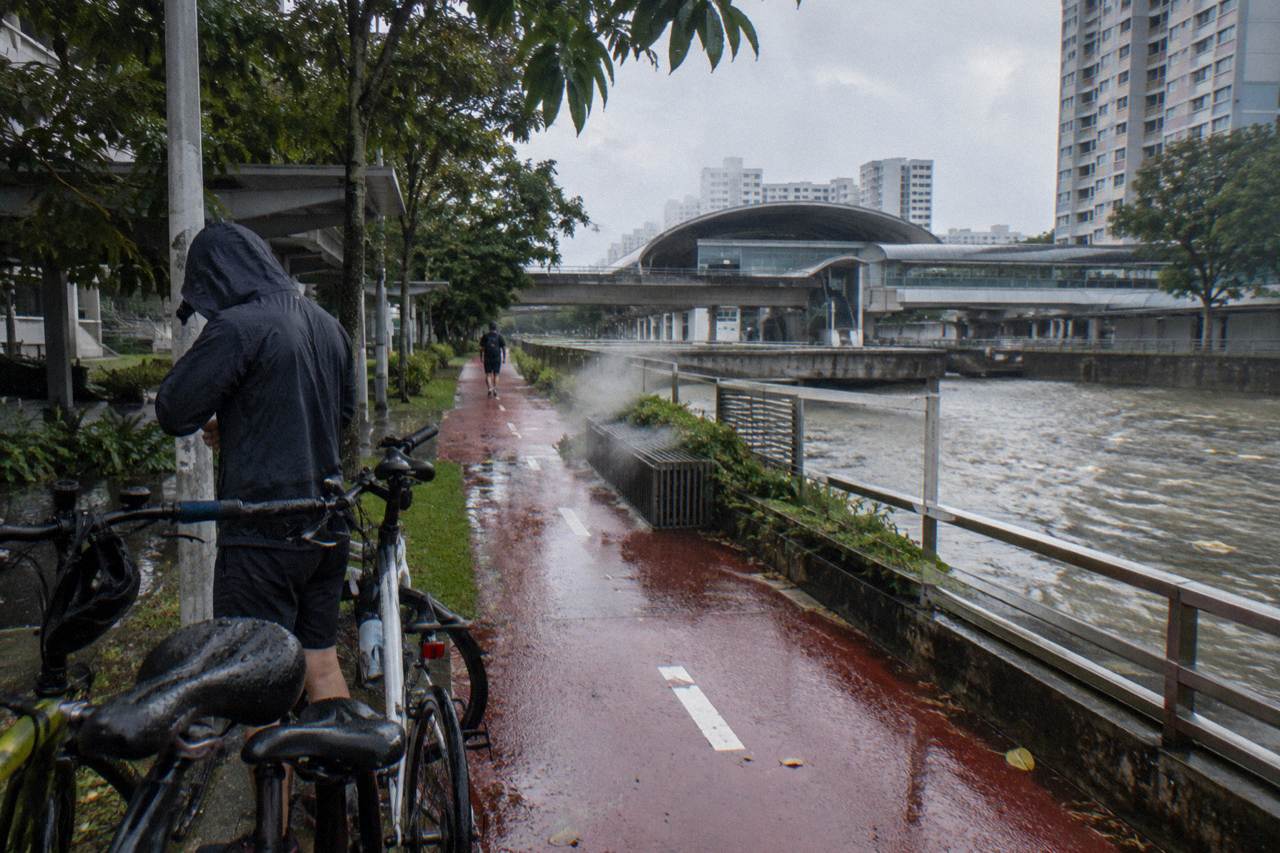
Yes, cyclists may ride on most Singapore roads, and a helmet is mandatory when you do. Footpaths carry a 10 km/h limit, cycling and shared paths 25 km/h, and since 1 July 2025 bicycles are banned on Pedestrian-Only Paths, with penalties up to $2,000 and/or three months for a first offence. Guided city rides from $64.03 per person handle routing, bikes and guide judgement.
Singapore wrote its cycling rules down, enforces them, and publishes them in plain language, which is rare good news for a visitor. The Active Mobility Act, in force since May 2018, sets out where each kind of device may go, how fast, and what a bicycle must carry. The rules are short enough to learn in an afternoon, and a guided ride makes most of them someone else's job.
This guide walks through the questions visitors ask most: roads, helmets, pavements, speed limits, equipment and group rides. Every figure comes from the Land Transport Authority's published rules, NParks guidance for the park connectors, and the tour pages covered on Singapore Bike Tours. Nothing here is guesswork, and where a number is not published, it says so.
Can Cyclists Cycle On The Road In Singapore?
Yes, bicycles are legal on nearly all Singapore roads, and the law is precise about how you ride: with traffic, as close as practicable to the far left edge, in single file on single-lane roads and during bus lane hours, with a helmet on, front white and rear red lights after dark, and never on expressways, road tunnels or selected viaducts. Groups are capped at 5 devices in single file or 10 two abreast.
Cycling on the road is a normal, protected activity here, not a tolerated oddity. The Road Traffic (Bicycles) Rules require riders to obey traffic signals, ride in the direction of traffic, and stay near the left edge unless overtaking. On single-lane roads, and during bus lane operating hours, the default is single file. On multi-lane roads outside bus lane hours, riding two abreast is allowed up to the group ceiling of 10. Cyclists who would rather skip the road entirely can lean on the park connector network instead: NParks counts over 350 km of connectors island-wide, described in the park connector guide.
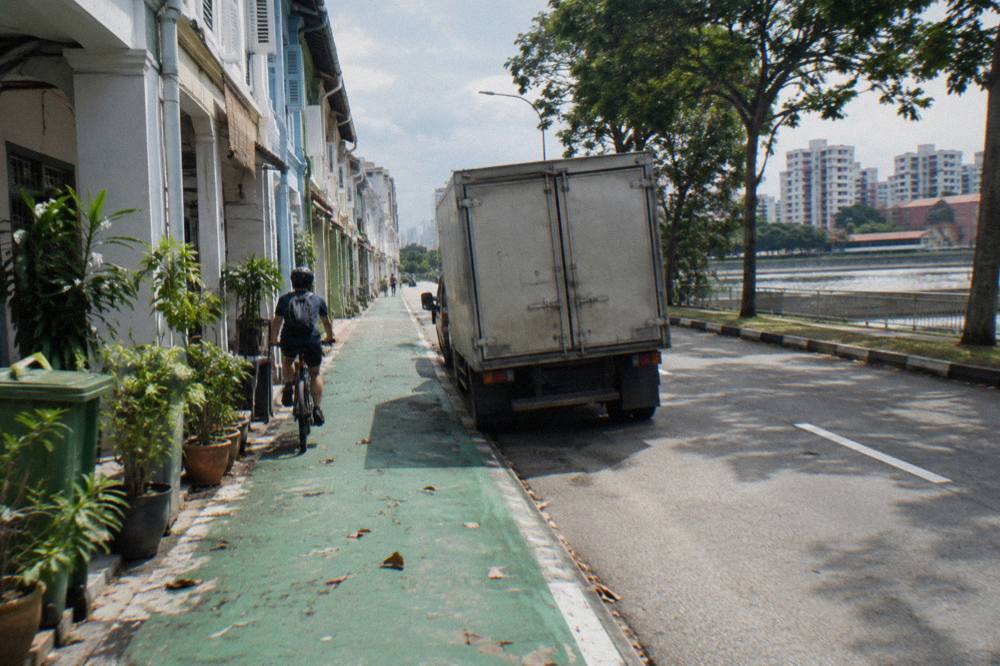
A few details trip visitors up. Holding a phone while riding, even at a junction, is an offence: the rules ban mobile communication devices in hand on any public path or road. After dark, a front white light and a rear red light are required, and a rear red reflector is acceptable in place of the rear light. Riders must use bicycle lanes where provided, and two Sunday-only bicycle lanes exist along Tanah Merah Coast Road and West Camp Road, open 5am to 11am, where the group-length cap does not apply. All of this is laid out in LTA's code of conduct, which is the source for the road rules above.
What the law does not do is threaten road cyclists with the headline penalties attached to path offences. The up-to-$2,000 figure that circulates in travel forums belongs to one specific offence, riding on a Pedestrian-Only Path, and is covered below in the pavement section. Helmet fines and summons amounts for road riders are not published as fixed numbers, so this guide does not quote any.
| Road rule | What the law asks |
|---|---|
| Position | Ride with traffic, as close as practicable to the far left edge |
| Formation | Single file on single-lane roads and during bus lane hours; two abreast otherwise |
| Group size | Maximum 5 devices single file, 10 two abreast |
| Group spacing | Keep about 30 m, roughly 2 lamp posts, between groups |
| Lights | Front white and rear red after dark; rear red reflector acceptable |
| Helmet | Mandatory on roads for riders and pillion passengers |
| Phone | No mobile communication device in hand while riding |
| Exclusions | No cycling on expressways, road tunnels and selected viaducts |
For a visitor, the honest summary is that Singapore roads are rideable and orderly, but they are also busy, and the legal burden of lane position, formation and signalling sits on the rider. That is the single strongest argument for starting with a guided ride: a licensed guide who rides these roads daily picks the lane and the moment. The Lion City tour run by Bike Around Tour Singapore, Licensed Guide, Poncho Included, uses exactly that format, a 4-hour guided loop on regular bikes from $68.03 per person, rated 5.0 across 6,579 reviews, with a licensed local guide carrying the routing decisions.
What Are The Speed Limits And Path Types In Singapore?
Speed limits follow the path, not the rider: 10 km/h on footpaths, 25 km/h on cycling paths and shared paths, and the posted road speed on roads. Since 1 July 2025, footpaths beside dedicated cycling paths have been converting to Pedestrian-Only Paths, where bicycles are prohibited outright, and motorised personal mobility aids are capped at 6 km/h on paths from 1 June 2026.
The path system is simpler than it looks because each surface carries its own mark. A cycling path is typically red or dark grey with a cyclist logo: 25 km/h. A shared path carries both cyclist and pedestrian logos: also 25 km/h, and that is the surface most of the park connector network uses. A footpath, the unmarked pavement beside roads and within housing estates: 10 km/h. The full breakdown, straight from LTA's "where devices are allowed" rules sheet, is worth reading once, because it also settles where power-assisted bicycles may not go.
Speed Limits By Path Type In Singapore
Limits follow the surface, not the rider, under the Active Mobility Act
| Path type | Marking | Bicycle allowed | Speed limit |
|---|---|---|---|
| Cycling path | Red or dark grey, cyclist logo | Yes | 25 km/h |
| Shared path | Cyclist and pedestrian logos | Yes | 25 km/h |
| Footpath | Unmarked, beside roads and in housing estates | Yes, except Pedestrian-Only Paths | 10 km/h |
| Pedestrian-Only Path | Pedestrian logo, "Pedestrians-Only" wording | No | Not applicable |
| Road | Not applicable | Yes, except expressways, tunnels, selected viaducts | Posted road speed limit |
The footpath allowance surprises visitors from countries where pavement riding is banned outright, but it comes with obligations: give way to pedestrians, slow near bus stops and junctions, and walk the bike in crowded areas. The guideline language from LTA is explicit about giving way and about dismounting at "No Riding" signs. NParks mirrors it for the connectors, where safe use of the park connectors asks riders to slow down at Attention Zones, marked with red dotted lines near playgrounds, crossings and fitness corners.
Riding at a tour pace means these limits are theoretical rather than tested. A guided group on regular bikes moves well under 25 km/h, and on the connectors the guide calls the slowdowns before the signage does. That is one reason first-time visitors land on a guided ride rather than a bare rental, and the format choices run from short loops to full-day routes.
The two rides above cover the formats visitors compare most: a small-group highlights ride from $64.03 per person, and a 2-hour night loop around Marina Bay from $48.02 per person, rated 4.9 across 598 reviews. Two of them include the bike and a guide, while a rain poncho shows up on some listings only, so check the inclusions list for the rest.
Is It Illegal To Cycle Without A Helmet In Singapore?
Only on roads. The helmet rule in Singapore is a road rule: riders and pillion passengers on bicycles must wear a suitable protective helmet whenever riding on the road, and traffic police stepped up enforcement against non-compliance in early 2026. On park connectors and shared paths no helmet law applies, though NParks advises protective gear, and most guided tour bikes here include or offer one. For a fuller picture of risks beyond helmets, our guide to cycling safety in Singapore covers path rules, weather, and how guided tours manage the hazards.
- Bike23 of 23
- Guide19 of 23
- Drinks14 of 23
- Helmet11 of 23
- Meal or food stop8 of 23
A listing that does not mention an item is not counted as leaving it out.
The legal split matters. Ride a bicycle on a footpath or a park connector and the helmet is advisory, not mandatory. Move onto the road, and the helmet becomes a legal requirement under the Road Traffic (Bicycles) Rules, with enforcement activity reported against non-compliant riders. The amount of any helmet fine is not published in the sources used here, so no figure is quoted.
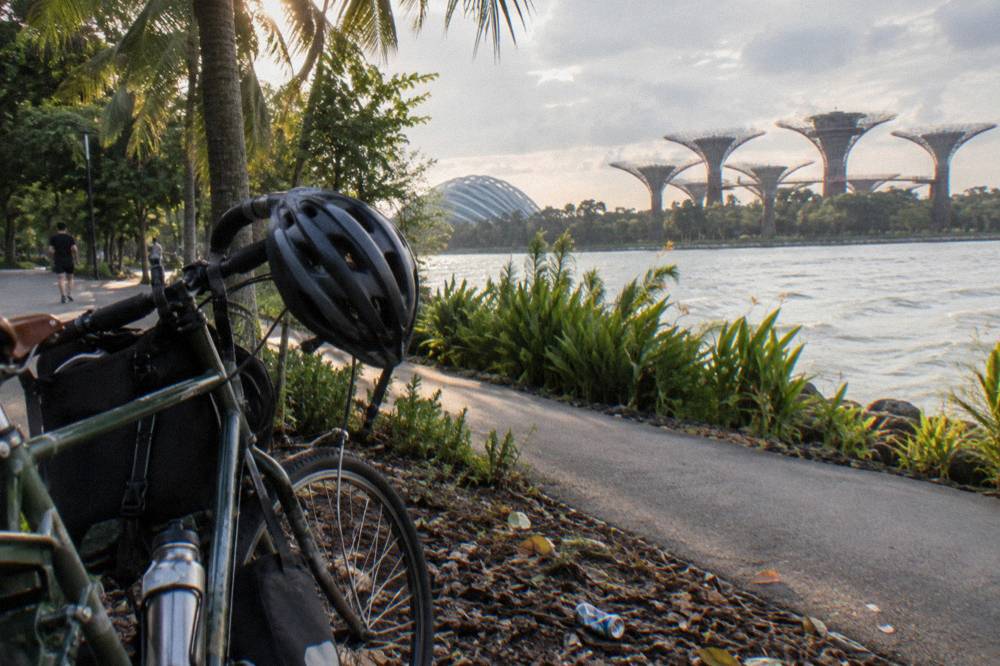
In practice, guided tours close the gap for you. The Small Group, Max 10 Guests ride run by City Scoot includes helmet use in the ticket, as does Full-Sized Bikes, Small Group from Lets Go Tour Singapore, and the 5-Hour Nature Ride run by The Cycle Startup. The Lion City tour provides a helmet on request indicated at booking. None of this is a legal burden on the operator, it is simply how the better tours are equipped, and it removes the one decision a visitor tends to get wrong when renting independently.
| Surface | Helmet legal status | Source |
|---|---|---|
| Roads | Mandatory, riders and pillion passengers | Road Traffic (Bicycles) Rules |
| Cycling paths and shared paths | Not required by law | LTA device rules |
| Footpaths | Not required by law | LTA device rules |
| Park connectors | Not required; protective gear advised | NParks guidance |
If the helmet question sits inside a broader "is it safe" worry, the honest answer is that Singapore's injury picture is dominated by road behaviour and visibility, both of which a guided ride manages directly: lights after dark, planned crossings, and a guide who knows which junctions to avoid. More on that in the blog post is it safe to cycle in Singapore.
Is It Legal To Cycle On The Pavement In Singapore?
Yes, with two conditions. On ordinary footpaths bicycles are allowed at a maximum of 10 km/h, giving way to pedestrians. But since 1 July 2025, footpaths beside dedicated cycling paths have been converting to Pedestrian-Only Paths, and on those specific paths bicycles and non-motorised personal mobility devices are prohibited, with first offences carrying penalties of up to $2,000 and/or up to three months' imprisonment.
The Pedestrian-Only Path conversion is the biggest rule change of the decade for cyclists, and it is the one most likely to catch a visitor. The affected paths are footpaths sitting directly alongside a dedicated cycling path, and they are marked with pedestrian logos and the words "Pedestrians-Only". More than 200 km of footpaths across areas like Tampines, Punggol, Sengkang, Yishun, Clementi and Toa Payoh have been converted under the initiative. Standalone footpaths and shared paths, usually marked with dotted red edge lines, are unaffected: riders and pedestrians keep sharing them as before. The penalty figures come from LTA's enforcement release, which also notes officers take a measured approach to first-time offenders while holding zero tolerance for speeding and reckless riding.
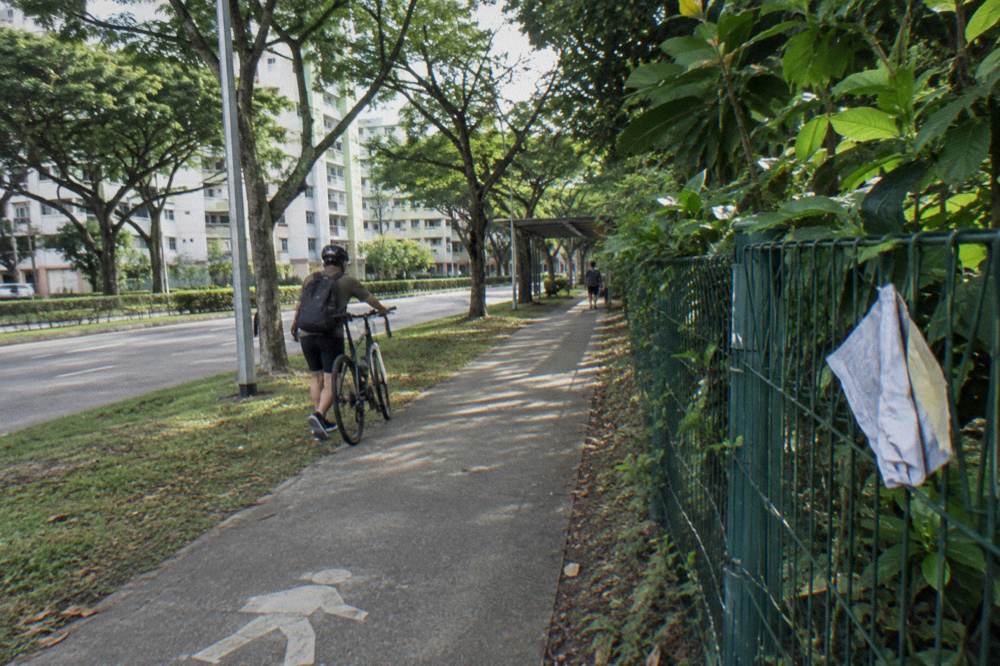
The practical reading for a visitor: if a proper cycling path runs alongside the pavement, ride the path, not the pavement, because the pavement beside it may well be a Pedestrian-Only Path. If there is no cycling path, the footpath is yours at 10 km/h with pedestrians keeping right of way. Since 1 March 2024, manual three-wheeled pedal cycles and recumbents are also allowed on footpaths, cycling paths and roads if they meet device criteria, which matters to riders with balance or mobility needs.
Rules for a first visit can feel like a lot to hold, which is the whole appeal of a guided ride. On a guided loop the guide simply never takes the group down a banned path, and the routing decisions, path type, crossing points, dismounts, are made by someone who rides them daily.
What Equipment Must Your Bicycle Have In Singapore?
A legal bicycle on public paths must weigh 20 kg or less, be no more than 70 cm wide, and have at least one working handbrake on the handlebar; on roads the limits widen to 130 cm width and 260 cm length, still with a handbrake. After dark, front white and rear red lights are required. Power-assisted bicycles are a separate, heavily regulated category and cannot be casually rented as a guided-tour bike.
The device criteria are the quiet backbone of the whole system. Any bicycle a licensed rental operator or tour company hands you will meet them, because the operator would be liable if it did not, but a visitor buying a cheap bike or borrowing one should know the numbers. The full equipment and behaviour list, from lights to the requirement to stop and exchange particulars after an accident, is in the LTA rules and code of conduct.
Power-assisted bicycles deserve a plain warning, because they are the category visitors get wrong. A PAB must be type-approved, sealed, registered with a rear plate, compliant with EN15194, limited to 250W continuous power with assistance cutting out at 25 km/h or when pedalling stops, and capped at 20 kg unladen. Riders must be at least 16 and pass a mandatory theory test before riding on cycling paths or roads. This is a commuter's registered vehicle, not a tourist rental, and every tour here runs on a regular bicycle. The details of the e-bike regime, if you are curious, are in the Singapore e-bike rules guide.
For a typical visitor on a guided ride, the equipment question reduces to one line: the bike, helmet and poncho come with the ticket. Small Group, Max 10 Guests from City Scoot includes bike, helmet, bottled water, a raincoat and bag storage, from $64.03 per person, rated 4.8 across 74 reviews, with a request to arrive 15 minutes early for bike selection and set-up.
- Small group13 of 23
- Private5 of 23
- Group type not stated5 of 23
How Do Group Rides And Guided Tours Fit The Rules?
The road group rules cap a riding group at 5 bicycles in single file or 10 two abreast, with roughly 30 m between groups. Tour operators set their own group size caps, which vary by listing. Most guided tours here list a licensed local guide, and several cap at 8 to 15 riders. Separately, LTA rules let up to 10 bicycles ride two abreast on a road, so larger groups split up.
Group-size caps vary by tour, and roads carry their own device limit. Full-Sized Bikes, Small Group from Lets Go Tour Singapore runs at a maximum of 15 riders. On roads, groups are limited to 10 bicycles riding two abreast. Bike Around Tour Singapore caps its Lion City tour at 12 and its Light to Night tour at 8. The 5-Hour Nature Ride caps at 4, which makes formation moot. None of this needs to be memorised on a guided ride, the guide runs it, but it explains why the caps sit where they do.
Guided tours also shift who carries the insurance question. LTA strongly encourages, but does not mandate, third-party liability cover for non-commercial riders, while businesses and commercial riders must carry it. A tour operator is a commercial rider, so the cover the law merely encourages for an individual is mandatory for the company guiding you. Several tour pages still exclude personal accident insurance from the ticket, the 5-Hour Nature Ride and the Private Pulau Ubin Ride among them, so read the inclusions rather than assuming.
| Tour | Group cap | Duration | From price per person | Reviews |
|---|---|---|---|---|
| Licensed Guide, Poncho Included | 12 | 4 hours | $68.03 | 5.0 across 6,579 |
| Full-Sized Bikes, Small Group | 15 | 4 hours | $64.03 | 5.0 across 1,559 |
| Small Group, Max 10 Guests | 10 | 4 hours | $64.03 | 4.8 across 74 |
| Light to Night, 3 Hours | 8 | 3 hours | $60.03 | 5.0 across 243 |
| 5-Hour Nature Ride | 4 | 5 hours | $84.04 | 5.0 across 37 |
Where the group cap does not apply at all is the Sunday cycling lane: along Tanah Merah Coast Road and West Camp Road, 5am to 11am Sundays, the group-length limit is waived, and the Seletar Sunday Cycling Lane runs buses and bicycles together on Sunday mornings with an extension from 4.6 km to 11.2 km announced for works starting November 2026. Independent riders planning around those lanes have a companion piece in the private versus group bike tour guide.
Where Can You Not Cycle In Singapore?
Cycling is banned on expressways, road tunnels and selected viaducts, on Pedestrian-Only Paths, and at a specific list of parks assets: the four gazetted nature reserves, Henderson Waves bridge, the Forest Walk, the Canopy Walk, Singapore Botanic Gardens, most of Jurong Lake Gardens, Thomson Nature Park and several mangrove and beach boardwalks. On Pulau Ubin, signs direct cyclists to dismount and push on steep slopes.
- Up to 2 hours4 tours
- 3 to 4 hours17 tours
- 5 to 6 hours1 tour
- 7 hours or more1 tour
The banned list reads long but clusters into one idea: protected ecology and crowded elevated structures. The four gazetted nature reserves, Bukit Timah, Central Catchment, Sungei Buloh Wetland Reserve and Labrador, are off-limits to bikes entirely. Boardwalks are consistently no-riding: the marsh garden at West Coast Park, Coney Island's boardwalk, select boardwalks at Changi Beach Park and the mangrove boardwalk at Pasir Ris Park. NParks' cycling page carries the full list, and it is the page to check before routing any independent ride.
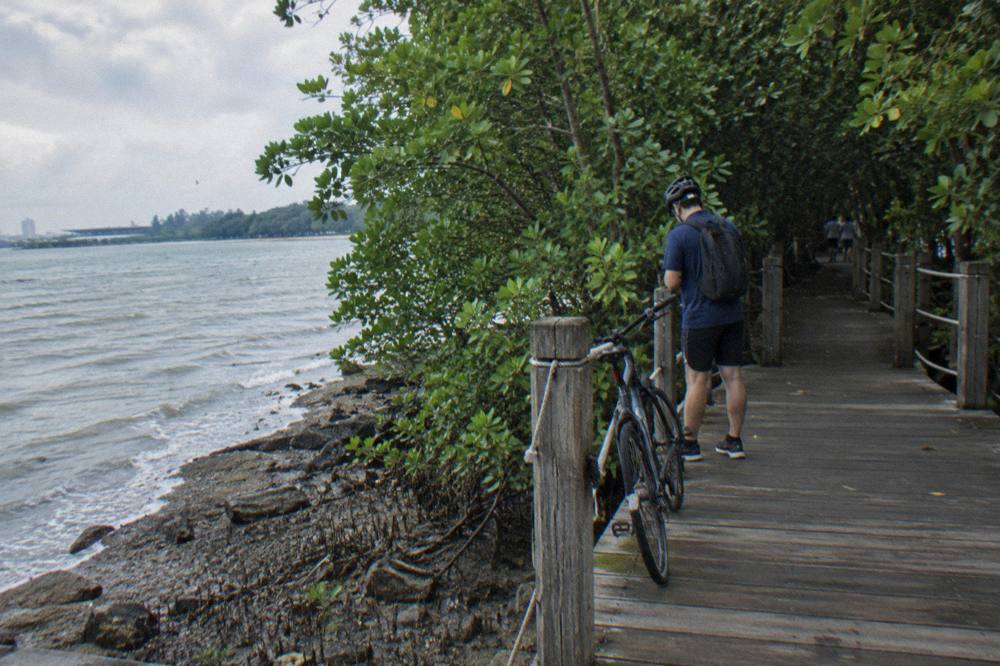
On Pulau Ubin, the rules are behaviour-based rather than blanket: NParks recommends renting or bringing a helmet, signs tell cyclists to dismount and push on steeper slopes, and one section of the Coastal Loop boardwalk at Chek Jawa Wetlands is closed for maintenance from 15 September 2026 with completion expected 30 April 2027, with the Chek Jawa Wetlands tour suspended until further notice. None of the Ubin tours sold here route into the closed boardwalk section, and none of them start anywhere but Changi Point Ferry Terminal or the operator's own Ubin meeting point. The practicalities of getting there are in the how to get to Pulau Ubin with a bike guide.
A handful of connector closures also shape routing: NParks notices list sections of the Tampines, Bedok and Loyang park connectors closed for construction, Punggol Point Park closed for upgrading until 31 December 2027, and a Rail Corridor South section from Henderson Road to Spooner Road closed until an expected 31 July 2027. These closures come and go, they are not fixed geography, and a guide's route adapts around them.
What About Riding In Singapore Heat, Haze And Rain?
The climate sets the real constraints: November to January is the wettest stretch of the year, with December averaging 331.9 mm of rain across 19.3 rain days and November 252.3 mm across 19 days, while May is the hottest month at a 24-hour mean of 28.6 C. Many rides here hand out ponchos as standard equipment, and some run rain or shine, so check each listing before you book.
The numbers come from the Meteorological Service Singapore 1991 to 2020 normals for Changi, and they explain the shape of every tour schedule on the site. The deepest-dry month is February, at 105.1 mm, and the sunniest is also February at 7.0 sunshine hours per day, which makes the first quarter the statistically kindest window for a long ride. The northeast monsoon, December into early March, and the second inter-monsoon of October and November bring the heavy months, yet tours run year-round because the rain arrives in bursts rather than all day, and operators from Bike Around Tour Singapore upward describe their rides explicitly as rain-or-shine activities with a disposable poncho in the ticket.
| Month | Mean temp C | Rainfall mm | Rain days | Sunshine h/day |
|---|---|---|---|---|
| January | 26.8 | 221.6 | 13.4 | 5.8 |
| February | 27.3 | 105.1 | 8.5 | 7.0 |
| May | 28.6 | 164.3 | 14.5 | 6.0 |
| October | 27.9 | 168.3 | 15.0 | 5.0 |
| November | 27.2 | 252.3 | 19.0 | 4.4 |
| December | 26.8 | 331.9 | 19.3 | 4.3 |
Heat is the subtler constraint. Daily maxima sit in the low 30s, and the inter-monsoon months run humid, with a mean annual relative humidity of 82 percent, so a 4-hour ride is as much a hydration exercise as a sightseeing one. Free cancellation is standard across the tours here, on the listing terms, which matters when a forecast turns between booking and ride day. The month-by-month picture, including which windows suit which rides, is in the best time to cycle in Singapore guide, and the wet-day playbook is in cycling in Singapore in the rain.
The sunrise format is the local answer to both heat and rain: start before the traffic, finish before the heat. Sunrise Ride, Local Breakfast from Punggol Field runs 3 to 4 hours from $48.02 per person, breakfast and souvenir included, capped at 5 riders, and it is the quietest way to see the north-east coast.
Between the path rules, the road rules and the weather, the case for a guided first ride in Singapore writes itself: the guide absorbs the rulebook, the bike arrives compliant, and the route skips every path that is closed, banned or unwise. If you're still weighing whether the city justifies the effort at all, our piece on whether Singapore actually works for casual cycling gives you the honest verdict before you book anything.
Common Questions About Singapore Cycling Rules For Visitors
Can Cyclists Cycle On The Road In Singapore?
Yes. Bicycles are allowed on nearly all roads, ridden with traffic, as close as practicable to the far left edge, in single file on single-lane roads and during bus lane hours, with a helmet on and lights after dark. Expressways, road tunnels and selected viaducts are excluded. Groups are capped at 5 devices single file or 10 two abreast.
Is It Illegal To Cycle Without A Helmet In Singapore?
Only on roads, where helmets are mandatory for riders and pillion passengers. On footpaths, cycling paths and shared paths there is no helmet law, though NParks advises protective gear on the park connectors, and most guided tours include or offer a helmet with the bike.
Is It Legal To Cycle On The Pavement In Singapore?
Yes, on ordinary footpaths, at a maximum of 10 km/h and giving way to pedestrians. The exception is Pedestrian-Only Paths, footpaths beside dedicated cycling paths converted since 1 July 2025, where bicycles are prohibited and first offences carry penalties of up to $2,000 and/or three months.
What Is The Speed Limit For Bikes On Singapore Paths?
10 km/h on footpaths and 25 km/h on cycling paths and shared paths. On roads, bicycles follow the posted road speed limit. Motorised personal mobility aids are capped at 6 km/h on public paths from 1 June 2026.
Do The Rules Differ For Tourists?
No. Tourists follow the same Active Mobility Act rules as residents, on the same paths at the same limits. The difference a guided tour makes is practical rather than legal: the operator supplies a compliant bike, a licensed guide routes around banned and closed paths, and group caps keep the ride inside one legal formation.
Can Visitors Rent An E-Bike For A Guided Tour?
No guided e-bike tour is listed on this site. Power-assisted bicycles in Singapore must be type-approved, sealed, registered and ridden by someone at least 16 who has passed a mandatory theory test, which makes them a commuter vehicle rather than a tourist rental. Every guided tour here runs on a regular bicycle.