Singapore E-Bike Rules: What Visitors Can Ride And Where
Singapore regulates power-assisted bicycles tightly: riders must be at least 16, pass a theory test, and ride a registered, sealed machine. Visitors cannot casually rent one, so most guided rides here use regular bikes.
Short answer
Singapore treats a power-assisted bicycle (PAB) as a regulated vehicle: the rider must be at least 16, pass the PAB theory test, and use a type-approved, sealed and registered bike capped at 25 km/h. PABs are banned on footpaths and Pedestrian-Only Paths. No casual PAB rental for visitors is verified, so guided rides here use regular bikes, from $47 per person.
Singapore is one of the easiest cities in Asia to ride a bicycle in, and one of the hardest to ride an e-bike in. The power-assisted bicycle, called a PAB in local law, sits inside a dense web of rules under the Active Mobility Act: the machine itself must be type-approved, sealed and registered, the rider must be at least 16 and must have passed a theory test before touching a cycling path or a road. That is a lot of ceremony for a bicycle with a small motor, and it exists because Singapore shares its paths with a very dense pedestrian population. The Land Transport Authority sets it out in its Active Mobility rules and code of conduct, which this page walks through in plain language.
For a visitor, the practical outcome is simple and slightly surprising. You cannot walk off a plane and rent a PAB the way you might rent a scooter in Bali or a moped in Vietnam: no casual PAB rental for tourists is verified anywhere in the city, and the machines that do exist are personal, registered vehicles owned by residents who passed their tests. What you can rent, easily and cheaply, is a regular bicycle, and every guided tour sold through Singapore Bike Tours runs on one. The city's tour operators made that choice for good reasons, and the rules explain why.
This guide covers what counts as an e-bike here, who is allowed to ride one, where it may go, what the machine must comply with, and what happens if you get it wrong. It closes with the decision most readers are actually making: whether to chase a PAB at all, or book a regular-bike guided ride that skips the paperwork entirely. If you want the broader picture for pedal bikes, the companion page on cycling rules for visitors covers helmets, path etiquette and group limits without the PAB detail.
What Counts As An E-Bike Under Singapore Law?
In Singapore an e-bike means a power-assisted bicycle, or PAB: a bicycle with an electric motor that assists only while you pedal, cutting off at 25 km/h or sooner. Anything faster, anything throttle-driven, anything self-balancing is a different device class with different rules, and unregistered or non-compliant machines are banned from public paths and roads altogether.
The definition matters more than visitors expect, because the words "e-bike" and "electric scooter" get used loosely and the law does not. A PAB must meet the EN15194 standard for the market, carry a maximum continuous power of 250 watts, and weigh no more than 20 kg unladen. The motor must stop helping the moment you stop pedalling, and it must stop helping at 25 km/h even if you keep going. Anything that drives itself without pedalling, like a scooter-style device, is classified as a personal mobility device or PMD, not a PAB, and PMDs have their own separate rulebook.
The table below keeps the device classes straight, because mixing them up is the single most common way visitors get into trouble.
| Device | What it is | Where it may go | Key limits |
|---|---|---|---|
| Bicycle (regular) | Pedal cycle, no motor | Cycling paths, shared paths, most roads, footpaths unless marked Pedestrian-Only | 10 km/h on footpaths, 25 km/h on shared and cycling paths |
| PAB (power-assisted bicycle) | Pedal cycle with compliant motor assist | Cycling paths, shared paths, roads | 25 km/h assist cutoff, 20 kg max, rider 16 and over, theory test |
| PMD (e-scooter and similar) | Motorised personal mobility device | Cycling paths, shared paths; never footpaths or roads | 25 km/h on shared paths, 10 km/h on footpaths where still allowed |
| PMA (mobility aid) | Motorised wheelchair or scooter for mobility needs | Footpaths and shared paths | 6 km/h on public paths from 1 June 2026 |
Two boundaries deserve emphasis. First, PABs are not allowed on footpaths at all, and since 1 July 2025 they are not allowed on footpaths converted to Pedestrian-Only Paths either: those are the paths beside dedicated cycling infrastructure that LTA has been converting across housing estates since Toa Payoh went first in January 2025. Second, the roads that a PAB may use exclude expressways and tunnels, same as a regular bike. A compliant PAB rider on a cycling path and a regular cyclist on the same path follow nearly identical etiquette: give way, slow at attention zones, keep left except when overtaking.
So when this site says "e-bike," it means a PAB in the strict sense. There is no guided e-bike tour sold here: every ride on the tour pages is a regular, non-electric bicycle with a guide, chosen precisely because a regular bike carries none of the registration, testing or path restrictions that a PAB does. That point comes up again later, but it is worth fixing now because search results and rental shop chatter often blur it.
- Bike23 of 23
- Guide19 of 23
- Drinks14 of 23
- Helmet11 of 23
- Meal or food stop8 of 23
A listing that does not mention an item is not counted as leaving it out.
Who Can Ride An E-Bike In Singapore?
Riders must be at least 16 years old before riding a PAB on a cycling path or a road, even with an adult supervising, and must have passed the mandatory PAB theory test first. The bike must be registered to a plate, and children under 16 may not ride as pillion passengers on one either. There is no visitor exemption of any kind.
The age floor is absolute. LTA's rules state that riders under 16 must not ride a PAB on cycling paths or roads even if supervised, and that no passenger under 16 may be carried on one. A 15-year-old visiting cyclist can ride a regular bicycle across the city quite legally, with a helmet on the roads, but the same teenager cannot touch a PAB. Families weighing options may find the page on cycling in Singapore with kids more useful than the PAB rulebook, since regular bikes are what family rides actually use.
The theory test is the second gate. Before riding a PAB on a cycling path or a road, the rider must pass the mandatory PAB theory test, which covers path rules, device limits and rider conduct. It exists to confirm that the person holding the throttle-equivalent understands where the machine may go. For a resident who commutes daily, that is a reasonable one-time hurdle. For a visitor staying four days, it is a barrier that makes no sense to cross, which is a big part of why no casual PAB rental market for tourists exists.
Enforcement is real, not theoretical. Police figures reported in 2026 covering the second half of 2025 counted about 650 cyclists issued summonses, for violations including failing to obey traffic signals and failing to wear helmets on roads. Those summonses skew toward regular cyclists on roads rather than PAB riders, but the number tells you the authorities are watching, and LTA runs joint targeted operations with police at hotspot paths. The measured, considered approach the authority describes applies to first-time path mistakes, not to speeding or reckless riding, for which it states zero tolerance.
| Requirement | Regular bicycle | PAB |
|---|---|---|
| Minimum rider age | None for paths; road use expects adult judgement | 16 and over, no exceptions |
| Theory test | Not required | Mandatory before riding paths or roads |
| Registration | Not required | Type-approved, sealed, registered, rear plate |
| Helmet | Mandatory on roads; advised on park connectors | Mandatory on roads; advised on paths |
| Where banned | Pedestrian-Only Paths, expressways, tunnels | Footpaths, Pedestrian-Only Paths, expressways, tunnels |
| Casual rental for visitors | Widely available | Not verified anywhere |
For a visitor, the honest summary of that table is this: the PAB column describes a resident's commuter machine, and the regular-bike column describes something you can book a seat on within the hour. The guided side of this site lives entirely in the second column, which is why the three most-booked styles of city ride here, the classic four-hour heritage circuit, the full-sized-bike small-group ride, and the short night loop, all run on pedals alone.
Where Can You Ride An E-Bike In Singapore?
A PAB may use cycling paths, shared paths and ordinary roads, at a 25 km/h cap on the paths and the road speed limit on the streets. It may never use footpaths, Pedestrian-Only Paths, or park boardwalks, and it must follow pedestrian-priority etiquette everywhere it does ride.
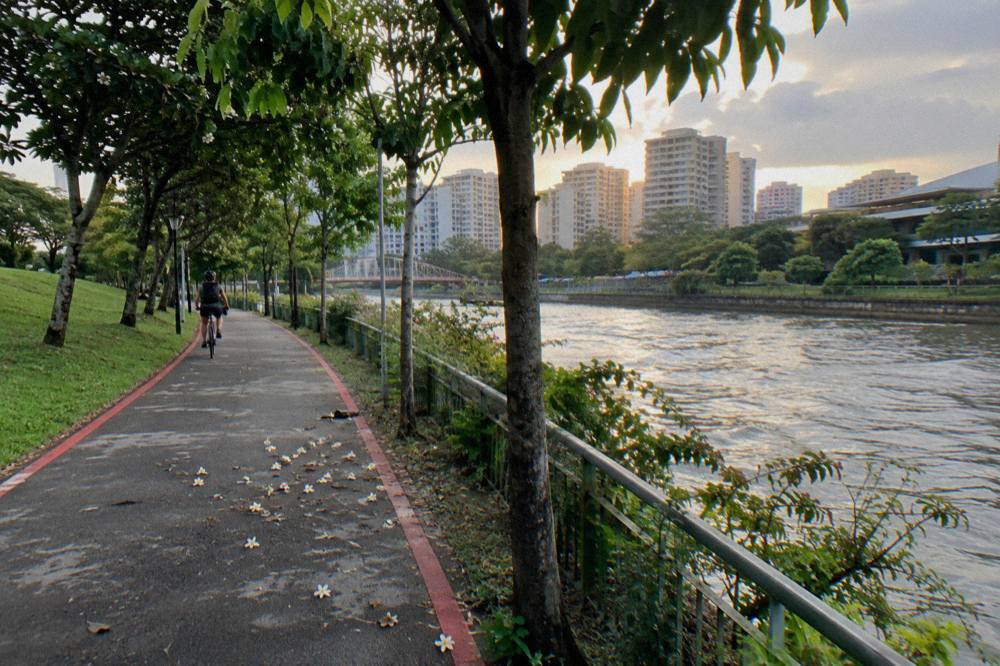
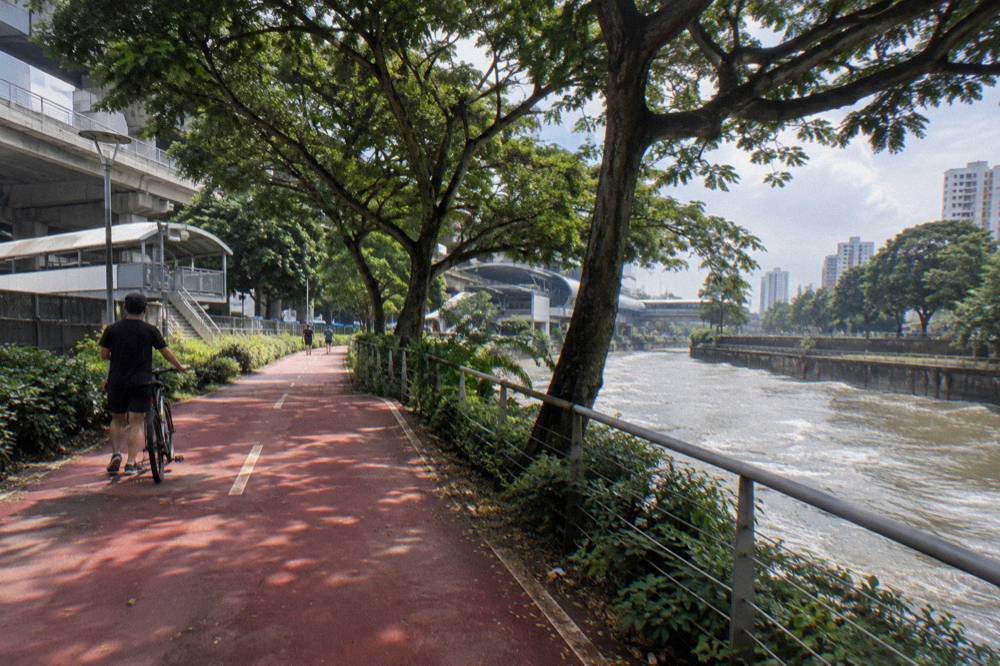
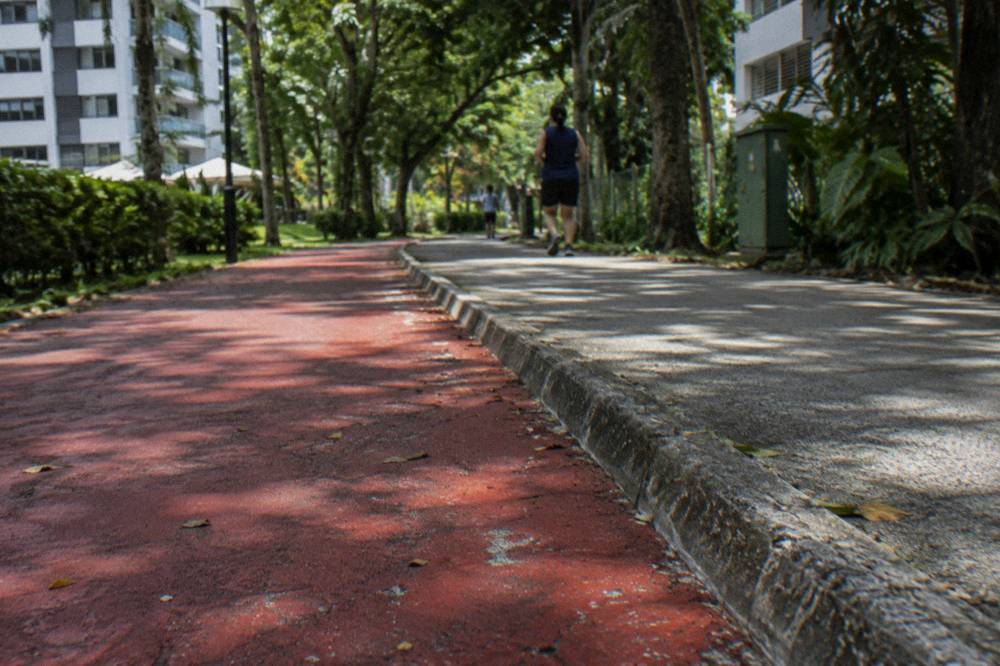
The path map is where PAB rules and regular-bike rules converge. Cycling paths, marked with a cyclist logo and typically surfaced in red or dark grey, carry a 25 km/h limit for both bicycles and PABs. Shared paths, marked with both a cyclist and a pedestrian logo, carry the same 25 km/h. Footpaths, the unmarked pavements beside roads and inside housing estates, carry 10 km/h for the devices still allowed on them, and since 1 July 2025 that list no longer includes bicycles of any kind where the footpath has been converted to a Pedestrian-Only Path beside a cycling path. LTA's own device-by-path summary sets out the current matrix, and the 25 km/h shared-path figure is also the number the Ministry of Transport has defended publicly as matching normal cycling speed.
- Up to 2 hours4 tours
- 3 to 4 hours17 tours
- 5 to 6 hours1 tour
- 7 hours or more1 tour
The Park Connector Network is where most visitors actually ride, and it is built around the same rules. NParks describes over 350 km of park connectors across the island, a mix of shared paths with continuous red edge lines and segregated stretches where a 10 km/h footpath runs beside a cycling path. The etiquette pages ask cyclists to give way to pedestrians, slow down at red-dotted attention zones near bus stops and playgrounds, keep left except when overtaking, and ride single file where the path narrows. None of that changes for a PAB, except that a PAB never belongs on the pedestrian side of a segregated pair.
Boardwalks and nature areas are a hard no for both device classes, and a visitor on a PAB should treat them the same way a visitor on a regular bike must. NParks lists cycling as prohibited at the four gazetted nature reserves, the Henderson Waves bridge, the Forest Walk, the Botanic Gardens, most mangrove boardwalks and the Coney Island boardwalk, among others. On Pulau Ubin, the signposted wetland boardwalks are dismount-and-push territory, and signs at the steeper slopes tell cyclists the same. The practical rule that covers all of it: where a path is marked for pedestrians only, or where a surface is a boardwalk, get off and walk, whatever is powering the wheels.
Night riding adds lights, not new paths. Riders on paths or roads need a front white light and a rear red light or reflector in the dark, and reflective clothing is encouraged. The rules do not change after sunset, but the visibility of a 25 km/h machine among evening joggers does, which is part of why the short guided night loops around Marina Bay keep their groups small and their pace conversational. The fuller night-riding picture, including lighting detail and route character, sits on the Singapore night cycling page.
Can Tourists Rent An E-Bike In Singapore?
No casual PAB rental for visitors is verified in Singapore. The rental market serves regular bicycles, from dockless shared bikes to shop rentals and guided tour fleets, and every guided ride sold through this site uses a regular, non-electric bike with a licensed guide, so no test, registration or age gate applies. If you're still weighing whether a powered option makes sense for your trip, our guide on renting an electric bike in Singapore as a visitor explains exactly where the legal roadblocks sit and what you can ride instead.
That answer surprises people who have rented e-bikes in Hanoi, Chiang Mai or half of Europe, and the mechanics behind it are worth understanding. A rental PAB would have to be type-approved, sealed and registered with a rear plate, kept compliant with EN15194, capped at 250 watts and 20 kg, and ridden only by customers aged 16 and over who have each passed the theory test before setting off. A shop would need to verify age, test status and registration on every customer, for a machine whose market in Singapore is overwhelmingly residents commuting to work. The economics never worked, so the shops never opened, and the rental scene settled on what anyone can ride: regular bikes.
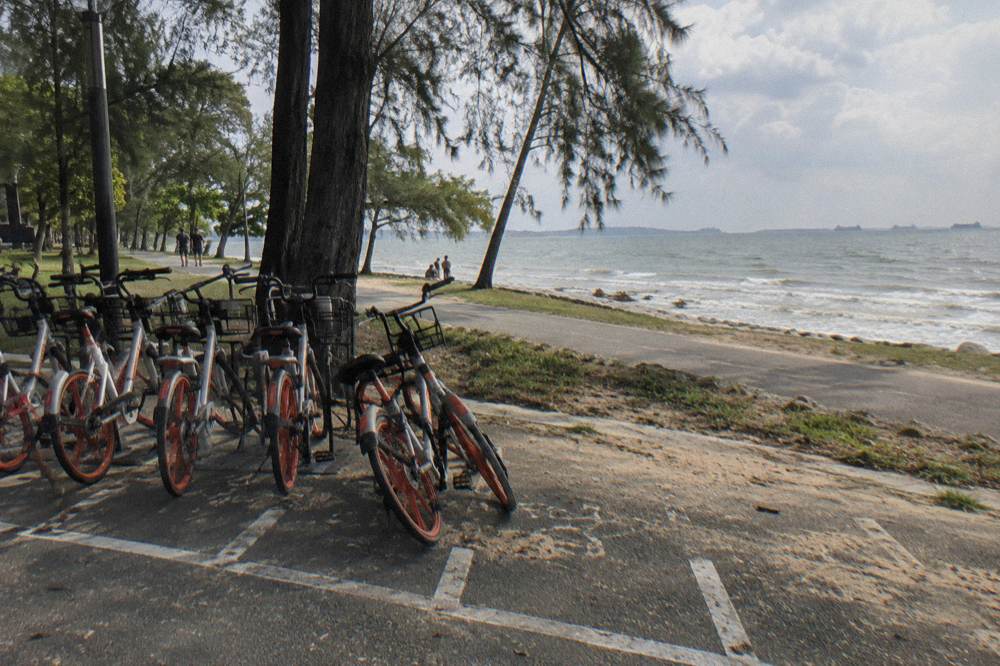
The shared-bike system is the clearest illustration. Only two operators hold LTA licences for shared bicycles in the city, and both run regular, non-motorised fleets unlocked by app, parked in designated zones, with a $5 penalty for ending a trip outside one. The bike sharing overview covers how those fleets work and what a ride costs to plan around, and the key point for this page is that neither operator offers anything with a motor.
What a visitor can book immediately is a guided regular-bike ride, and the good ones remove every remaining friction. The Full-Sized Bikes, Small Group ride from Lets Go Tour Singapore runs four hours at a cap of 15 riders, from $64.03 per person with the total depending on group size, and includes the bike, a helmet, a licensed English-speaking guide, one local snack, one local drink, bottled water and a rain poncho, plus bag storage at the shop. It carries a 5.0 rating across 1,559 reviews, which is the kind of review pool a visitor can trust. There is no test to pass, no plate to check, no age gate beyond ordinary adult judgement, and free cancellation applies on the booking page.
Rental costs for regular bikes, shop by shop and area by area, sit on the bike rental in Singapore page, and East Coast Park and Pulau Ubin get their own area guides. None of those pages lists a PAB rate, because none exists to list. If a rental shop ever offers you a "motorbike-style" e-bike or a scooter without pedals, it is either a PMD you cannot legally ride on footpaths or an unregistered machine, and either way the safest answer is to walk out and book a pedal ride instead.
What Device Standards Must An E-Bike Meet?
A road-legal PAB in Singapore must be type-approved and sealed by LTA, registered with a rear registration plate, compliant with EN15194, weigh 20 kg or less unladen, and have a motor of no more than 250 watts continuous that assists only while pedalling and cuts off at 25 km/h. Width is capped at 70 cm on paths and 130 cm on roads, and road use adds a 260 cm length cap.
These are not aspirational specs; they are the difference between a machine you may ride and one that gets impounded. The orange seal fixed to the frame is LTA's physical proof of type approval, and the rear plate ties the machine to its registration record. A visitor who somehow borrowed a resident's PAB would be riding a registered vehicle, with the plate to show for it. Tampering with the seal, delimiting the motor or fitting a throttle converts the machine into something that may not be used on any public path or road, and enforcement targets non-compliant devices directly.
Key E-Bike (PAB) Figures For Singapore Visitors
Numbers that decide whether and where you can ride a power-assisted bicycle
- 25 km/hPAB assist cutoffMotor stops helping at this speed even if you keep pedalling
- 250 wattsMax continuous powerPAB must also meet EN15194 standard
- 20 kgMax unladen weightApplies to compliant PABs
- 16Minimum rider ageTheory test also mandatory; no visitor exemption
- 10 km/hFootpath speed limitApplies to devices still allowed on footpaths; PABs are not
- 350 kmPark Connector NetworkNParks describes over 350 km of park connectors islandwide
Regular bicycles face a much lighter version of the same device rules, and the comparison shows how little the motor is worth on paper. On public paths a bicycle must weigh no more than 20 kg, be at most 70 cm wide, and have at least one working handbrake on the handlebar. On roads the width allowance stretches to 130 cm and a handbrake is still required. There is no registration, no seal, no standard to certify, no plate. A rental bike from a tour operator meets every one of those criteria by default, which is one more reason the guided industry never bothered with PABs.
- Jan222 mm
- Feb105 mm
- Mar152 mm
- Apr164 mm
- May164 mm
- Jun135 mm
- Jul147 mm
- Aug147 mm
- Sep125 mm
- Oct168 mm
- Nov252 mm
- Dec332 mm
Rain-days run from 8.5 (driest month) to 19.3 (wettest month).
The physics also matter less in Singapore than the marketing suggests. The city is flat to a degree that surprises anyone who has cycled in Hong Kong or Taipei, its climbs are bridge ramps and underpass grades, and the park connectors were built on canal corridors that run level for kilometres. A 25 km/h assist cutoff also means a fit rider on a regular bike keeps pace with a PAB on the flat anyway. The motor buys almost nothing here that a lower gear and a water bottle do not, and the climate normals back that up: mean daily maximums at Changi sit around the low 30s C in every month, per the Meteorological Service Singapore 1991 to 2020 normals, so the sweat comes from the sun more than the gradient.
What Happens If You Break E-Bike Rules In Singapore?
Riding a bicycle or PAB on a Pedestrian-Only Path can draw penalties of up to $2,000 and/or up to three months imprisonment for a first offence, under enforcement that began 1 July 2025. Speeding and reckless riding draw zero tolerance, while genuine first-time path mistakes are handled with what LTA calls a measured and considered approach.
The Pedestrian-Only Path penalty is the number that gets attention, and it deserves precision. The enforcement release that announced the 1 July 2025 start states the up to $2,000 fine and up to three months imprisonment for first-time offences of riding a bicycle or non-motorised PMD on a converted path. That maximum belongs to this offence specifically. It is not a general cycling fine, and any page that tells you "cycling fines are up to $2,000" has garbled the rule.
| Offence | Who it applies to | Stated penalty |
|---|---|---|
| Riding on a Pedestrian-Only Path | Bicycles and non-motorised PMDs | Up to $2,000 and/or up to 3 months imprisonment, first offence |
| Speeding or reckless riding on paths | Any device | Zero tolerance, penalties under the Active Mobility Act |
| Riding a PAB under age 16 | Riders and supervising adults | Prohibited outright, penalties under the Act |
| Riding a non-compliant or unregistered PAB | Any rider | Device may not be used on public paths or roads |
| Riding a PAB without passing the theory test | Riders 16 and over | Prohibited on cycling paths and roads |
Visitors should read that table as descriptive rather than terrifying. The odds of a tourist on a guided regular-bike ride encountering any of it are close to nil, because a licensed guide keeps the group on cycling paths and shared park connectors, and the paths a visitor would mistakenly enter are signposted with pedestrian logos and "Pedestrians-Only" wording in the estates where conversion has happened. The realistic visitor risk is not enforcement but the wrong-device rental, which is why the earlier advice stands: if a shop offers something with a motor and no plate, decline it.
The broader enforcement picture is steady rather than dramatic. LTA's Active Mobility Enforcement Officers patrol paths, run targeted operations with police at hotspots, and use speed detection and signage rather than checkpoints. Rules tightened through 2026 in areas mostly affecting mobility devices rather than tourists: from 1 June 2026 motorised personal mobility aids are capped at 6 km/h on public paths, with registration requirements phasing in, and further device-sale rules are scheduled from Q2 2027. A visitor on a regular bike with a helmet touches almost none of this.
The insurance point rounds out the picture. LTA strongly encourages, but does not mandate, third-party liability insurance for non-commercial riders; it is mandatory for businesses and commercial riders. Tour operators fall on the commercial side of that line, though insurance is not a given: only one Ubin tour in our roster includes accident insurance, and most listings name it as excluded, so check the inclusions before you book. Check the inclusions on the specific tour's booking page rather than assuming, since coverage varies by operator.
Why Guided Rides In Singapore Use Regular Bikes
Every guided tour sold through this site runs on a regular, non-electric bicycle, and that is a deliberate fit with the rules rather than a cost saving. A regular bike needs no registration, no theory test and no age gate, can use every path a PAB can plus footpaths where still permitted, and lets a licensed guide set a pace that suits the stops, the food and the photos.
The economics of a tour fleet push the same way as the law does. A PAB fleet would need registration plates, seals, insurance and test-verified customers, for a motor that cuts off at 25 km/h on an island with no hills. A regular fleet needs bikes, helmets, ponchos and water, and any visitor of riding age can join within minutes of booking. When rain comes, and it comes on roughly 8 to 19 days a month depending on season, both machines stop equally, because operators here describe their tours as rain-or-shine rides with ponchos handed out rather than cancelled afternoons.
- Small group13 of 23
- Private5 of 23
- Group type not stated5 of 23
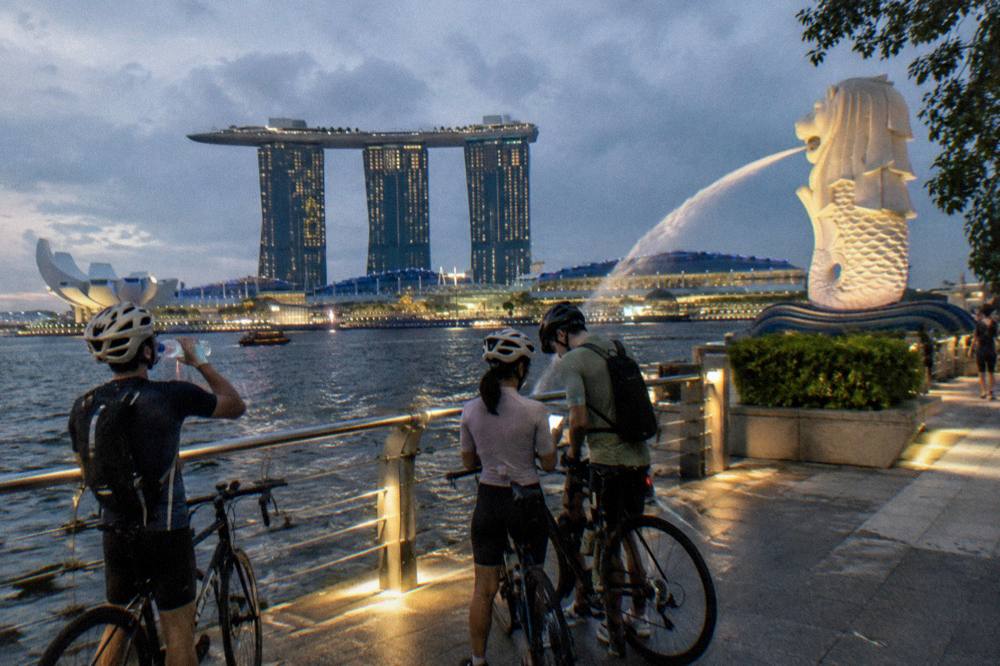
The night rides show the model at its best. The Marina Bay Night Ride, 2 Hours from Lets Go Tour Singapore covers the lit waterfront at a conversational pace, capped at 15 riders, from $48.02 per person with the total depending on group size, bike and helmet included, water and poncho in the ticket, and a 4.9 rating across 598 reviews. Two hours of night air around the bay is a distance almost anyone manages on a regular bike, and the stops for photos are the point of the route, not a pause in it.
The food rides make the same argument with chopsticks. A guided food tour is a ride between hawker stops, not a workout, so the machine is a chair between snacks. Rides like the Downtown Food Ride, Meal Included and the Katong Food Ride, Meal Included are built around exactly that rhythm, and the food tour options page compares the routes and what each one feeds you. An assist motor would change nothing about a ride that spends a third of its time parked beside a hawker table.
None of this is a case against e-bikes in general. In hillier cities a motor is the difference between riding and not riding, and Singapore residents who commute on registered PABs have made a rational choice within a working system. The point is narrower: in this city, on these paths, for a visitor riding for a few hours, the PAB's extra requirements buy no extra experience, and the guided industry prices accordingly, with regular-bike rides starting from $47 per person.
E-Bike Or Regular Bike: Which Suits A Visitor Better?
For a short visit, a regular bike wins on every axis that matters: it is rentable without a test or registration, it can go everywhere a PAB can plus the footpaths still open to bicycles, it costs less to rent or ride, and on flat Singapore terrain the 25 km/h assist cutoff means the motor adds almost nothing anyway. A PAB only makes sense for a resident commuting daily.
The cost comparison is blunt because the PAB side of it barely exists. On the regular-bike side, guided rides run from $47 per person for a two-hour river and Marina Bay loop via the F1 track up to $104.05 for a four-hour food ride with tastings included, with the mid-range city rides sitting from $64.03 per person for the Full-Sized Bikes, Small Group ride and from $68.03 per person for the Licensed Guide, Poncho Included tour. On the PAB side there is no verified per-day rental figure to print, because there is no verified casual rental to price. The decision is therefore not between two prices but between a bookable ride and an unbookable device class. If you want to see exactly what those guided ride prices buy you, the cost and value breakdown of guided bike tours in Singapore covers what is included and when renting on your own makes more sense.
| Guided regular-bike ride | Length | Group cap | From, per person | Reviews |
|---|---|---|---|---|
| Marina Bay Night Ride, 2 Hours | 2 hours | 15 | $48.02, total depends on group size | 4.9 across 598 reviews |
| Full-Sized Bikes, Small Group | 4 hours | 15 | $64.03, total depends on group size | 5.0 across 1,559 reviews |
| Licensed Guide, Poncho Included | 4 hours | 12 | $68.03 | 5.0 across 6,579 reviews |
| Small Group, Max 10 Guests | 4 hours | 10 | $64.03 | 4.8 across 74 reviews |
Ease of access favours the regular bike even more than the price does. The Small Group, Max 10 Guests city ride from City Scoot asks riders to arrive 15 minutes early for bike fitting and setup, hands over a bike, helmet, water and raincoat, stores bags at the shop, and rolls out from Esplanade Mall with a licensed guide, all without a single question about your age or test status. A PAB equivalent would need you to prove 16 and over and theory-test-passed before the kickstand went up. One of those is a holiday; the other is paperwork.
Weather tolerance is identical between the classes, and Singapore weather rewards knowing it in advance. November averages 252.3 mm of rain across 19.0 rain days on the 1991 to 2020 Changi normals, with December wetter still at 331.9 mm, while February is the driest month at 105.1 mm and the sunniest at 7.0 hours of sunshine a day. Neither machine rides in a downpour better than the other, and operators respond the same way regardless of what is in the frame: ponchos, slower pace, shelter stops. The best time to cycle in Singapore page works the seasonal arithmetic out in full.
The last word goes to fit. If you live here and commute through daily heat, a registered PAB is a sensible machine inside a strict but coherent system. If you are visiting for a week, the theory test, the registration check and the path exclusions are friction with no payoff, because the experiences worth having here, the heritage lanes, the hawker stops, the lit bay at night, all sit comfortably within regular-bike range. Book the pedal ride, take the poncho when offered, and spend the minutes you saved on the food.
Common Questions About E-Bike Rules In Singapore
What Counts As An E-Bike Under Singapore Law?
A power-assisted bicycle, or PAB: a pedal bicycle whose electric motor assists only while you pedal and cuts off at 25 km/h, with maximum 250 watts continuous power, 20 kg unladen weight, EN15194 compliance, and LTA type approval, seal and registration with a rear plate. Throttle devices and e-scooters are classified separately as PMDs.
Who Can Ride An E-Bike In Singapore?
Riders aged 16 and over who have passed the mandatory PAB theory test, riding a registered, compliant machine. There is no supervision exception for under-16s, and no passenger under 16 may be carried. Tourists follow exactly the same rules as residents, with no visitor exemption.
Where Can You Ride An E-Bike In Singapore?
On cycling paths and shared paths at 25 km/h, and on ordinary roads at the road speed limit. A PAB may never use footpaths or Pedestrian-Only Paths, and is excluded from expressways, tunnels and the same boardwalks and nature areas that ban regular bikes. Front white and rear red lights are required at night.
Can Tourists Rent An E-Bike In Singapore?
No casual PAB rental for visitors is verified in Singapore. Rental fleets, shared bikes and guided tours all use regular, non-electric bicycles, which need no registration, theory test or age gate. Every guided ride sold through this site runs on a regular bike.
What Happens If You Break E-Bike Rules In Singapore?
Riding on a Pedestrian-Only Path carries penalties of up to $2,000 and/or up to three months imprisonment for a first offence, under enforcement that began 1 July 2025. Speeding and reckless riding meet zero tolerance, while genuine first-time path mistakes are handled with what LTA describes as a measured and considered approach.
Is A Guided E-Bike Tour Available In Singapore?
No. No guided e-bike tour exists here, none is sold on this site, because the registration, theory-test and path rules make a PAB tourist fleet unworkable. Guided rides here use regular bikes with local guides, from $47 per person.