Electric Bike Rental In Singapore: Rules And Where To Ride
Singapore regulates power-assisted bicycles tightly: registration, a minimum age of 16, a theory test and a sealed, type-approved motor. For most visitors that rules out a casual e-bike rental, and the practical alternative is a guided ride on a regular bike.
Short answer
Renting a power-assisted bicycle in Singapore is not a casual option for visitors. The rider must be 16 or older, pass a mandatory theory test, and the bike itself must be type-approved, sealed and registered with a rear plate. Rental shops here overwhelmingly rent regular bikes, and every guided ride covered on this site uses a regular, non-electric bike.
Singapore is one of the easiest cycling cities in Asia to plan for, and one of the hardest cities in which to rent a motor-assisted bicycle. The two facts are connected. The same Active Mobility Act that gave cyclists a fast, well-marked network of paths also fenced off power-assisted bicycles behind registration, a minimum age and a mandatory theory test, so the electric option most visitors imagine when they type a search like "electric bike rental Singapore" simply is not sitting in a shop waiting for them.
What is sitting in shops, and what several licensed operators run daily, is something better suited to a short visit anyway: guided rides on comfortable full-sized regular bikes, with a licensed local guide, water and a rain poncho in the price. This page walks through the rules honestly, explains why the motor-assisted route is a dead end for most tourists, and lays out where a regular bike can legally take you instead. The deeper rule background lives in the companion pages on Singapore e-bike rules and cycling rules for visitors; this one stays focused on the rental question.
Can Tourists Rent An Electric Bike In Singapore?
In practice, no, not as the casual walk-in rental most travellers picture. A power-assisted bicycle here must be type-approved, sealed and registered with the Land Transport Authority and fitted with a rear plate, and its rider must be at least 16 years old and must have passed a mandatory theory test before riding it on any cycling path or road. A shop cannot lawfully hand one to a visitor with none of that in place.
The details matter more than the headline. A power-assisted bicycle, or PAB, is a specific legal category in Singapore, not a marketing one. The motor must comply with the EN15194 standard, cut out at 25 km/h or sooner when the rider stops pedalling, and deliver no more than 250 watts of continuous power. The machine itself must weigh no more than 20 kg, and its frame must carry the seal and plate that prove it passed type approval and registration. Those are conditions attached to the vehicle, and they do not lapse because the rider is a tourist holding a valid passport.
Then the conditions attach to the person. Riders under 16 may not ride a PAB on cycling paths or roads even with supervision. Anyone who wants to ride one on a cycling path or a road must first pass the mandatory PAB theory test, which is administered online in a way that assumes a local identity and a lasting relationship with the licensing system. None of this is hostile to visitors; it is simply a framework built for residents who commute daily on the same registered machine.
The result is what the rental market reflects. Shared-bicycle licences in Singapore cover only regular bikes, and shops that rent to tourists overwhelmingly rent regular bikes too. Whether any individual shop will hand over a registered PAB to a visitor without a theory-test pass is not something this page can verify, because it depends on the shop and on paperwork this site has not confirmed. The honest answer to a traveller asking for "an e-bike rental" is that the category barely exists here as a tourist product, and hunting for it can burn half a day of a short trip.
What Exactly Counts As A Power-Assisted Bicycle In Singapore?
A PAB is a bicycle whose electric motor assists only while the rider pedals, cuts out at 25 km/h, delivers no more than 250 watts of continuous power, and rides on a machine weighing at most 20 kg that is type-approved, sealed and LTA-registered with a rear plate. Anything with a twist throttle that runs without pedalling, or a motor stronger than the cap, is not a PAB and is not legal on public paths.
The distinction between "electric bike" in the loose sense and PAB in the legal sense is where most confusion starts. Singapore law does not have a general category for small electric motorcycles dressed as bicycles. A throttle-driven device that propels itself without pedalling falls outside the PAB rules and, unless it is separately type-approved as some other class of vehicle, it is prohibited on public paths and roads outright. Genuine PABs are pedal-assist machines by definition: the motor only helps while the legs are working.
| Requirement | What the law expects |
|---|---|
| Motor power | No more than 250 W continuous |
| Assistance cut-off | 25 km/h, or sooner if pedalling stops |
| Standard | EN15194 compliance |
| Weight | No more than 20 kg |
| Width on paths | No more than 70 cm |
| Markings | Orange seal, LTA registration, rear plate |
| Rider age | 16 or older for cycling paths and roads |
| Theory test | Mandatory pass before riding on paths or roads |
| Helmet | Mandatory when riding on roads |
Every row in that table traces back to the Land Transport Authority's published rules and its device-criteria guidance, summarised on the LTA's rules and code of conduct page. A rider who meets all of them is lawful. A rider who does not is not, and a rental shop that glosses over the age, test or registration rows is not doing that rider any favours.
For a visitor, the takeaway is simpler than the table. Even a fully compliant PAB still needs a compliant rider, and the theory-test row is the one that closes the door. The test is not optional, it is not waived for short stays, and it is the reason this site steers travellers toward guided rides on regular bicycles rather than spending the trip chasing motor assistance.
Where Are Bicycles And Power-Assisted Bikes Allowed To Ride?
Bicycles may ride on roads, on cycling paths and on shared paths, at a maximum of 25 km/h on cycling and shared paths and 10 km/h on footpaths; PABs may use roads, cycling paths and shared paths but never footpaths, and from 1 July 2025 neither bicycles nor PABs may use any footpath converted to a Pedestrian-Only Path. Expressways, road tunnels and selected viaducts stay off-limits to all of them.
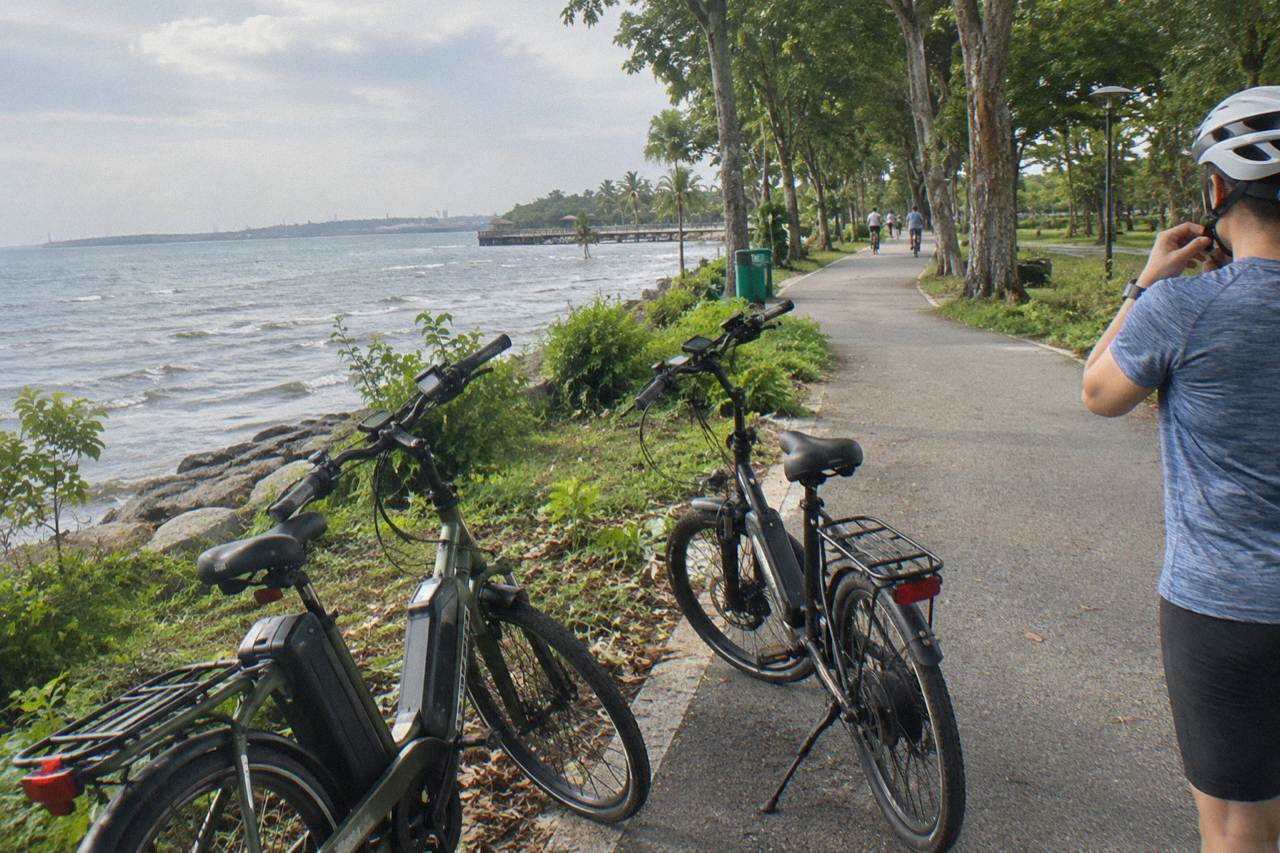
Singapore's path network is colour-coded, and once you can read the colours the city opens up. Cycling paths are typically red or dark grey and marked with a cyclist logo; shared paths carry both cyclist and pedestrian logos; footpaths are the unmarked strips beside roads and within housing estates. The Land Transport Authority's own infographic on where devices are allowed lays out the speeds by path type, and the numbers are worth committing to memory before the first ride.
| Path or road type | Bicycles | PABs | Speed limit |
|---|---|---|---|
| Cycling path (cyclist logo) | Allowed | Allowed | 25 km/h |
| Shared path (cyclist and pedestrian logos) | Allowed | Allowed | 25 km/h |
| Footpath beside roads and in estates | Allowed at 10 km/h | Not allowed | 10 km/h for bicycles |
| Pedestrian-Only Path (beside a cycling path) | Not allowed | Not allowed | No riding |
| Roads (not expressways, tunnels, selected viaducts) | Allowed, helmet mandatory | Allowed, helmet mandatory | Road speed limit |
The Pedestrian-Only Path row deserves its own care. Since 1 July 2025, footpaths running alongside dedicated cycling paths have been converted, section by section, into paths for pedestrians only, marked with pedestrian logos and "Pedestrians-Only" wording. The logic is that where a proper cycling path exists a few metres away, bikes belong on it, not on the footpath beside it. Standalone footpaths and shared paths, the ones marked with dotted red edge lines, are unaffected and stay shared.
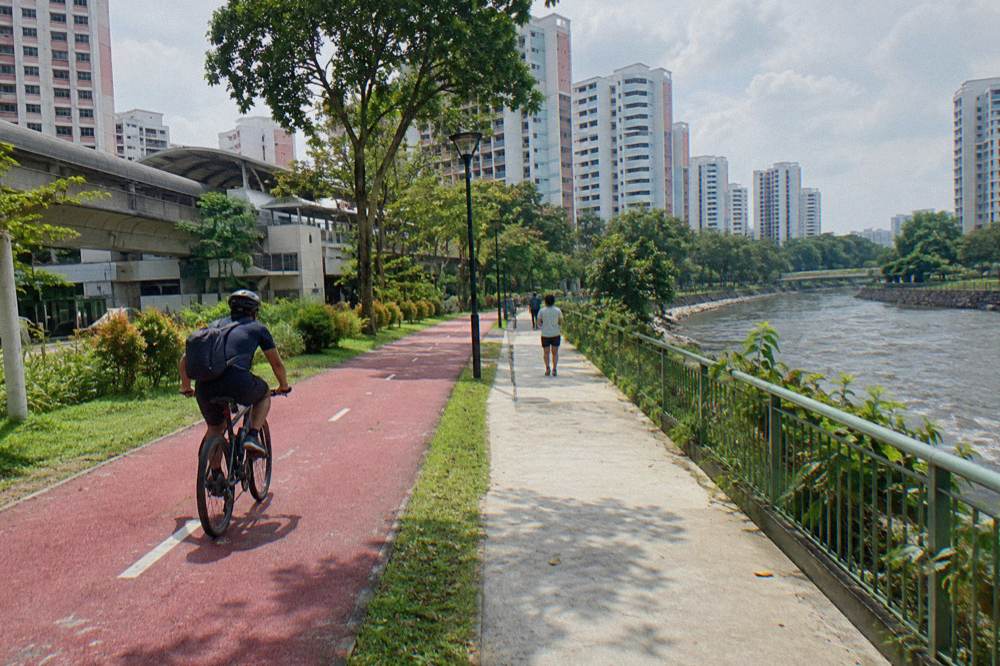
The Ministry of Transport has defended the 25 km/h shared-path ceiling as matching normal cycling speed, in a public reply on its review of bicycle speed limits on shared paths, and a parliamentary review in late 2025 considered but did not lower it. For a visitor on a regular bike that ceiling is generous: a comfortable touring pace sits well under it, and the places that matter for sightseeing, the park connectors and waterfront loops, are all built to that standard. The National Parks Board's own cycling and inline skating guidance covers the same ground from the park side.
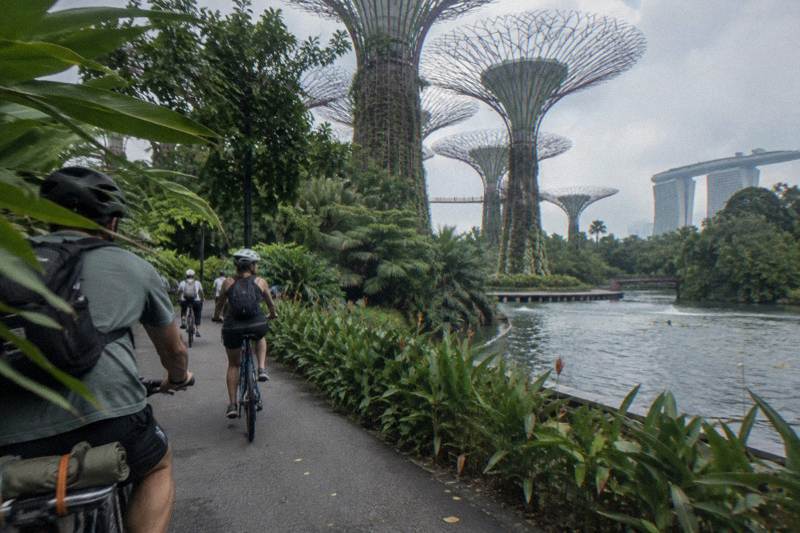
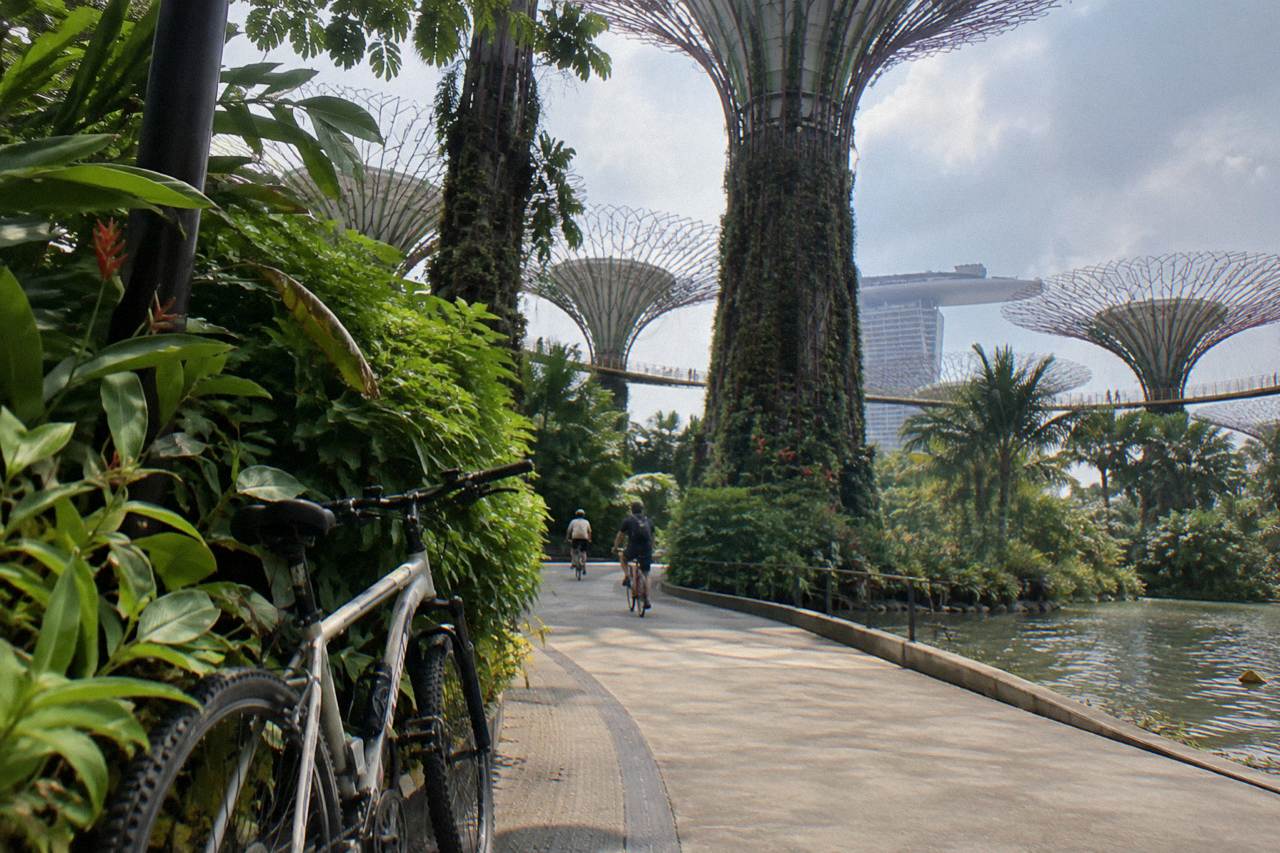
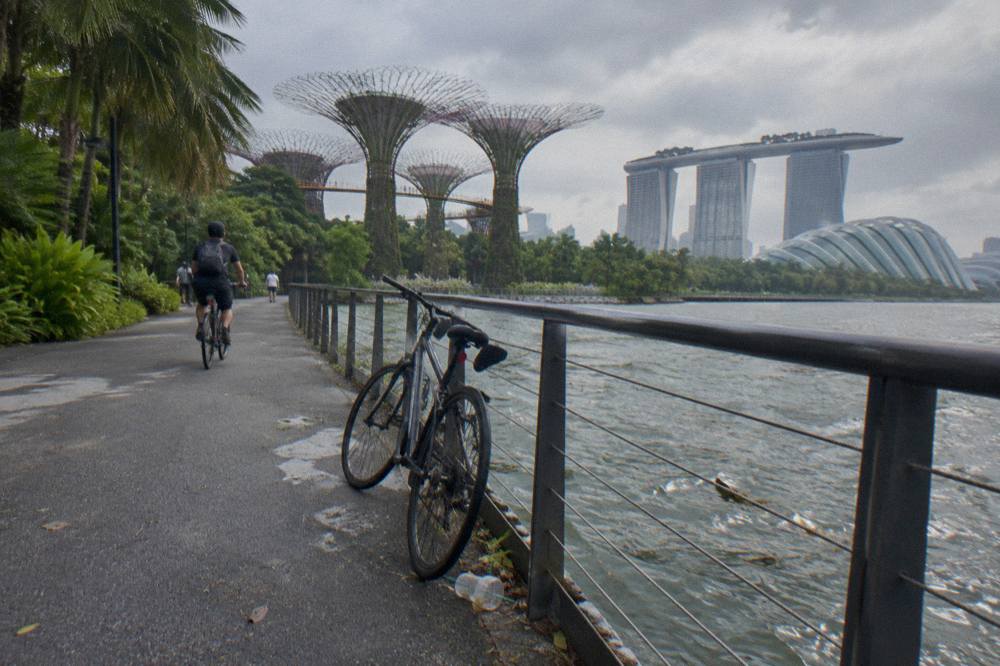
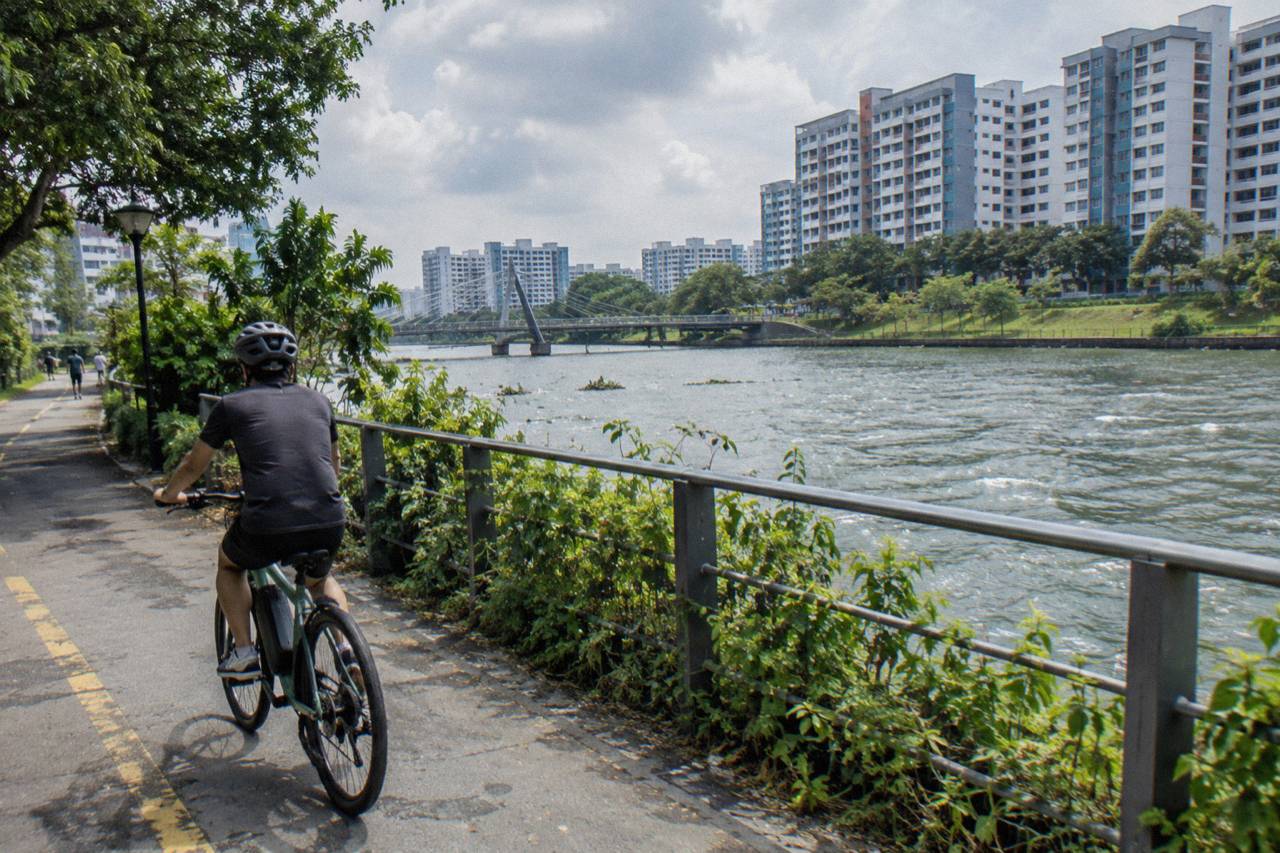
All three of those rides run on regular, non-electric bicycles, which is the point of showing them here. A first-time visitor weighing an e-bike rental against a guided ride is usually weighing the wrong variables: Singapore is flat, its sightseeing distances are short, and the obstacle between a tourist and a good day on two wheels is rarely leg power. It is route knowledge, traffic confidence and the small logistics of where to start, all of which a licensed guide supplies on a regular bike.
What Happens If You Ride Where You Should Not?
Riding a bicycle or PAB on a Pedestrian-Only Path carries penalties of up to $2,000 and/or up to three months in prison for a first offence, under enforcement that began on 1 July 2025. Fines for cycling on the wrong path type, speeding on shared paths or riding without lights at night are issued under the Active Mobility Act, and enforcement officers run targeted operations at known hotspots.
The headline number belongs to one offence only. Since enforcement of the Pedestrian-Only Path rules began on 1 July 2025, a first-time rider caught on one of these paths may face penalties of up to $2,000 and/or up to three months' imprisonment, per the LTA's own enforcement release. The authority has stressed that its officers take a measured and considered approach with ordinary riders, while maintaining zero tolerance for people who speed or ride rashly on paths. It is not a fine schedule that applies to every cycling mistake, but it signals how seriously the city treats the boundary between walking space and riding space.
- Up to 2 hours4 tours
- 3 to 4 hours17 tours
- 5 to 6 hours1 tour
- 7 hours or more1 tour
Around that headline sit the everyday rules that actually catch tourists out. Lights are required in the dark, front white and rear red. Handbrakes must work. Riding with a phone in hand is an offence on public paths. Dismounting is required at "No Riding" signs, and crowded areas call for walking the bike. On roads, a helmet is mandatory for cyclists and PAB riders alike, riding is kept to the left edge, and single file is required on single-lane roads and during bus lane operating hours. These are small habits that cost nothing and keep a holiday uneventful.
Shared bikes have their own small enforcement story. Riders must park only in designated parking zones and scan the zone's QR code to end the trip properly; parking outside a designated zone earns a $5 penalty fee charged by the operator, and repeat offenders can be banned across operators. The Ministry of Transport's reply on complaints and fines related to shared bicycles puts roughly 95 percent of trips ending in designated areas, which suggests the system mostly works and the fee mostly lands on the careless.
None of this should read as a warning off the bike. Singapore's rules are detailed because the paths are shared, and the same enforcement culture is part of why a visitor can ride a waterfront loop without the chaos found in harder cycling cities. The practical read for a tourist is straightforward: rent a regular bike, follow the painted lanes, wear the helmet on roads, and give the converted footpaths a wide berth.
- Jan222 mm
- Feb105 mm
- Mar152 mm
- Apr164 mm
- May164 mm
- Jun135 mm
- Jul147 mm
- Aug147 mm
- Sep125 mm
- Oct168 mm
- Nov252 mm
- Dec332 mm
Rain-days run from 8.5 (driest month) to 19.3 (wettest month).
Which Guided Rides Replace The E-Bike Idea For Visitors?
The closest like-for-like substitutes for an easy, assisted-feeling ride are short guided tours on regular bikes: a 2-hour Marina Bay night ride from $48.02 per person, a 4-hour small-group city highlights ride from $64.03 per person, and a 4-hour guided city tour from $68.03 per person, all with bike, helmet or poncho and a licensed guide included. None uses an electric bike, and none needs one at Singapore's riding pace. If you'd rather explore on your own after a tour, our guide to bringing a foldable bike on the MRT and buses covers the rules, peak-hour limits, and station exits you can ride from.
This is the pivot point of the whole question. A traveller searching for motor assistance is usually searching for confidence, and a guide supplies confidence more directly than a motor does. The city's flagship guided rides run on well-maintained full-sized bicycles with a licensed local guide leading, which removes the route decisions, the traffic judgment and the start-point guesswork in one stroke.
The best-reviewed of them is the "Licensed Guide, Poncho Included" city tour from Bike Around Tour Singapore. It runs 4 hours, caps the group at 12, includes the bike, a licensed local guide and a disposable poncho, and carries a 5.0 rating across 6,579 reviews, from $68.03 per person. For a first visit, that combination of small group, local guide and overwhelming review pool is the strongest single recommendation this site makes in the city-ride category.
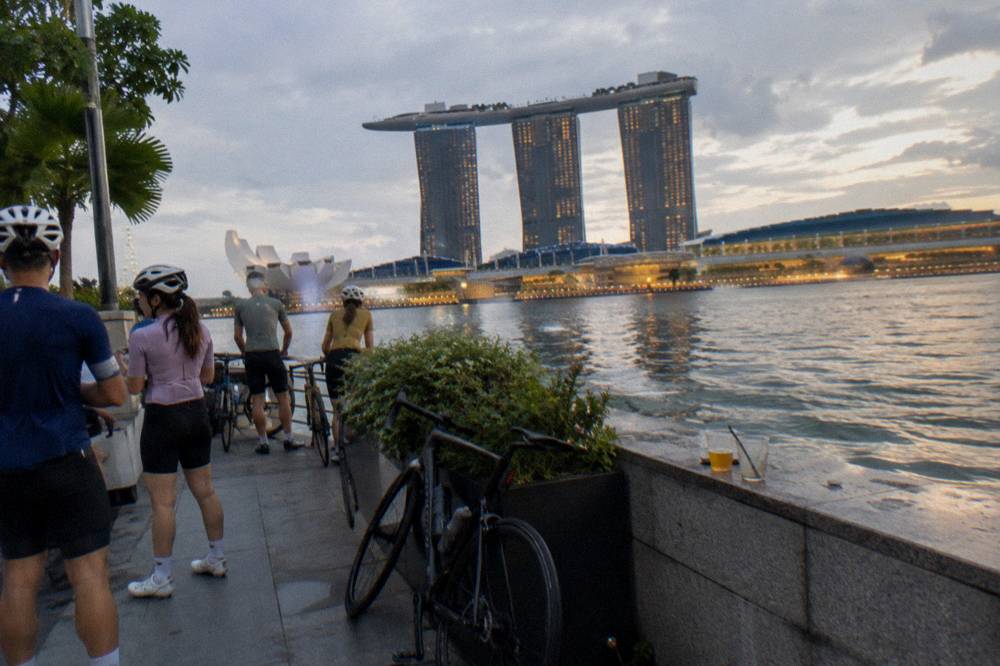
A step down in intensity is the 2-hour "Marina Bay Night Ride" from Lets Go Tour Singapore, from $48.02 per person, rated 4.9 across 598 reviews, capped at 15 riders, with bike, helmet, bottled water and rain poncho included. Two hours at a gentle pace around the bay after dark is about the lowest-commitment introduction to Singapore cycling that exists, and it lands right in the middle of the city's most photogenic district.
Between those two sits the "Small Group, Max 10 Guests" ride from City Scoot, a 4-hour city tour from $64.03 per person, rated 4.8 across 74 reviews, with bike, helmet, licensed guide, bottled water and raincoat in the price and bag storage at the shop. Ten riders is a meaningfully smaller room than fifteen, and the operator asks guests to arrive 15 minutes early for bike fitting, which is a good habit in any case.
The food-led variant deserves a mention for anyone whose real motivation is eating their way across the island. The "Bike and Bites, 3 Hours" ride from Lets Go Tour, from $79.24 per person and rated 4.9 across 282 reviews, pairs a guided cycle with shared local bites, bottled water and a rain poncho. The tastings are described by the operator as a cultural introduction rather than a full meal, which sets the right expectation for anyone booking it as dinner. More on the options lives in the site's page on Singapore food tour options.
How Do Rental Costs Compare With A Guided Tour?
Rental rates for regular bikes vary by shop and by day, and this site does not print unverified numbers for them, but guided tours give a fixed anchor: a 2-hour guided night ride costs from $48.02 per person and a 4-hour guided city tour from $64.03 to $68.03 per person, with bike, guide and basics included. Against those figures, a bare rental only wins if the rider already knows the city.
The honest way to handle rental pricing, and the way this site handles it everywhere, is to say plainly that rates vary by shop and that a traveller should read the posted rate at the specific outlet. Printing a plausible per-hour figure for a bike rental in Singapore would be a guess dressed as fact, and the shops around the main parks genuinely differ in bike quality, deposit terms and included gear. The bike rental guide covers where the shops cluster; the prices belong to the shops.
What can be compared honestly is what a guided tour buys for its fixed price, because those figures are published on each booking page and are reproduced here exactly.
| Guided ride | Duration | Group size | Rating | From per person |
|---|---|---|---|---|
| Marina Bay Night Ride | 2 hours | Max 15 | 4.9 across 598 reviews | $48.02 |
| Small Group, Max 10 Guests | 4 hours | Max 10 | 4.8 across 74 reviews | $64.03 |
| Licensed Guide, Poncho Included | 4 hours | Max 12 | 5.0 across 6,579 reviews | $68.03 |
| Bike and Bites | 3 hours | Max 15 | 4.9 across 282 reviews | $79.24 |
Read that table against the PAB requirements earlier in this page and the trade becomes obvious. Four of the price tiers are rideable today with a booking and a water bottle. The fifth category, the assisted rental a visitor imagines, costs a theory test and a registration question mark before it costs dollars. For a stay measured in days, the guided regular-bike ride wins on every axis a tourist actually cares about: certainty, route quality and time.
When Is The Best Season To Ride In Singapore?
The most comfortable riding months by the climate record are February and March, with February averaging 105.1 mm of rain across 8.5 rain days, against December's 331.9 mm across 19.3 rain days; temperatures barely move all year, from a 26.8 C mean in December and January to 28.6 C in May. Rain, not heat or cold, is the only variable worth planning around.
The Meteorological Service Singapore's 1991 to 2020 normals for Changi give the full picture, and it is a narrow one. The hottest month by 24-hour mean is May at 28.6 C, the coolest are December and January at 26.8 C, and mean daily maxima sit between 30.5 and 32.4 C in every single month of the year. There is no month when a visitor needs cold-weather kit, and no month when heat alone should stop a ride, provided the pace is sensible and the water bottle is full.
| Month | Mean temp | Mean daily max | Rainfall | Rain days | Sunshine h/day |
|---|---|---|---|---|---|
| Jan | 26.8 C | 30.6 C | 221.6 mm | 13.4 | 5.8 |
| Feb | 27.3 C | 31.5 C | 105.1 mm | 8.5 | 7.0 |
| Mar | 27.8 C | 32.2 C | 151.7 mm | 12.1 | 6.3 |
| May | 28.6 C | 32.3 C | 164.3 mm | 14.5 | 6.0 |
| Nov | 27.2 C | 31.2 C | 252.3 mm | 19.0 | 4.4 |
| Dec | 26.8 C | 30.5 C | 331.9 mm | 19.3 | 4.3 |
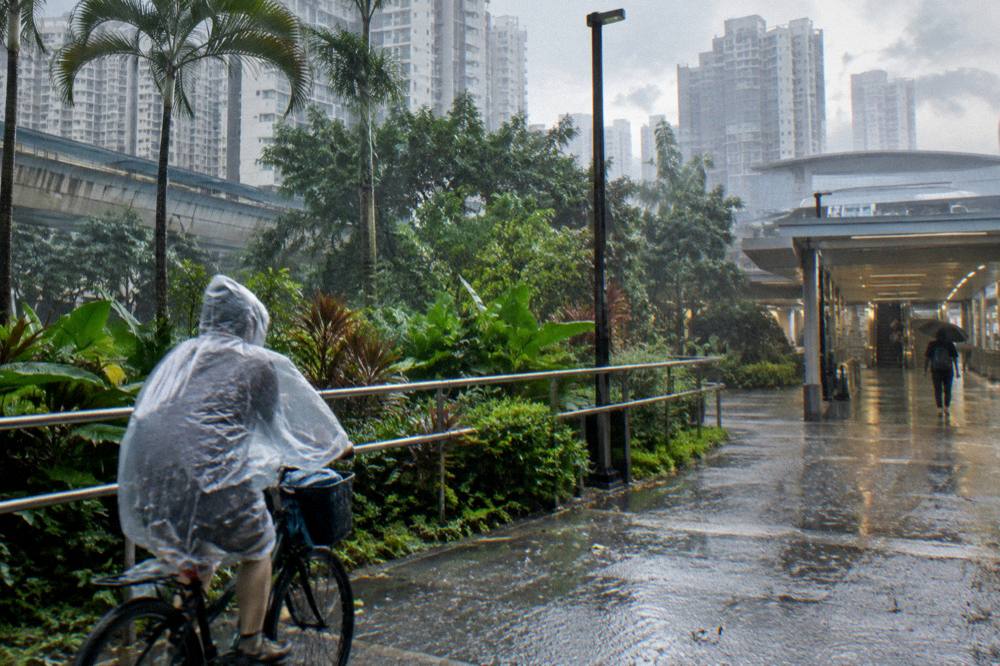
The wettest period runs November to January under the Northeast Monsoon, and December is emphatically the wettest month on the record. But the same record shows even December averages 4.3 hours of sunshine a day, and the practical Singapore answer to rain is the one the tour operators already ship in the price: a poncho, a short shelter stop, and a schedule that treats showers as interruptions rather than cancellations. Several operators here describe their rides as rain-or-shine activities, which is not bravado, it is the local norm.
Haze deserves one honest line. Slight to moderate haze is common in the Southwest Monsoon and light-wind inter-monsoon months, and severe transboundary episodes can cut visibility sharply, so a rider with respiratory sensitivity should check the daily PSI forecast the way a skier checks a snow report. The full seasonal breakdown, including what to wear for the humidity, sits in the site's guide to the best time to cycle in Singapore, and the same thinking extends to the wet-weather riding page if the trip lands in the monsoon months.
Where Should A Beginner Actually Ride In Singapore?
The safest first rides in Singapore are the dedicated park connectors and waterfront loops: the Park Connector Network runs over 350 km of linked paths, the Round Island Route's first phase covers 75 km on the eastern half of the island, and short guided routes around Marina Bay or East Coast Park keep a beginner on separated, low-traffic paths. A first-timer should avoid roads during bus lane hours and any path marked Pedestrians-Only.
- Small group13 of 23
- Private5 of 23
- Group type not stated5 of 23
The National Parks Board maintains the spine of this: the Park Connector Network, more than 350 km of linked green corridors that stitch parks, rivers and coastline together, built to shared-path etiquette rules that every local rider grows up knowing. Its etiquette guidance is short and worth reading in full before a first ride: look out for others, give way, slow down at the red-dotted Attention Zones near bus stops, crossings and playgrounds, and keep left except when overtaking.
The Round Island Route adds a longer canvas. Its first phase opened in January 2022, covering 75 km from Rower's Bay in the north-east down the eastern half of the island to Berlayer Creek in the south, with two cycling bridges at Changi Bay and access points at parks along the way. It is part of a planned 150 km continuous route within a wider 360 km island-wide recreational network. For a visitor, the practical takeaway is not to attempt it whole but to borrow its best segments, and a guide knows exactly which those are.
For anyone who wants the path detail route by route, this site carries a full Park Connector Network guide alongside pages on specific corridors like Marina Bay cycling and the Southern Ridges. What matters on a first ride is picking one loop, starting early before the heat builds, and letting the infrastructure do the work. Singapore has spent a decade building exactly the kind of paths that make beginners into cyclists; the visitor's only real job is to show up with a working bike and a route someone else has already sanity-checked.
Common Questions About Electric Bike Rental In Singapore
Is Electric Bike Rental In Singapore Possible For Tourists?
Not as a casual walk-in product. A power-assisted bicycle must be type-approved, sealed and LTA-registered with a rear plate, and its rider must be 16 or older and have passed the mandatory PAB theory test before riding on cycling paths or roads. Rental shops in Singapore overwhelmingly rent regular bikes, and every guided tour on this site runs on a regular, non-electric bicycle.
Do I Need A Licence To Ride A Regular Bicycle In Singapore?
No licence or test applies to a regular bicycle. Riders must follow the path rules instead: 25 km/h on cycling and shared paths, 10 km/h on footpaths, no riding on Pedestrian-Only Paths, lights at night, and a helmet on roads. No bike of any kind is allowed on expressways or road tunnels.
What Is The Fine For Cycling On A Pedestrian-Only Path In Singapore?
Since enforcement began on 1 July 2025, riding a bicycle or non-motorised personal mobility device on a Pedestrian-Only Path carries penalties of up to $2,000 and/or up to three months imprisonment for a first offence. Enforcement officers take a measured approach with compliant riders and reserve strict action for speeding and reckless riding.
Can I Rent An E-Bike In Singapore Without Taking The Theory Test?
Not legally for riding on cycling paths or roads. The PAB theory test is mandatory for anyone riding a power-assisted bicycle on those surfaces, with no exemption for visitors or short stays. Riders under 16 may not ride a PAB on paths or roads at all, even supervised.
Is A Guided Bike Tour In Singapore Worth It Instead Of Renting?
For a first visit, usually yes. Guided rides run from $48.02 for a 2-hour night loop to $68.03 for the best-reviewed 4-hour city tour, and the price includes the bike, a licensed local guide and basics like water and a poncho. The guide handles routing, traffic judgment and the start point, which is the part of Singapore cycling that self-guided visitors most often get wrong.
What Should I Do If It Rains During My Ride?
Ride it out or shelter briefly. Singapore tours ship a disposable poncho as standard, several operators describe their rides as rain or shine activities, and even the wettest month averages 4.3 hours of sunshine a day. The city's paths drain fast, and rain in the tropics usually arrives in short bursts rather than full-day events.
The search for an electric bike rental in Singapore usually ends the same way for every visitor who runs it: at the realisation that the motor was never the point. The city is flat, the distances are short, and the parts of a cycling day that actually need assistance, knowing where to start, which paths connect and how to read the painted lanes, come bundled with a licensed guide on a regular bike. The rides above are bookable the same day, all on regular bicycles, and the full range of options across the site is covered in depth on Singapore Bike Tours.