Singapore Bike Sharing: Anywheel, HelloRide And How They Compare
Two licensed operators, yellow parking zones, and a set of path rules that changed in 2025: here is what actually works if you want to hop on a shared bike in Singapore, and where a guided tour on a regular bike makes more sense.
Short answer
Only Anywheel and HelloRide hold LTA licences to operate shared bicycles in Singapore. You unlock through the operator app, ride at 25 km/h or less on shared paths, and end every trip by scanning the QR code at a designated parking zone. Both operators publish their current rate cards in their apps; guided bike tours start from $47 per person.
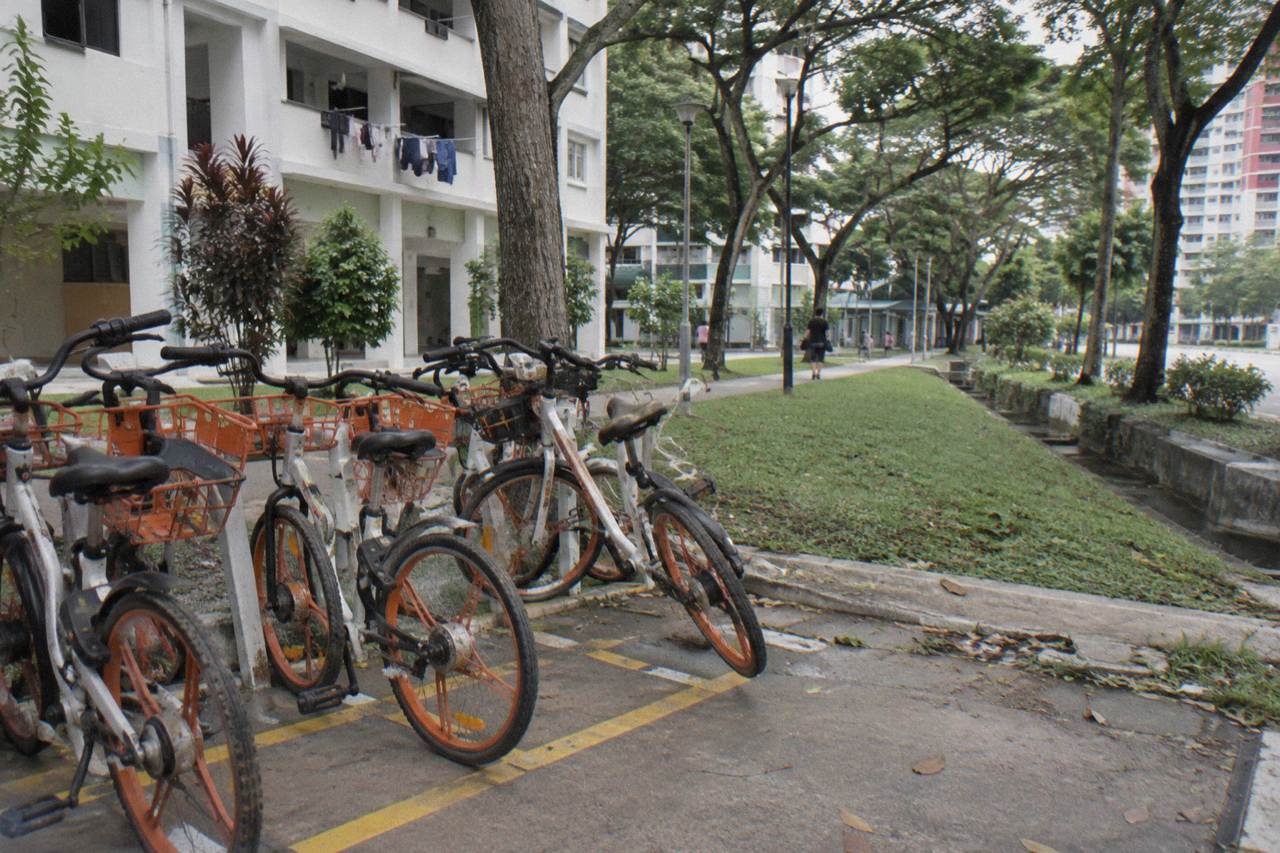
Singapore runs one of the tidiest shared-bike systems in Asia, and it is tidy partly because the rules are strict and partly because only two companies are allowed to run it. Anywheel and HelloRide are the only operators holding LTA licences for shared bicycles in Singapore, a fact worth knowing before you download anything else. Every shared bike you see locked to a rack outside an MRT station, a hawker centre or a park connector entrance belongs to one of those two fleets.
That structure is great for a commuter. For a visitor, it comes with friction: designated parking zones only, a QR code to scan at the end of every trip, a $5 penalty if you park wrong, and a path network where the speed limit and even the legality of your route depend on which strip of asphalt you are standing on. None of it is hard, but all of it takes learning. This page walks through how sharing actually works here, where the rules bite, and where a guided ride on a regular bike simply removes the homework: the Lion City tour of Singapore, for instance, hands you the bike, the licensed guide and the route in one booking. If HelloRide is the app you're leaning toward, our guide to HelloRide's parking rules and how it stacks up covers the details before you download anything.
What Is Bike Sharing In Singapore And Who Runs It?
Bike sharing in Singapore is a dockless system run by exactly two licensed operators, Anywheel and HelloRide, under the Land Transport Authority's regulatory framework. Bikes are unlocked through each operator's app, ridden on public paths and roads under Active Mobility Act rules, and returned by scanning a QR code at a designated parking zone rather than at fixed docks. Since both operators charge differently depending on how long and how often you ride, the plain breakdown of Anywheel versus HelloRide pricing shows which one actually costs less for your trip.
Dockless does not mean park-anywhere. The first generation of sharing here famously collapsed under piles of badly parked bicycles, and the regulatory response was a licensing regime with teeth: operators face fleet reductions and licence consequences if their bikes pile up outside designated zones, and riders who park badly get charged and eventually banned. The system you meet today, in late 2026, is the result of that cleanup.
- Up to 2 hours4 tours
- 3 to 4 hours17 tours
- 5 to 6 hours1 tour
- 7 hours or more1 tour
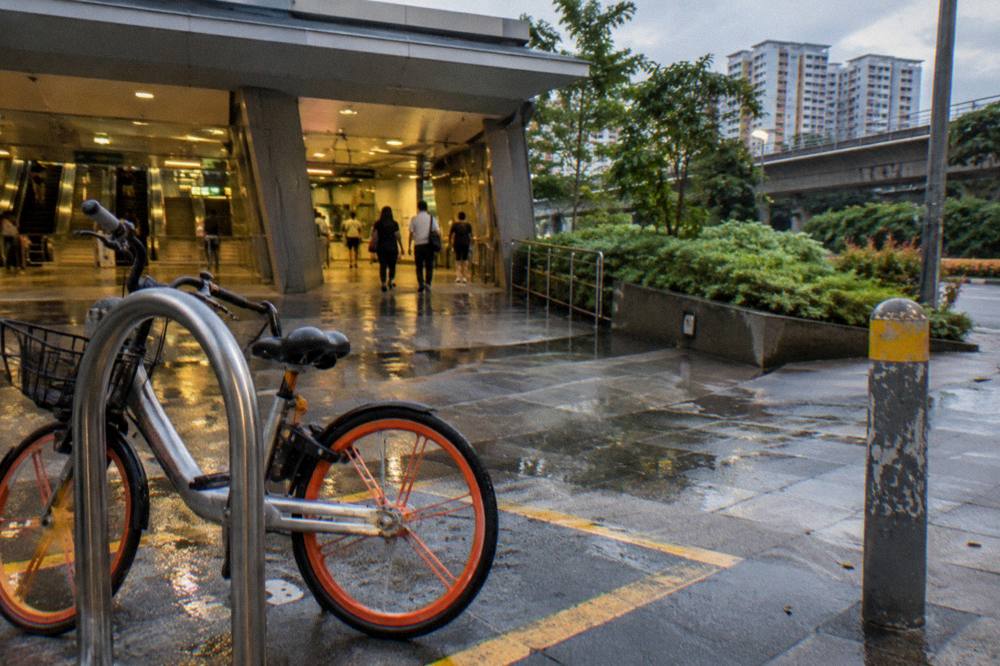
What makes the Singapore version interesting for a short-stay visitor is how much of the hard work has been moved into the app. Finding a bike, unlocking it, paying, and ending the trip correctly are all handled on your phone. You scan a QR code on the bike to start, ride to somewhere near your destination, find the nearest yellow-marked parking zone, and scan the zone's QR code to end the trip properly. Most trips end exactly that way. The Ministry of Transport reported that about 95 percent of shared-bike trips finish inside designated parking areas.
That success rate is also the honest warning. If you are the five percent case, in a hurry outside a zone, the system charges you. And if you are cycling somewhere with sparse parking zones, such as stretches of park connector far from an MRT station, the "end trip" requirement becomes a planning constraint rather than a convenience.
How Do You Unlock A Shared Bike In Singapore?
You download the Anywheel or HelloRide app, register with a payment method, find a bike on the map, and scan the QR code on the bike's frame or use tap-to-ride to unlock. HelloRide also integrates with the Grab app in some cases. Both operators publish their current rate card inside their own apps, and fares are not printed on this page because they change.
The unlock flow is the easy part. Both operators use rear-wheel locks, so once the app registers your scan the wheel releases and you ride off. Payment runs through the app with cards or PayNow. There is no membership desk, no deposit counter and nothing to sign in person, which is exactly why the model suits a two-hour errand more than a full day of sightseeing.
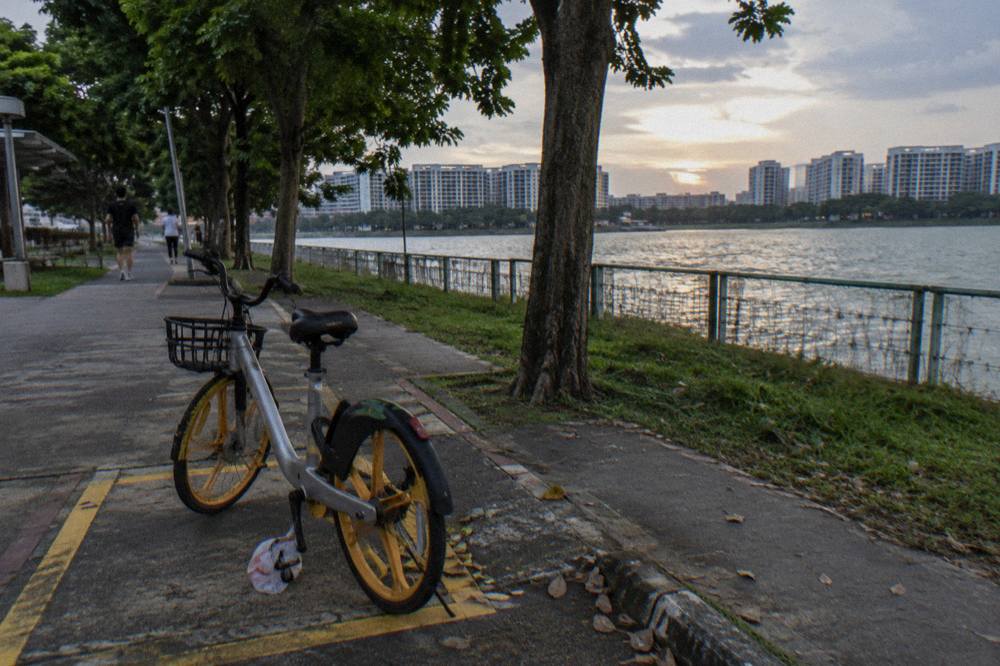
The catch is the return. Trips must end in an LTA-designated parking zone, identified by QR codes in the app's map, and you finish by scanning the zone code. Fail to do that and the operator charges a $5 penalty fee, and repeat offenders, typically after several improper parks in a calendar year, can be banned across operators. So the app works brilliantly between two points that both have zones, and badly for a route that ends anywhere the planner did not put a zone.
For a visitor doing a loop, this shapes your whole day. You cannot casually ride from, say, a hawker lunch to a beach and abandon the bike at a scenic spot. The bike goes back to a zone, and the zone may be a ten-minute walk from the view. Renting from a shop on Sentosa or at East Coast Park works differently, and those options have their own pages, but sharing is point-to-point by design.
There is a category of rider for whom none of this friction matters because they never wanted to plan a route at all. If you recognise yourself there, the guided options below sit at the other end of the effort spectrum: bikes provided, routes decided, guide in front.
Key Numbers For Shared Bikes In Singapore
Penalties, speed limits and tour pricing at a glance
- 25 km/hSpeed limit on cycling paths
- 10 km/hSpeed limit on footpaths
- $5Penalty for parking outside a zone
- $2,000Fine for Pedestrian-Only Path offendersand/or up to three months imprisonment
- $47Guided tour starting price per persontours run 2 to 8 hours
Where Can You Ride And Park A Shared Bike In Singapore?
Shared bikes ride on shared paths and cycling paths at up to 25 km/h, on footpaths at up to 10 km/h, and on most roads following the road speed limit. Since 1 July 2025 bicycles are not allowed on Pedestrian-Only Paths, the footpaths beside dedicated cycling paths. Parking is only legal in designated zones, ending with a QR scan.
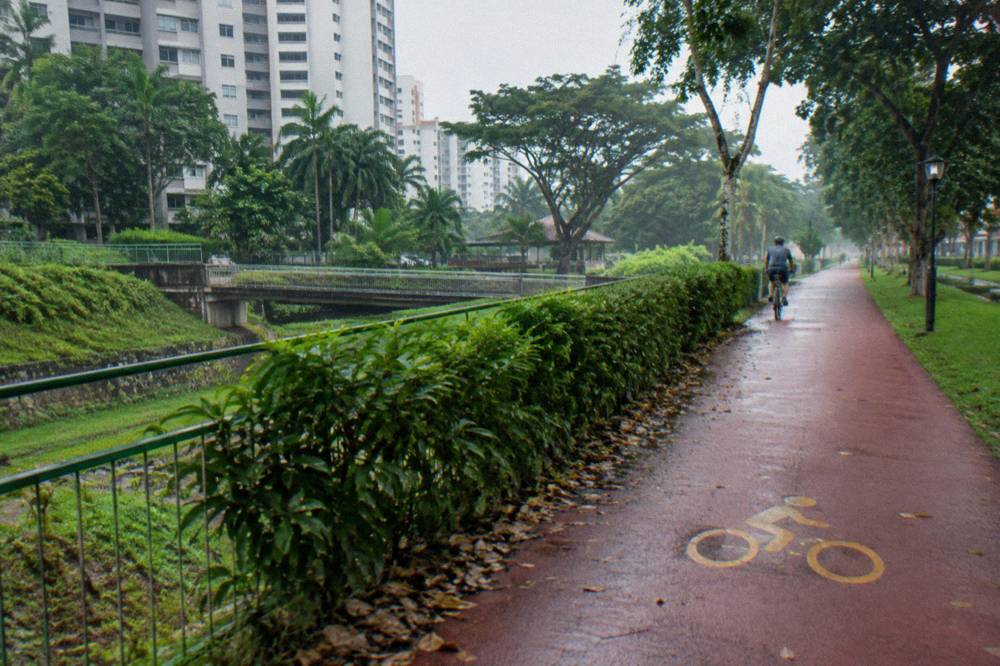
The path map matters more here than in most cities, because Singapore colour-codes its network. Cycling paths are red or dark grey and marked with a cyclist logo, shared paths carry cyclist and pedestrian logos, and footpaths, the unmarked strips beside roads and within housing estates, are shared but slow: 10 km/h. The LTA publishes the full breakdown in its Active Mobility rules and code of conduct, and the where devices are allowed infographic gives the speed limit for each path type.
- Jan222 mm
- Feb105 mm
- Mar152 mm
- Apr164 mm
- May164 mm
- Jun135 mm
- Jul147 mm
- Aug147 mm
- Sep125 mm
- Oct168 mm
- Nov252 mm
- Dec332 mm
Rain-days run from 8.5 (driest month) to 19.3 (wettest month).
The big recent change is the Pedestrian-Only Path. Footpaths running next to dedicated cycling paths have been converted, marked with pedestrian logos and "Pedestrians-Only" wording, and from 1 July 2025 bicycles and non-motorised personal mobility devices are prohibited on them. Enforcement officers began acting on 1 July 2025, and first-time offenders face penalties of up to $2,000 and/or up to three months imprisonment. That penalty belongs to this specific offence, not to cycling fines generally. Standalone footpaths and shared paths are unaffected.
| Path type | Speed limit for bicycles | Notes |
|---|---|---|
| Cycling path (red or dark grey, cyclist logo) | 25 km/h | Preferred route where available |
| Shared path (cyclist and pedestrian logos) | 25 km/h | Give way to pedestrians |
| Footpath (unmarked, beside roads and in estates) | 10 km/h | Slow, dismount in crowds |
| Pedestrian-Only Path (beside a cycling path) | Not allowed | Bicycles prohibited since 1 July 2025 |
| Road (no expressways or tunnels) | Follow the road speed limit | Helmet mandatory on roads |
On the park connector side the same logic applies with different paint. The NParks Park Connector Network path types page describes shared paths with red continuous lines, segregated stretches with separate footpaths and cycling paths, and attention zones marked in red dotted lines at bus stops, crossings and playgrounds where you slow down and give way. NParks advises a helmet, single-file riding and lights at night. Some boardwalks and gazetted nature reserves are off-limits to bikes entirely.
Parking follows the same discipline. Yellow-boxed zones sit near MRT stations, malls and park entrances, and the MOT reply on shared-bicycle parking complaints and fines confirms the operator-side model: a $5 penalty for parking outside a zone, bans for repeat offenders, and obligations on operators to remove errant bikes promptly.
If reading that table felt like homework, that is the honest trade of sharing. A guided tour exists to delete the homework: someone who rides these paths daily picks the route and keeps the group inside the rules.
What Happens If You Park A Shared Bike In The Wrong Place?
The operator charges a $5 penalty fee to your app account, and the trip does not end correctly until the bike is in a designated zone with the zone QR scanned. Repeat offenders, generally after a few improper parks in a calendar year, can be banned across the licensed operators, which in practice means losing access to shared bikes island-wide.
The $5 fee sounds small. The ban is not. Because only two operators hold licences, a ban from both leaves you with no shared-bike option at all, so treating the zone map as optional is a false economy for anyone on a longer stay. The fee is charged by the operator under the LTA regulatory framework, and about 95 percent of trips comply, so the system is forgiving of an honest mistake and firm about a habit.
A related trap is the "just leave it at the kerb" instinct that dockless systems invite everywhere else. Here the app will keep the trip running or flag the improper end, and the bike you abandoned becomes the operator's problem and, statistically, yours. The graceful version is simple: before you set off, check the map for a zone near your destination, and treat that zone as the real end of your ride.
For families, note that shared bikes in Singapore are standard adult-sized machines: the licensed fleets are not a children's cycling option, and the app model presumes a registered adult account doing the unlocking. The dedicated page on riding with kids covers the family angle properly, including trailer and child-seat questions, if that is your situation.
How Does Bike Sharing Compare With A Guided Bike Tour In Singapore?
Bike sharing wins on spontaneity and short hops between two well-connected points, while a guided tour wins on everything that needs planning: a suitable regular bike, a route that is legal and scenic, commentary, and no parking-zone logistics. Prices for guided rides begin around $47 per person, with durations from 2 to 8 hours. All include the bike, and many add a helmet, water and a licensed guide (check each listing).
The comparison is not really about price per hour. It is about what the money buys. A shared bike is a tool for movement. A guided tour is movement plus interpretation plus logistics, run by operators who supply the bike, carry ponchos for the rain, and route around closures and crowds. Several of the rides covered here are led by STB-licensed or licensed local guides, which is a regulated category in Singapore and a quality signal the shared fleet cannot match.
- Bike23 of 23
- Guide19 of 23
- Drinks14 of 23
- Helmet11 of 23
- Meal or food stop8 of 23
A listing that does not mention an item is not counted as leaving it out.
Consider the failures of each. The shared bike fails you at the third destination of a sightseeing day, when you are hot, the nearest zone is a walk away, and you are re-locking a bike you will unlock again in an hour. It fails families, because kids are not riding shared bikes. It fails you on route knowledge, which in a city where a footpath can be a Pedestrian-Only Path is not a small gap. The guided tour fails you on spontaneity: you book a slot, you start at a stated meeting point, you follow someone else's pace.
| Shared bike (Anywheel / HelloRide) | Guided bike tour | |
|---|---|---|
| spontaneity | Unlock on demand, any time | Booked start time |
| bike provided | Yes, standard adult machine | Yes, full-sized regular bike, often helmet |
| route planning | Your job, with path rules to learn | Guide's job |
| parking | Designated zones only, QR scan to end | Hand the bike back at the end |
| cost basis | Per trip, rate card in the app | From about $47 per person, per the listing |
| family riding | Not an option | Small-group and private options exist |
| commentary | None | Licensed local guide |
The middle case is a rider who wants the shared-bike convenience without the tour commitment. Some operators here do run small-group and private formats that sit between the two, and one frequent complaint about solo planning is simply not knowing which paths connect. The Round Island Route and the park connector network are documented on their own pages for exactly that reader.
Which Guided Tours Suit A Rider Leaving The Shared Fleet?
The natural upgrades are the small-group city rides: a 4-hour tour with a licensed guide from $64.03 per person, a 4-hour highlights ride capped at 15 guests from the same price, and a 2-hour Marina Bay night ride from $48.02 per person. Food-focused and nature formats run longer, and private tours start near $80 per person with the total depending on group size.
Start with the value end, because it overlaps what a day of shared-bike trips would cost. The Small Group, Max 10 Guests ride from City Scoot runs 4 hours from $64.03 per person, meets at Esplanade Mall, includes the bike, helmet, bottled water, raincoat and bag storage, and carries a 4.8 rating across 74 reviews. Its sibling River Route via F1 Track covers 2 hours from $47 per person with bike, helmet, water and a licensed guide at the same meeting point, from a small review pool of 14.
The Lets Go Tour family of rides is the volume leader on this site. Full-Sized Bikes, Small Group runs 4 hours from $64.03 per person with a cap of 15 guests, includes a local snack and a local drink plus water and a poncho, and is rated 5.0 across 1,559 reviews, which makes it the most reviewed ride covered here. Marina Bay Night Ride, 2 Hours starts at $48.02 per person for a 2-hour loop rated 4.9 across 598 reviews. Bike and Bites, 3 Hours, from $79.24 per person, adds shared local tastings described as a cultural introduction rather than a full meal.
| Tour | Duration | From, per person | Group | Rating |
|---|---|---|---|---|
| Lion City Bike Tour | 4 hours | $68.03 | Max 12 | 5.0 across 6,579 reviews |
| Full-Sized Bikes, Small Group | 4 hours | $64.03 | Max 15 | 5.0 across 1,559 reviews |
| Marina Bay Night Ride | 2 hours | $48.02 | Max 15 | 4.9 across 598 reviews |
| Small Group, Max 10 Guests | 4 hours | $64.03 | Max 10 | 4.8 across 74 reviews |
| Bike and Bites | 3 hours | $79.24 | Max 15 | 4.9 across 282 reviews |
| 5-Hour Nature Ride | 5 hours | $84.04 | Max 4 | 5.0 across 37 reviews |
The Lion City ride deserves its own paragraph because it is the one most often compared against a self-guided day. It runs 4 hours from $68.03 per person with a cap of 12 riders, includes the bike and a licensed local guide plus a poncho, notes that helmets are available on request, and carries a 5.0 rating across 6,579 reviews, the deepest review pool of any ride on this site. For someone leaving the shared fleet, it answers the exact question the app never will: what am I actually looking at?
Food and nature riders have their own ladder. Katong Food Ride runs 4 hours from $96.05 per person with snacks and foods included, rated 5.0 across 337 reviews, and the Sunset Ride with Hawker Food runs 3 hours from $86 per person with a meal and helmet, from 12 reviews. On the nature side, the 5-Hour Nature Ride from The Cycle Startup starts at Punggol Park, caps at 4 riders, includes helmet and water, and carries 5.0 across 37 reviews, while the Pulau Ubin options trade city polish for island tracks, covered in the Ubin pages.
Which Choice Fits Which Kind Of Day?
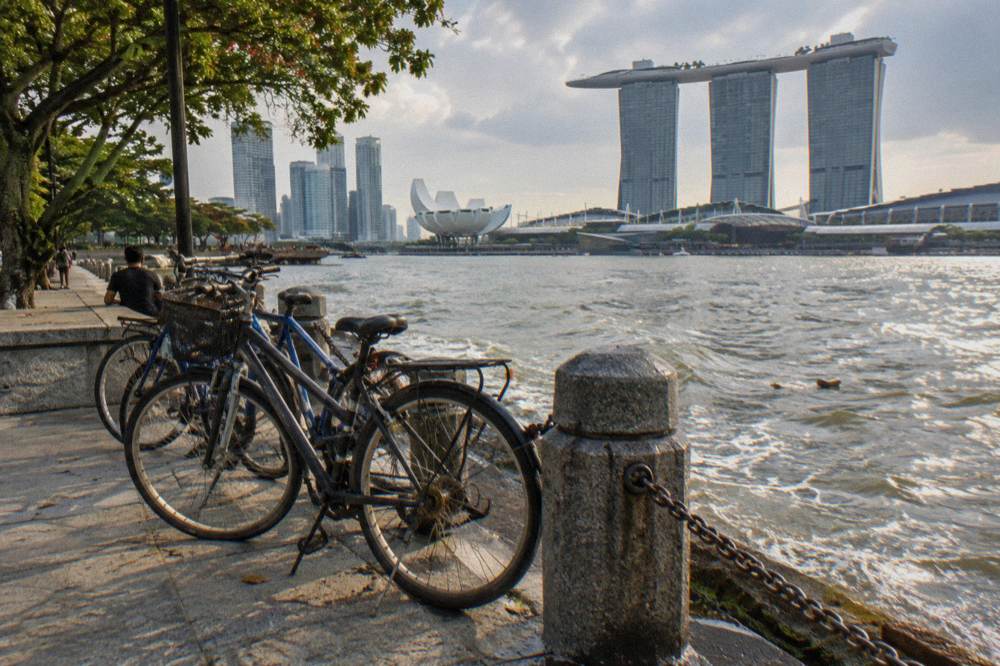
Pick a shared bike for short, spontaneous hops between MRT stations, malls and nearby food spots where you know a parking zone exists. Pick a guided tour for first visits, food days, night rides, families and anyone who wants interpretation along with the exercise. Pick a private tour when the schedule or the group is unusual.
The weather argument leans guided, mildly. Singapore's wettest months are November to January, with November averaging about 252.3 mm of rain across roughly 19 rain days and December 331.9 mm across 19.3 days, per the Meteorological Service Singapore 1991 to 2020 normals for Changi. February is the driest and sunniest month. A guide carries ponchos and reroutes around a downpour; a shared bike leaves you scanning the map for shelter while the clock runs.
The rules argument leans guided more strongly. On a shared bike, the rider is the one who must know that footpaths run at 10 km/h, that converted Pedestrian-Only Paths are off-limits, that a helmet is mandatory the moment you touch a road, and that groups on roads are capped at 5 bicycles in single file with about 30 m between groups. Those are learnable, but they are the difference between a relaxed ride and a summons, and about 650 cyclists were issued summonses by police in the second half of 2025 for violations including riding without helmets or disobeying signals.
| Month | Mean temp | Rainfall mm | Rain days | Sunshine h/day |
|---|---|---|---|---|
| February | 27.3 C | 105.1 | 8.5 | 7.0 |
| March | 27.8 C | 151.7 | 12.1 | 6.3 |
| July | 28.2 C | 146.6 | 13.6 | 6.1 |
| November | 27.2 C | 252.3 | 19.0 | 4.4 |
| December | 26.8 C | 331.9 | 19.3 | 4.3 |
None of this means sharing is a bad product. It is a commuter product doing a tourist job, and it does that job well precisely as far as the parking zones reach. The reader who has tried both usually lands somewhere simple: shared bikes for the afternoon errand, guided for the day that is the reason you flew here.
What About Sentosa, Ubin And The Other Complications?
Sentosa has about 12 km of designated cycling trails and cyclists enter free, with bike sharing available on the island; Pulau Ubin is a shop-rental island, not a shared-fleet one; and no guided tour on this site uses an e-bike, because power-assisted bicycles are a regulated, registered device category that no tour here rents casually.
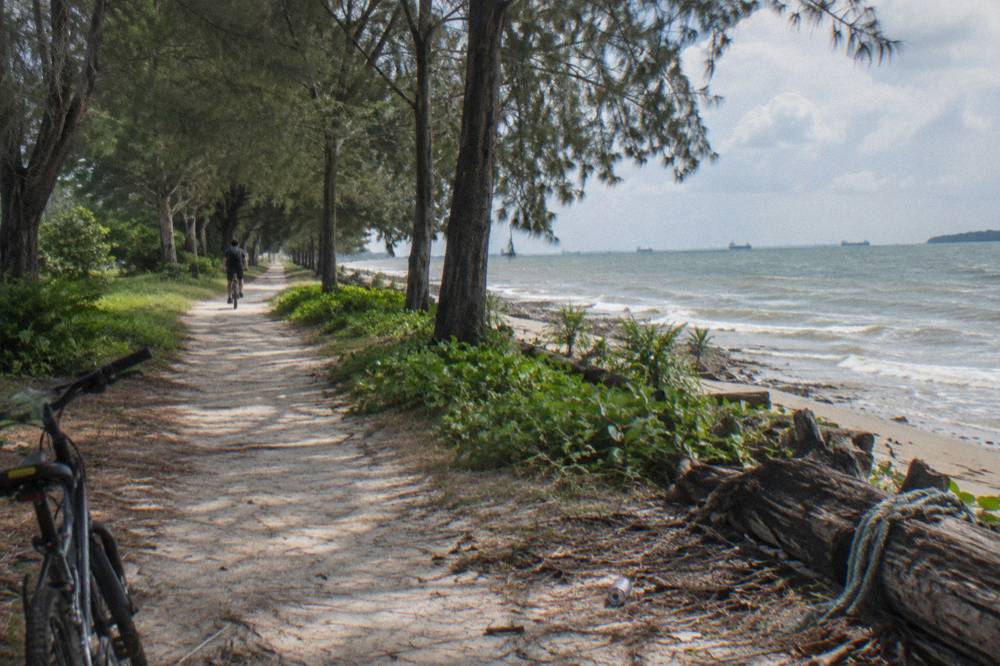
Sentosa is the one place where the two models sit closest together. The island's own guide describes three trails, VivoCity to Sentosa Cove and back under 6 km each way with long or steep slopes, and the 3.2 km Siloso to Palawan to Tanjong beach run. There are no island admission charges for cyclists, entry is from the Sentosa Boardwalk by VivoCity, and there is one underpass where you dismount and walk the bike. Shared bikes exist there, so a visitor can mix a shared-bike beach hop with a guided format elsewhere.
Pulau Ubin is the opposite case. Two of the three guided Ubin rides meet at Changi Point Ferry Terminal and include the crossing; the Nature Ride starts on the island and leaves the ferry to you. The island runs on shop rental, and NParks recommends renting or bringing a helmet. The National Parks board also carries live notices for Ubin, including a Chek Jawa boardwalk section closed for maintenance from 15 September 2026 with completion expected by 30 April 2027, so check the notices before promising anyone a specific wetland loop.
The e-bike question comes up because power-assisted bicycles are common on Singapore roads, and the answer is regulatory rather than preference. PABs must be type-approved, sealed, registered with a rear plate, limited to 250W continuous power, ridden only by those 16 and over who have passed a mandatory theory test, and helmeted on roads. That is not a casual tourist rental category, and every guided tour covered on this site runs on regular, non-electric bikes with the bike included.
How Do You Decide In About Two Minutes?
Decide by destination density. If your day is three or four spots within one district and you can see parking zones on the map between them, share. If your day crosses districts, mixes food and sights, runs into the evening, or involves anyone under adult bike size, book a guided tour and let the operator carry the logistics.
The honest test is the "third unlock" rule. If you would unlock the same category of bike three times in a day, each time walking to and from a zone, the shared fleet has quietly cost you the hour you saved on fares. A 3 to 4 hour guided ride with tastings, or a 4-hour city loop with a licensed guide, collapses all that unlocking into one continuous trip where someone else worries about where the bike sleeps.
Budget is the other axis, and the dedicated cost pages break it down: the Anywheel guide, the HelloRide guide and the blog post which is cheaper, Anywheel or HelloRide cover the sharing side, while the guided tour cost guide covers the operator side. Both rate cards live in the respective apps, because operator fares are the operator's to change.
One last thing that belongs in this decision rather than scattered through the others: this site, Singapore Bike Tours, exists because the guided side of the comparison is the one worth doing properly. A shared bike is a utility. A guided ride is a product with a route, a guide and a rain plan, and the difference shows up on the second day of a trip, when the novelty of scanning QR codes has worn off and the equatorial afternoon heat is doing what it does. If the price still feels steep, our guide to free things to do in Singapore and when a paid ride earns its cost lays out where the free options genuinely deliver and where a guided bike ride outearns them.
Common Questions About Bike Sharing In Singapore
Which Apps Can I Use For Bike Sharing In Singapore?
Only Anywheel and HelloRide hold LTA licences for shared bicycles in Singapore. You unlock through the operator's own app, or in some cases through the Grab app for HelloRide. Both operators publish their current rate cards inside their apps.
Do I Have To Park A Shared Bike In A Special Zone?
Yes. Trips must end in an LTA-designated parking zone, and you scan the zone's QR code to end the trip properly. Parking outside a zone costs a $5 penalty fee charged by the operator, and repeat offenders can be banned across both licensed operators.
Can I Ride A Shared Bike On The Footpath In Singapore?
On ordinary footpaths you may ride at up to 10 km/h. But footpaths beside dedicated cycling paths have been converted to Pedestrian-Only Paths, and since 1 July 2025 bicycles are not allowed on them, with first offences carrying up to $2,000 and/or three months.
Is A Shared Bike Cheaper Than A Guided Bike Tour?
For a single short hop, usually yes. For a sightseeing day of several hours, a guided tour starts from about $47 per person and includes the bike, a licensed guide, and often water, a poncho and food on the longer formats, while a shared bike bills per trip and adds parking-zone walking time at every stop.
Can Tourists Rent An E-Bike In Singapore Instead?
Not casually. Power-assisted bicycles must be type-approved, sealed and registered with the LTA, ridden only by people 16 and over who have passed a mandatory theory test, and helmeted on roads. No guided tour on this site uses an e-bike; every ride runs on a regular bike with the bike included.
What Happens If I Just Leave The Shared Bike Anywhere?
The trip does not close correctly, the operator charges a $5 penalty fee, and repeated improper parking in a calendar year can get you banned across the licensed operators. About 95 percent of trips end in designated zones, so the system is forgiving of one mistake but not of a habit.