Which Is Cheaper, Anywheel Or HelloRide?
A plain comparison of Singapore's two licensed bike sharing operators, how their charges work, and when a guided bike tour is the better spend for a visitor.
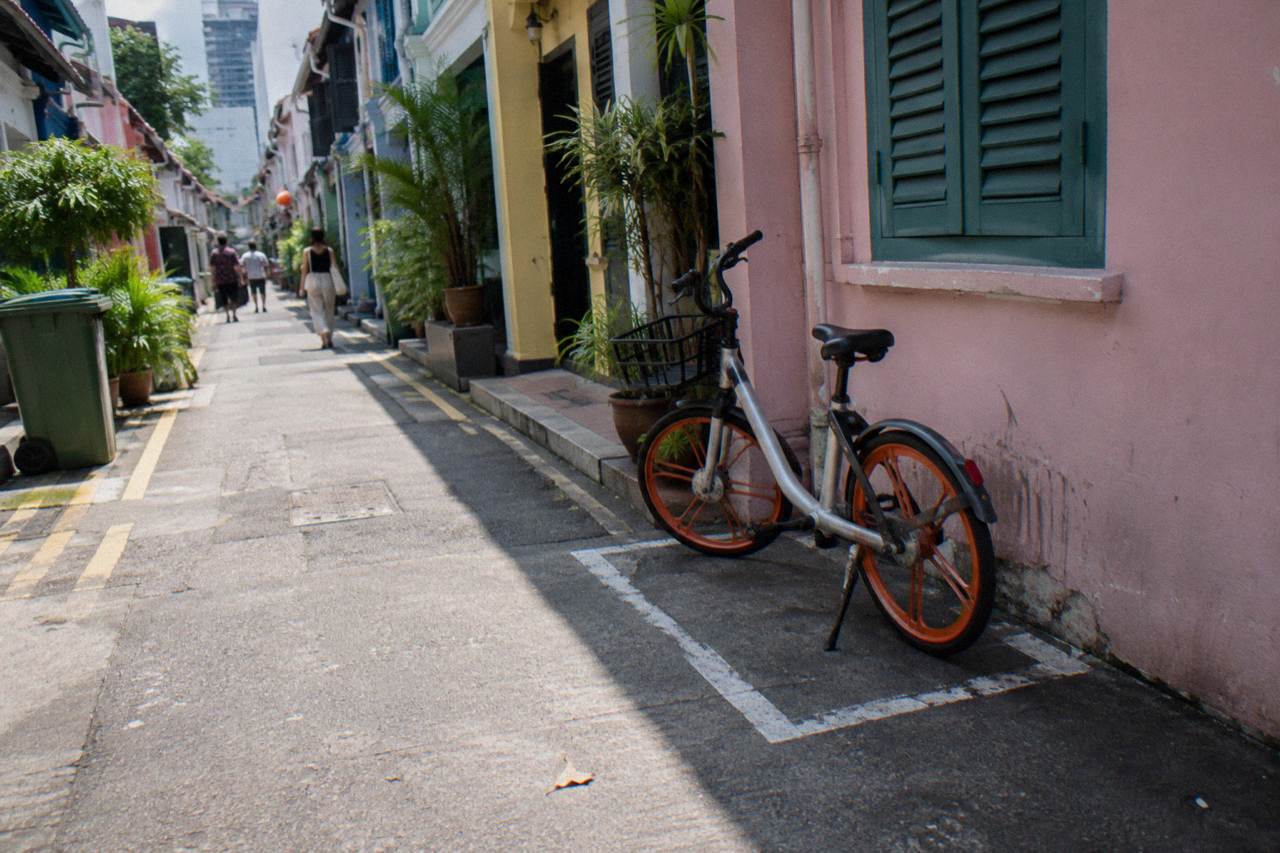
There is no fixed answer, because both operators price each ride through their own apps and neither publishes a standing public fare schedule. What is fixed is everything around the price: both are licensed by the LTA, both unlock by app and QR code, and both apply the same $5 penalty for parking outside a designated zone, so the real comparison is the per-ride rate inside each app against the length of trip you actually need.
Anywheel and HelloRide hold the only two bicycle sharing licences the Land Transport Authority has issued in Singapore. That matters for a cost question more than it first appears. A licensed operator has to meet device, parking and fleet rules that push both companies toward the same charging model: a per-ride or per-minute rate, charged in the app, tied to a bike you unlock with a QR code and return inside a designated parking zone. Neither operator can win on convenience by scattering bikes anywhere riders like, because both are required to keep bikes inside those painted zones.
So the honest answer to "which is cheaper" is: check each app's current rate card for the trip you have in mind, and compare like with like. A rate card in one app may look lower per minute and higher to start, or the reverse. Both apps show the rate before you unlock, so the comparison takes about a minute of standing on the pavement. The differences worth caring about are the structure of the charge and what happens at the end of the ride, not the brand on the frame.
What this page can settle is the structure, the shared rules, and the point at which a shared bike stops being the cheap option. When the clock passes an hour or two, or when the point of the ride is a route rather than a bike, the options covered here shift the math: a guided tour from the list below starts at prices that compete with a long session on a shared bike, and it comes with a guide, a helmet and a route already planned. The comparison pages in the Singapore bike sharing guide and the operator specific write-ups on Anywheel in Singapore and HelloRide in Singapore go deeper on each app.
The table below is what is genuinely the same across the two operators. Everything in it comes from the licensing regime, not from either company's marketing.
| Feature | Anywheel | HelloRide |
|---|---|---|
| LTA licence to operate shared bicycles | Yes, one of only two issued | Yes, one of only two issued |
| Unlock method | App, locate on map, scan QR code | App, QR scan, NFC tap-to-ride on supported bikes |
| Trip end | Park in designated zone, scan zone QR | Park in designated zone, scan zone QR |
| Improper parking penalty | $5 operator charge | $5 operator charge |
| Repeat offenders | Can be banned | Can be banned |
| Payment | In-app | In-app |
How Do The Two Apps Charge For A Ride In Singapore?
Both Singapore bike sharing apps charge per ride, with rates set inside each app rather than by any public fare schedule, so the true cost of a trip depends on the current rate card shown in the app at the moment you unlock. Short rides of ten to twenty minutes are usually the cheapest way to use either operator, while longer trips can quickly make other transport options better value.
The charging logic is worth spelling out, because it decides the answer more than the per-minute figure does. Both apps charge from unlock to trip end. The clock includes the time you spend riding, not the time the bike stands still in a zone, but every minute you keep the bike out is a minute you pay for, including the minutes spent finding your bearings at a junction or walking the bike through a crowd. On a short point-to-point ride, that barely registers. On a leisurely loop around Marina Bay with photo stops, the meter keeps running through every stop, and a two hour wander through the city can cost more than a guided tour that covers the same ground with someone who knows where to point the camera.
“My guide was Jason, a Singaporean with lots of knowledge of his country's history and who takes you to all major sights using pleasant and safe bicycle shortcuts. Morning was not too hot and Jason always stopped at shaded spots for his explanations. We passed plenty of restrooms and the best ice cream vendor in town!”
Neither operator's fare schedule is treated as a verified figure here, so none is printed. What the two apps ask for per ride and per minute changes with promotions, and any number quoted today could be stale by the time you ride. The reliable move is to open both apps before you leave your hotel, put in the same trip length you expect to ride, and read the rate each one shows at unlock. Both apps display it before you scan, so there is no guesswork and no commitment until the QR code is scanned.
A few structural points do hold, and they shape the cost more than most riders expect:
- Both operators use designated parking zones, marked with QR codes in the app and painted bays on the street, so the end of every trip involves finding a zone, not locking to a rack or dropping the bike anywhere.
- The $5 improper parking penalty applies on both apps, charged by the operator to the rider, and repeat offenders can be banned across operators.
- Bikes are the same legal device class under the Active Mobility Act regardless of brand, so the speed limits, path rules and helmet rules are identical on either app.
- HelloRide bikes with NFC tap-to-ride can be started faster, which trims seconds rather than dollars, but it also removes a friction point on short hops.
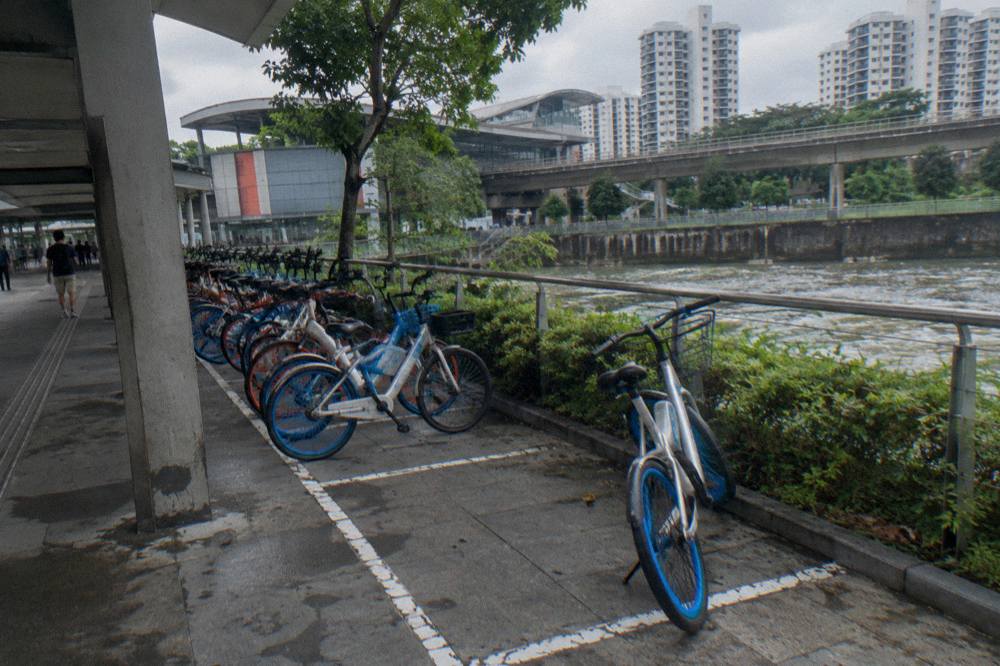
For a visitor, the practical split is simple. If the plan is a twenty minute hop from an MRT station to a hawker centre, either app is cheap and the choice comes down to which one has a bike in the zone nearest the door. If the plan is a half day of riding through the civic district, the waterfront and a food stop or two, the per-minute meter stops being the cheap route and the flat priced options start to matter.
The one cost neither app charges for, and a visitor should never ride without, is a route worth riding. Both apps will get you wheels. Neither will tell you which park connector leads somewhere worth seeing, where the skyline photo is taken from, or which hawker stall the locals queue at. That is the gap a guided tour fills, and it is the reason the cost comparison should include at least one tour in the same spreadsheet as the two apps.
What Happens If You Park Outside A Designated Zone?
The penalty is a $5 fee charged by the operator to your account, and repeat offenders can be banned across operators, which is a far bigger cost than the fee itself. The rule is identical on both apps because it comes from the licensing regime rather than from either company, and about 95 percent of trips already end inside the zones, so the fee is the exception rather than the norm.
- Small group13 of 23
- Private5 of 23
- Group type not stated5 of 23
The mechanics come from the authority, not the app. Riders must park only in designated parking zones and scan the zone's QR code to end the trip properly, per LTA's code of conduct for active mobility. Failing to do so triggers the operator's $5 penalty, and the Ministry of Transport has confirmed the fee structure in its reply on shared bicycle parking complaints and fines. The point is not the money, which is small, but the pattern: three improper parks in a calendar year is the typical threshold for a ban, and a ban on one operator can close the door on the other, since the enforcement is coordinated.
For a cost comparison this changes the math in one specific way. A shared bike is only cheap if the trip ends where a zone sits. If your destination is a stretch of East Coast Park or a corner of Kampong Glam with no zone nearby, the last ten minutes of the ride are spent hunting a legal ending point while the meter runs, and the $5 fee is the alternative. A guided tour never has this problem: the operator brings the bikes to the meeting point and takes them away at the end, and the parking logistics are the operator's, not yours.
This is also where the guided options start to look less like a luxury and more like a priced-in convenience. The Marina Bay Night Ride, 2 Hours, run by Lets Go Tour Singapore, starts at the operator's shop near the bay, hands you a full-sized bicycle and helmet, and takes you around the lit skyline and the Gardens by the Bay approach in a group capped at 15. It is rated 4.9 across 598 reviews and priced from $48.02 per person, with the total depending on group size. Two hours of shared bike time plus the risk of a parking penalty plus the cost of getting lost after dark adds up to a genuine comparison, not an obvious win for the app.
One more shared rule worth knowing before you ride either app: the bike you unlock is a bicycle under the Active Mobility Act, which means footpaths capped at 10 km/h where riding is allowed, 25 km/h on cycling and shared paths, and no riding at all on footpaths that have been converted to Pedestrian-Only Paths since 1 July 2025. The details are in the cycling rules guide for visitors. A fine for riding on the wrong path costs more than any fare difference between the two apps, and no amount of comparison shopping protects against it.
When Is A Guided Tour Cheaper Than Bike Sharing In Singapore?
A guided tour beats Singapore bike sharing on price once your ride stretches past about one to two hours, because tours charge a flat rate for a fixed block of time while shared bikes run like a meter with a parking constraint at the end. Tours start from $47 per person for two hours and from $64.03 for four, comparable to a long bike share session, and they include a guide, a route and usually a helmet and water.
- Up to 2 hours4 tours
- 3 to 4 hours17 tours
- 5 to 6 hours1 tour
- 7 hours or more1 tour
The crossover is not exact, because neither app's rate card is verified here, but the shape of the comparison holds regardless of where the per-minute rate sits. Shared bike pricing rewards short, direct hops. Tour pricing rewards a block of time in which you see something. Once the plan is "see Singapore for an afternoon," the meter on a shared bike is working against you: photo stops, food stops, a wrong turn, a rest in the shade, all billable minutes. A tour converts those same minutes into a flat cost with a route attached, and the route is usually the part a visitor could not have built alone. The full index of guides sits on Singapore Bike Tours.
The touring options here make the point with real figures. The table below lists the rides that compete most directly with a long session on a shared bike, with prices and durations exactly as the operators state them.
| Tour | Meets At | Duration | Price per person | Reviews |
|---|---|---|---|---|
| River Route via F1 Track | Esplanade Mall, Raffles Avenue | 2 hours | From $47 | 14 reviews, no star claim |
| Marina Bay Night Ride, 2 Hours | Lets Go Tour Singapore | 2 hours | From $48.02 | 4.9 across 598 reviews |
| Small Group, Max 10 Guests | Esplanade Mall, Raffles Avenue | 4 hours | From $64.03 | 4.8 across 74 reviews |
| Full-Sized Bikes, Small Group | Lets Go Tour Singapore | 4 hours | From $64.03 | 5.0 across 1,559 reviews |
| Katong Food Ride, Meal Included | Dakota MRT Station | 4 hours | From $96.05 | 5.0 across 337 reviews |
| Brompton Bike, Coffeeshop Coffee Stop | King Albert Park | 4 hours | From $96.05 | 14 reviews, no star claim |
Read the durations against your own pace. Two hours on a night ride around Marina Bay is a loop, not a commute, and the price sits under fifty dollars. Four hours on a full-sized bike with a licensed local guide, a snack and a drink included, sits at just over sixty. A shared bike session of four hours, at whatever the app charges per minute, plus the parking hunt at the end, is very unlikely to beat either, and it comes without the guide.
The food rides change the arithmetic again, because they replace a meal you would have bought anyway. The Katong Food Ride, Meal Included, run by Bike Around Tour Singapore, meets at Dakota MRT Station and spends four hours riding the east coast and Katong heritage streets with a licensed local guide, snacks and foods included in the price, which is from $96.05 per person in a group capped at 8. Against that, a shared bike covering the same ground is only the transport: you would still buy the laksa, and you would still be guessing which stall. The Singapore food tour options page sets out the food rides side by side.
What Does A Tour Include That A Shared Bike Does Not?
A tour price bundles the route, the guide, and in most cases a helmet, water and a rain poncho, all of which are separate costs or missing entirely on a shared bike. Every tour on the list includes the bicycle itself, so the comparison is not bike versus bike, it is bike versus bike plus a plan, and the plan is usually where the value sits for a first time visitor.
Work through the bundle item by item. The bicycle is included on every tour here, so the frame comparison cancels out. The helmet is included on some tours and available on request on others, and on a shared bike it is not part of the deal at all, which matters because helmets are mandatory on roads and advised on park connectors. Bottled water appears on most of the rides, a rain poncho on nearly all of them, which in a country with a mean of 171 rain days a year is not a gimmick. The guide is the part with no equivalent in either app: licensed, English speaking, and legally required on several of these listings.
- Bike23 of 23
- Guide19 of 23
- Drinks14 of 23
- Helmet11 of 23
- Meal or food stop8 of 23
A listing that does not mention an item is not counted as leaving it out.
The route is the hidden line item. Every tour here has one built and tested: the F1 track approach to the river, the Katong shophouses, the Marina Bay skyline at night. A rider on a shared bike builds that route alone, usually from a search results page, and pays metered minutes for every wrong turn while doing it. The Singapore cycling routes and cycling in the rain pages cover the planning side, but planning is exactly what a tour price buys out of.
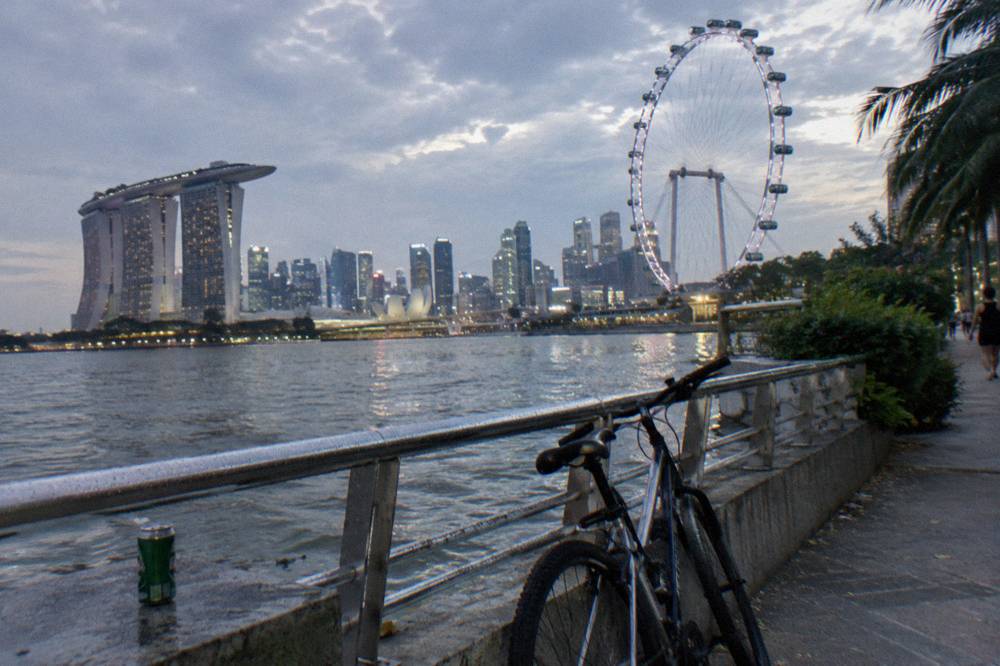
Two tours show the bundle at its clearest. The River Route via F1 Track, run by City Scoot from Esplanade Mall, is a two hour ride along the Singapore River and the Marina Bay circuit on the actual Formula 1 street track, from $47 per person in a group capped at 12, with bike, helmet, water and a licensed English speaking guide included. It carries 14 reviews, too few for a star claim, but the format is the point: a route a first time visitor would not find, at a price under a typical dinner.
The Full-Sized Bikes, Small Group ride from Lets Go Tour Singapore is the volume pick: 5.0 across 1,559 reviews, four hours, from $64.03 per person in a group capped at 15, with a licensed guide, a local snack and drink, water and a poncho included. That review pool is the largest on the list and the price is mid-range, which is the combination a cautious spender should notice. The same operator runs the Small Group, Max 10 Guests format at the same from price with drinks included, and the private versus group tour page explains when the smaller cap is worth it.
The same logic extends to the specialist rides. The Sunrise Ride, Local Breakfast from Punggol Field is 3 to 4 hours from $48.02 per person with breakfast included, in a group capped at 5. The 5-Hour Nature Ride from The Cycle Startup, based at GoCycling @ Punggol Park, is from $84.04 with a helmet and water included, in a group capped at 4. Neither of these is a route a shared bike and a map app replace cheaply, and both carry perfect scores on small review pools, so the count matters more than the stars.
Should A Visitor Use Bike Sharing Or A Guided Ride In Singapore?
Use a shared bike for short hops between points you already know, and use a guided ride for anything longer than about an hour or anything whose point is the route. Both apps are licensed, identical in their unlock and parking mechanics, and identical in the $5 improper parking penalty, so the app choice is a small one; the bigger cost decision is metered minutes versus a flat priced block with a guide.
Put the two side by side for the trips a visitor actually takes. A fifteen minute ride from a hotel to a museum is a shared bike's best case: cheap on either app, no planning needed, park and scan. A three hour exploration of the civic district, Chinatown and the bay at night is a tour's best case: flat price, helmet and water in the bundle, a licensed guide answering questions, and no parking hunt at the finish. The mistake is using the cheap tool for the expensive job, which usually means a metered afternoon with an unplanned route.
Cost is not the only axis either. Riding in Singapore is safe and well provided for, with over 350 km of park connectors and a clear path hierarchy, but the rules are specific: 10 km/h on footpaths where riding is allowed, 25 km/h on shared and cycling paths, no bicycles on Pedestrian-Only Paths, helmet on roads. A guide keeps a visitor on the right paths by default, which is worth something on a first visit. The best time to cycle and what to wear pages cover the rest of the preparation.
So, which is cheaper, Anywheel or HelloRide? For a short hop, whichever app has a bike closer to you, checked against each app's current rate card before you scan. For a proper ride around the island, neither: the guided options here start at prices that a long metered session reaches quickly, and they come with the thing no shared bike rents out, which is the plan.
Common Questions About Bike Sharing Costs In Singapore
Which Is Cheaper, Anywheel Or HelloRide?
Neither is cheaper in a fixed way. Both are LTA licensed, both charge per ride inside their own apps, and neither publishes a standing public fare schedule. Compare each app's current rate card for the trip length you need before you unlock, and expect the difference between the two to be small on short rides.
Do Anywheel And HelloRide Charge The Same Penalty For Bad Parking?
Yes. Both operators charge a $5 fee for parking outside a designated zone, and both can ban repeat offenders. The rule comes from the licensing regime, not from either company, so it is identical across the two apps.
Can You Rent An Electric Bike From Anywheel Or HelloRide?
No. Both operators run regular bicycles, and power assisted bicycles in Singapore are tightly regulated: riders must be at least 16, the device must be type approved, sealed and registered, and the rider must pass a mandatory theory test. There is no casual visitor e-bike rental.
When Does A Guided Bike Tour Cost Less Than Bike Sharing?
Roughly once your ride passes one to two hours. A shared bike is a running meter with a parking constraint at the end, while a tour is a flat price for a block of time with the bicycle, and usually the helmet, water and route included. Guided rides here start from $47 per person for two hours and from $64.03 for four hours.
Do You Need A Helmet On A Shared Bike In Singapore?
On roads a helmet is mandatory for all riders. On park connectors NParks advises a helmet. Neither app includes one, while most guided tours include or offer one on request, which is a real cost difference if you do not travel with your own.
Is A Shared Bike Or A Tour Better For A Short Ride?
For a point to point hop under about twenty minutes, a shared bike is usually the cheaper and faster option on either app. For anything where the route itself is the point, a guided tour is the better spend, because no app sells the plan.