HelloRide Singapore: Parking Rules And How It Compares
HelloRide is one of only two operators licensed to run shared bicycles in Singapore, and its rules are stricter than most visitors expect. Here is how the app, the parking zones and the penalties actually work, and where a guided ride fits in.
Short answer
HelloRide is one of two licensed shared-bike operators in Singapore, alongside Anywheel. You unlock a bike through the app by QR code, ride on cycling and shared paths at up to 25 km/h, and end every trip inside a designated parking zone by scanning its code. Parking outside a zone draws a $5 penalty fee, and repeat offenders can be banned.
Singapore keeps its shared-bicycle market deliberately tight. Only two operators hold licences to run dockless bike fleets island-wide, and HelloRide is one of them. That licence is not a formality: it is the reason every trip has to end inside a designated parking zone, why a $5 penalty fee exists, and why repeat offenders can find themselves locked out of every shared bike in the city.
This page walks through how HelloRide works in practice, where its bikes may and may not be ridden, and how the experience compares with Anywheel, the other licensed operator. It also looks at the point where a shared bike stops being the right tool: a visitor who wants routes chosen, stories told and food stops planned is usually better served by a guided ride such as the Lion City Bike Tour, a 4-hour small-group circuit rated 5.0 across 6,579 reviews, from $68.03 per person. Before comparing the two operators, it helps to know what each ride actually costs, and the Anywheel hourly pricing breakdown explains exactly how those charges add up.
What Is HelloRide In Singapore?
**HelloRide is one of the two operators licensed to run shared bicycles in Singapore, alongside Anywheel. The fleet is dockless: you find a bike in the app, scan its QR code to unlock, and end the trip inside a designated parking zone by scanning the zone's code. Casual rental here means standard pedal bicycles; power-assisted bicycles are a separate, type-approved category with their own rules. ** For a comparison, the guide to Anywheel's parking zones and unlock process covers how the other licensed fleet works.
The licensing matters more here than in most cities. Singapore regulates shared bicycles under the same Active Mobility framework that governs private bikes, so a HelloRide ride is legally a bicycle ride: the same path rules, the same speed limits, the same helmet requirement on roads. The Land Transport Authority sets out all of this in its rules and code of conduct, and the short version is that device type determines where you may ride.
The model is dockless, which is the source of both its convenience and its friction. There are no fixed stations, so a bike can appear a street away from where you are standing. In exchange, the operator requires trips to end in designated parking zones rather than wherever you happen to stop, because a bike abandoned on a footpath is exactly the problem the licensing regime was built to prevent.
Fares and passes are shown in the app before you unlock. The app shows live pricing before you unlock, and that is the honest place to check it. What is verified is the mechanics: QR unlock, designated-zone returns, and the penalty structure around them.
One point worth separating early: power-assisted bicycles are a different device class entirely. A PAB must be type-approved, sealed and registered, its rider must be at least 16 and must have passed a theory test before riding on cycling paths or roads. That is not something a visitor can casually rent for an afternoon, and no guided tour on this site uses one. Every HelloRide bike, and every guided ride compared below, is a regular pedal bicycle.
| Feature | What applies |
|---|---|
| Licence | One of two licensed shared-bike operators in Singapore |
| Bike type | Regular pedal bicycle, not motorised |
| Unlock | QR code scan through the HelloRide app |
| Trip end | Scan a designated parking zone's QR code |
| Penalty | $5 fee charged for parking outside a designated zone |
| Repeat offenders | Can be banned from shared-bike services |
| Fares and passes | Shown in the app before unlock, not fixed figures |
How Do You Unlock And Return A HelloRide Bike?
Unlocking takes four steps: download the HelloRide app, set up an account with a payment method, locate the nearest bike on the map, and scan the bike's QR code to release the lock. To finish, ride to a designated parking zone, scan that zone's QR code, and the trip closes in the app with the bike locked behind you.
The app is the whole interface. There is no membership card, no counter, no deposit handover. The map shows available bikes nearby, each with its own QR code printed on the frame, and the scan links that physical bike to your account for the duration of the ride. Payment runs through the app by card or local options. Some reports also mention a tap-to-unlock option on HelloRide bikes using a phone's NFC chip, but the QR scan is the route every source agrees on, so treat tap as a possibility rather than a promise.
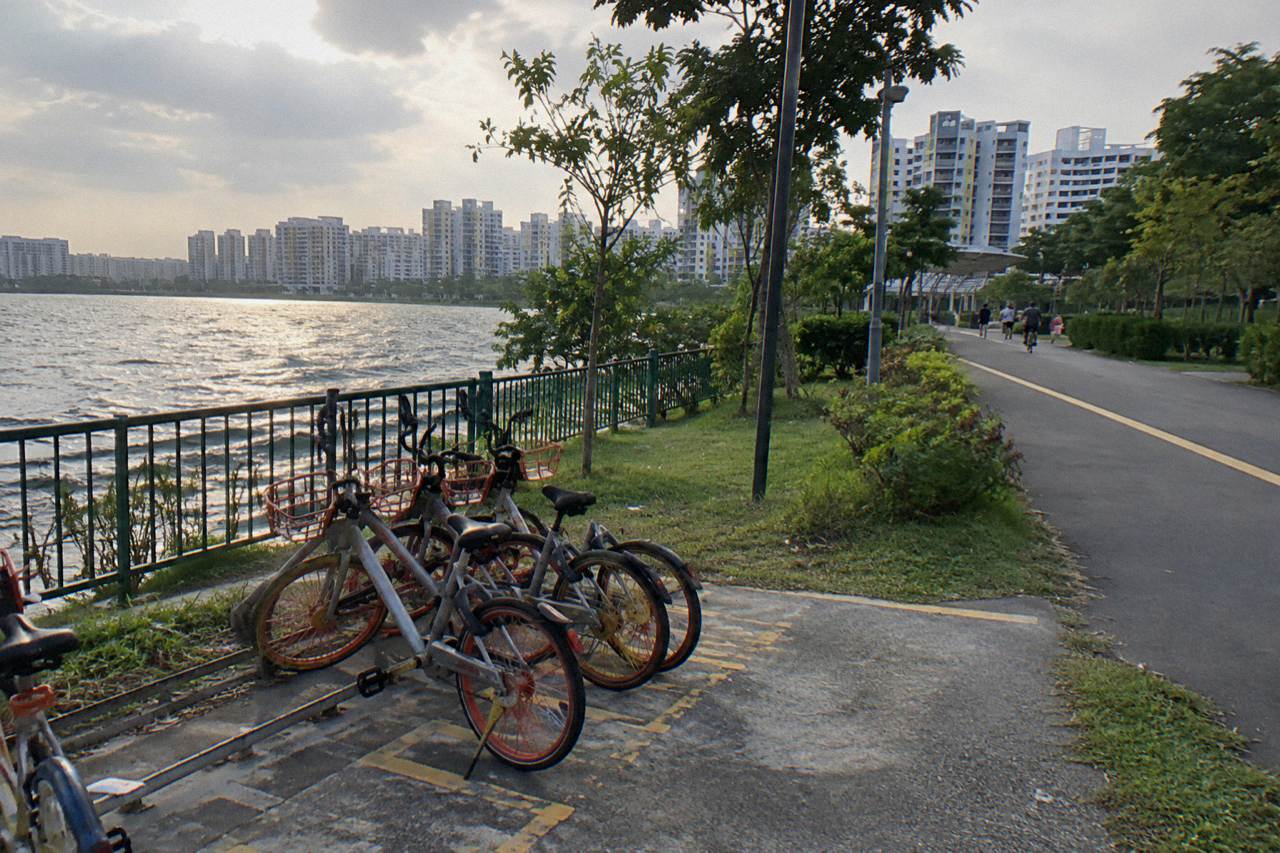
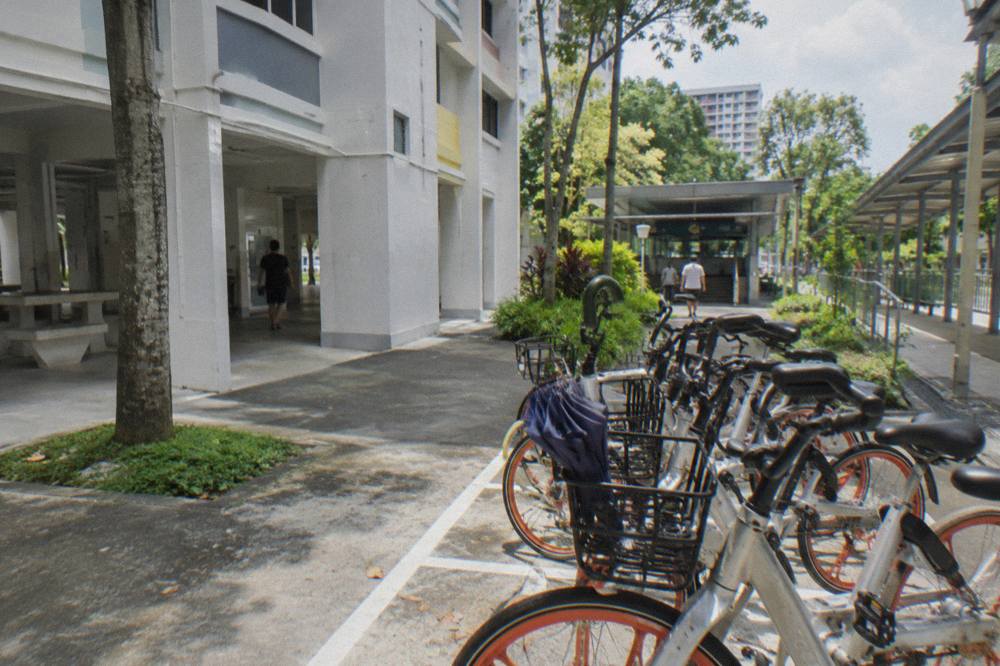
Ending the trip is where most first-time users slip. The ride does not finish when you dismount, it finishes when you scan the zone's QR code from inside a designated parking area. The app marks these zones on the map, generally near MRT stations, housing blocks and park entrances. If you lock the bike anywhere else, the trip stays open or draws the penalty fee, which is covered in detail further down.
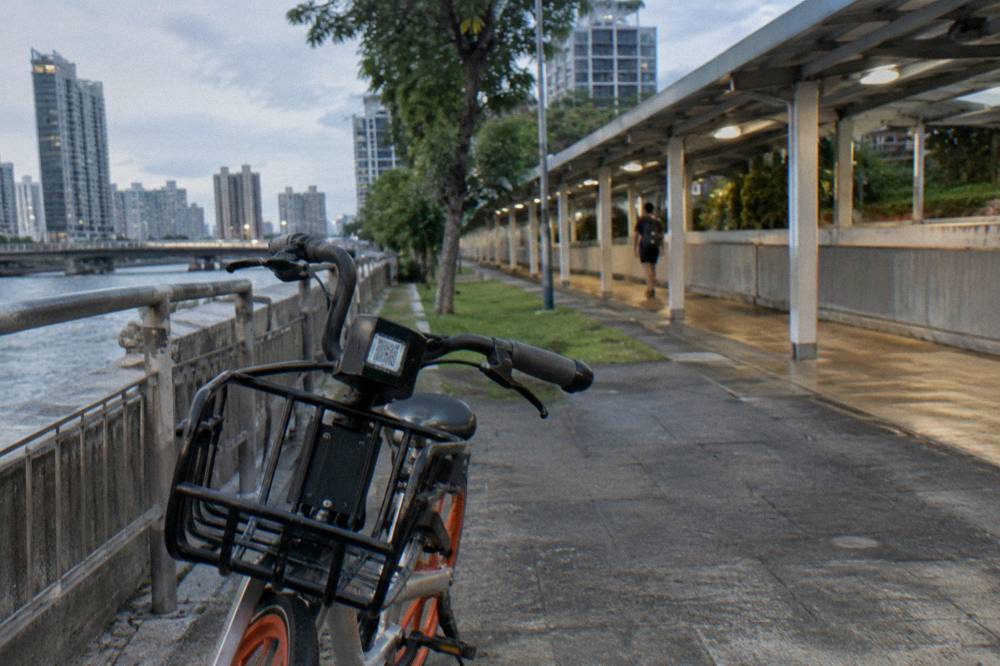
For a visitor, the practical use case is a short hop: MRT station to a food centre, hotel to a park connector, one neighbourhood to the next. That is what dockless bikes are built for, and both licensed operators fill that role competently. What a shared bike does not do is choose a route, explain a building, or know which hawker stall is worth the queue.
That is the gap a guided ride fills, and it is worth seeing the three side by side before deciding which way to spend a morning or an evening in the city.
All three of those options run on regular bicycles with a licensed local guide attached, and all three list free cancellation on their booking pages. The choice between them is really a choice of format: a 4-hour heritage circuit, a 4-hour small-group ride capped at 15, or a 2-hour night loop around Marina Bay. A shared bike competes with none of them on those terms, it competes on price and spontaneity, and it wins that contest only for short, self-directed hops.
Where Can You Park A HelloRide Bike In Singapore?
Every trip has to end inside an LTA-designated parking zone, shown in the app's map and marked with QR codes. You scan the zone's code to close the trip properly, and the operator treats a trip as ended only then. Around 95 percent of shared-bike trips in Singapore already finish this way, and parking outside a zone draws a $5 penalty fee from the operator.
The designated-zone system is the trade the operators made for their licences. In exchange for putting thousands of dockless bikes on the streets, they accepted the cost and the obligation of keeping those bikes out of the way. Riders park only in designated zones and scan the QR code to end the trip, per the Ministry of Transport's own summary.
In practice the zones are dense where bikes are dense. Expect them at MRT stations, near park connector entrances, around housing estates and close to major attractions. The app will not let you pretend otherwise for long: a bike locked outside a zone is visible to the operator's system, and the fee follows the account that unlocked it.
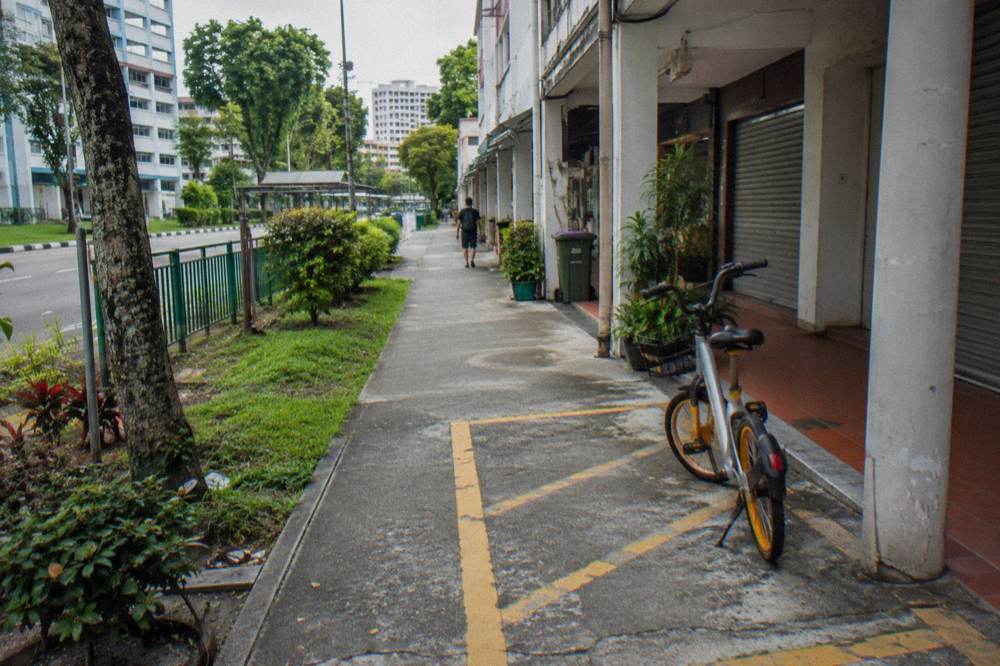
Visitors should budget a minute at the end of every ride for the parking step. It is the difference between a $5 charge and a clean trip, and it is the single most common mistake new users make. Check the map as you approach your destination, not after you arrive, because the nearest zone is sometimes a block past where you wanted to stop.
The same logic applies to sightseeing. A shared bike parked correctly at a designated zone near a landmark still leaves you walking the last stretch, and in a city where the highlights sit close together, that walking adds up. Guides solve it by parking the whole group at once, in a spot chosen for the route rather than for zone density.
What Happens If You Park Outside A Designated Zone?
The operator charges a $5 penalty fee when a bike is left outside a designated zone, and repeat offenders can be banned from shared-bike services. Enforcement on the paths is a separate system: since 1 July 2025, riding on a Pedestrian-Only Path carries penalties of up to $2,000 and/or up to three months' imprisonment for a first offence.
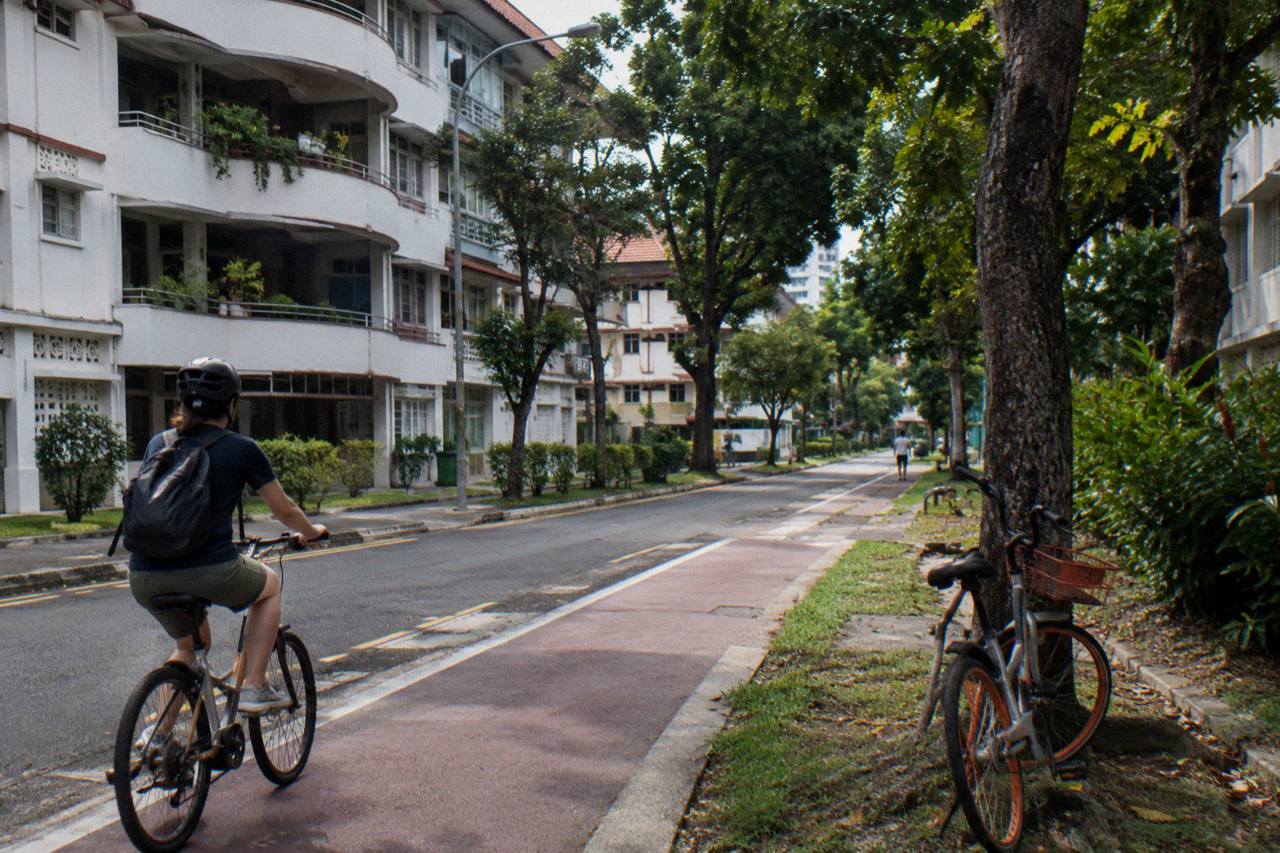
Those are two different regimes and it is worth keeping them apart. The $5 fee is commercial: the operator charges the account that ended a trip in the wrong place, roughly five percent of trips by the compliance figures, and the ban applies to riders who do it repeatedly. The $2,000 figure is statutory, it belongs specifically to the Pedestrian-Only Path offence, and the LTA enforcement release announcing the start of enforcement notes that officers take a measured approach to genuine confusion while holding a hard line on speeding and reckless riding.
The Pedestrian-Only Path rule is newer than most guidebooks. Since 1 July 2025, footpaths that run beside dedicated cycling paths have been converted to pedestrian-only use across areas including Tampines, Punggol, Sengkang, Yishun and Clementi, with Toa Payoh first in January 2025. Bicycles and non-motorised personal mobility devices are no longer allowed on those converted sections at all. Standalone footpaths and shared paths are unaffected, which is why reading the surface matters more than memorising a list.
- Up to 2 hours4 tours
- 3 to 4 hours17 tours
- 5 to 6 hours1 tour
- 7 hours or more1 tour
For a tourist on a HelloRide bike, the practical version is simple. Ride in the marked lane where there is one, drop to footpath pace, 10 km/h, where there is not, and never ride a converted pedestrian-only section. The signage is explicit at the conversions, and dismounting for twenty metres costs nothing.
If any of this reads like friction, that is a fair reaction, and it is the honest case for handing the logistics to someone who does them daily.
How Does HelloRide Compare With Anywheel In Singapore?
The two licensed operators are close twins on process: both run dockless regular bicycles, both unlock by QR code through an app, both require trips to end in designated parking zones, and both charge the same $5 penalty for parking outside one. The real differences sit in coverage, bike availability and app experience, and fares move too often to be compared as fixed figures.
Anywheel and HelloRide hold the only two licences, so the comparison is genuinely a two-horse race rather than a category. Both fleets are standard pedal bicycles. Both apps show a map with nearby bikes and nearby zones. Both follow the same designated-zone rules because those rules attach to the licence, not to the brand. A rider who has used one will operate the other within a minute of downloading it.
Where they can differ is where the bikes actually are. Availability shifts with demand, with the time of day and with how quickly each operator rebalances its fleet, so a flat statement about which is easier to find would be a guess dressed as a fact. HelloRide is also reported to be reachable through a ride-hailing app integration alongside its own app, which some travelers find convenient, though the standalone app remains the dependable route.
| Aspect | HelloRide | Anywheel |
|---|---|---|
| Licence | Licensed shared-bike operator | Licensed shared-bike operator |
| Bike type | Regular pedal bicycle | Regular pedal bicycle |
| Unlock | QR code scan in the app | QR code scan in the app |
| Where trips end | LTA-designated parking zones | LTA-designated parking zones |
| Penalty outside a zone | $5 operator fee | $5 operator fee |
| Repeat offenders | Ban possible | Ban possible |
| Fares | Shown in the app | Shown in the app |
The fuller picture of the rival operator, including how its fleet and app behave in practice, sits in the Anywheel operator guide, and the wider scene, including how both fit into Singapore's transport map, is covered in the bike sharing overview.
One honest conclusion: for a short tourist ride, the operator matters less than the parking discipline. Both bikes ride the same paths, end in the same zones and draw the same fee when misused. Choose whichever has a bike closer, and spend the saved energy on where to ride.
Where a shared bike runs out of usefulness is the guided territory: anything involving commentary, a planned food stop, or a route through neighborhoods a first-time visitor would not find alone. The 4-hour small-group rides are the natural upgrade path, and the mid-price options in that format are worth a look on their own merits.
That ride runs with City Scoot from Esplanade Mall, capped at 10 guests, with a licensed guide, helmet, bottled water and a raincoat included, from $64.03 per person. It is rated 4.8 across 74 reviews, and with the group capped at ten guests it keeps a small-ride feel while covering the same central-city ground as the longer heritage rides, with the price sitting at the low end of the four-hour options.
Where Can You Ride A HelloRide Bike In Singapore?
Shared bicycles may ride on cycling paths and shared paths at up to 25 km/h, on footpaths at up to 10 km/h, and on roads following the road speed limit, with a helmet mandatory on roads. They are banned from Pedestrian-Only Paths beside cycling paths, from expressways and from road tunnels, and from the gazetted nature reserves.
The path system is colour-coded and worth learning once. Cycling paths run red or dark grey with a cyclist logo. Shared paths carry both cyclist and pedestrian logos. Footpaths, the unmarked strips beside roads and inside housing estates, are legal for bicycles at 10 km/h. The LTA's own device-by-path breakdown sets out all of it, and the Ministry of Transport has also explained that the 25 km/h shared-path figure simply reflects normal cycling speed rather than an arbitrary cap.
| Path type | Typical marking | Speed limit | Shared bikes |
|---|---|---|---|
| Cycling path | Red or dark grey, cyclist logo | 25 km/h | Allowed |
| Shared path | Cyclist and pedestrian logos | 25 km/h | Allowed |
| Footpath | Unmarked path beside roads | 10 km/h | Allowed, except converted sections |
| Pedestrian-Only Path | Pedestrian markings beside a cycling path | Not applicable | Not allowed |
| Road | Follow the road speed limit | Road limit | Allowed, helmet mandatory |
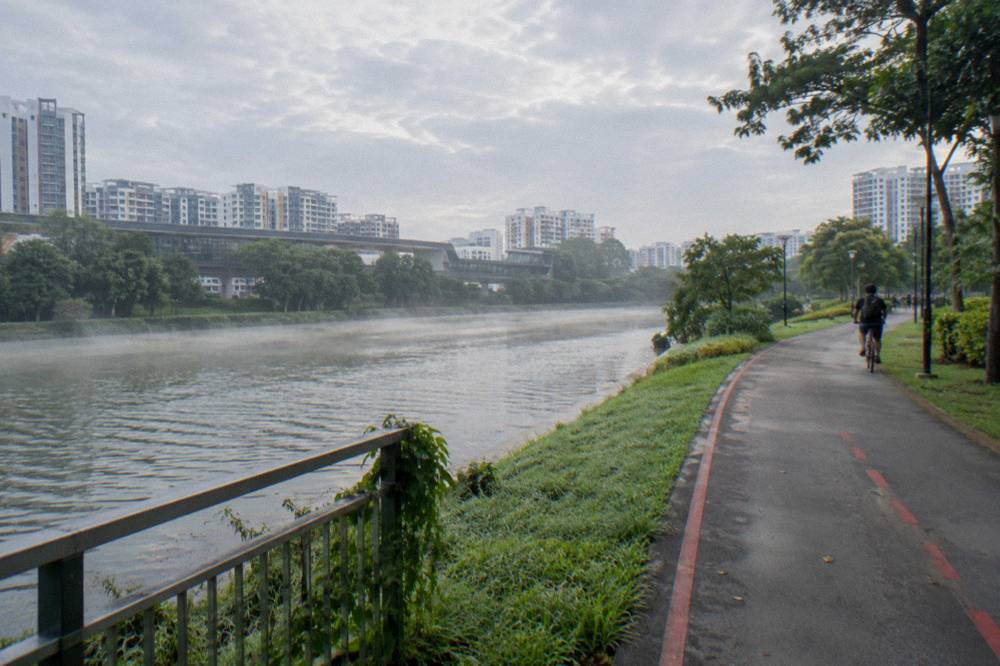
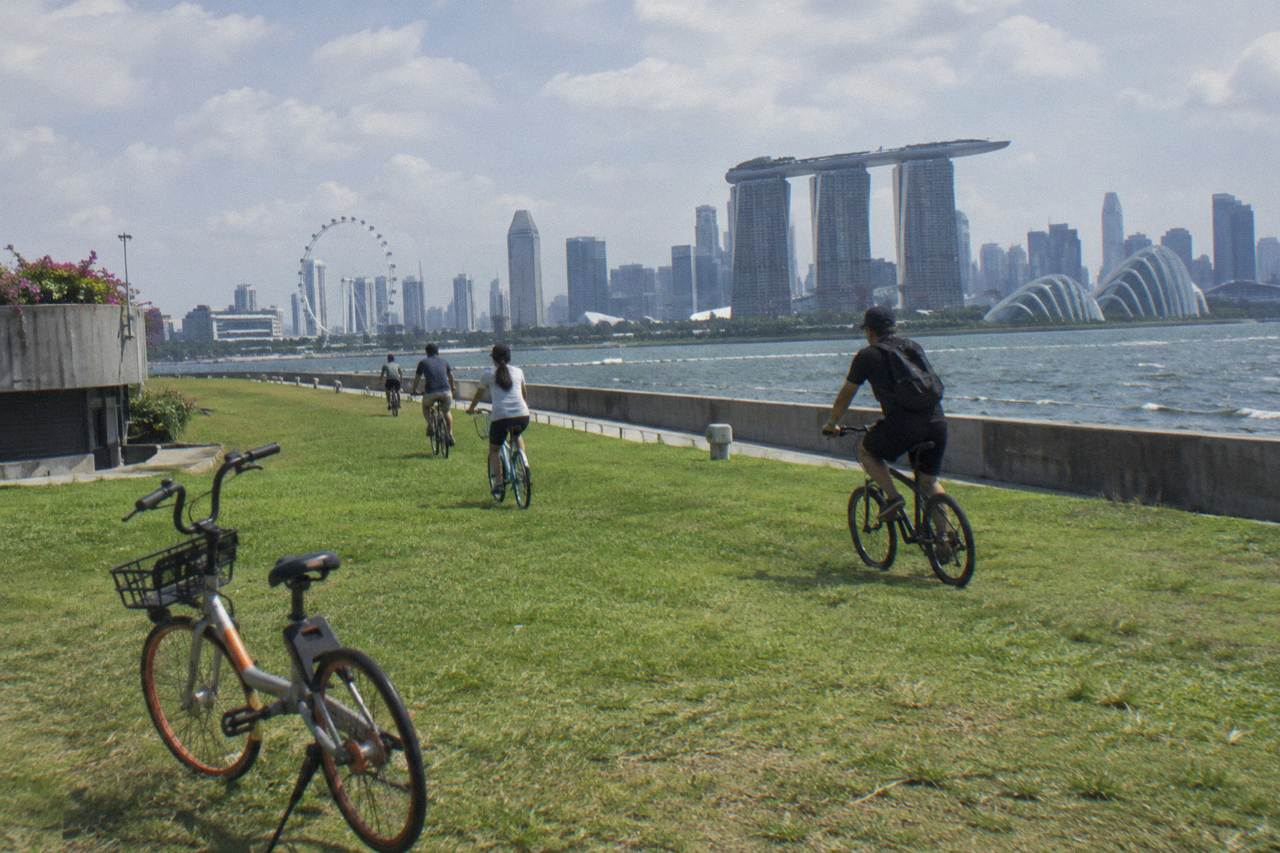
The park connector network is where most pleasant shared-bike kilometers happen. NParks counts over 350 km of connectors linking parks, rivers and coasts, with red continuous lines marking shared paths and red dotted lines marking attention zones at bus stops, crossings and playgrounds, where cyclists are expected to slow and give way. The etiquette is plain: keep left except when overtaking, give way to pedestrians, look out at junctions. NParks also advises a helmet on the connectors, which most guided operators provide as standard and most shared-bike riders do not carry. The connectors along Marina Bay make the bay itself one of the easiest rides from the network, so if you fancy a scenic finish, our routes and bike parking guide for Gardens by the Bay covers the waterfront paths and where the racks tend to sit.
A few places stay off limits regardless of markings. The four gazetted nature reserves, the Henderson Waves bridge, the boardwalks at Pasir Ris and Coney Island, and the Botanic Gardens all prohibit cycling, and mangrove boardwalks generally require dismounting. None of this is hidden, the signs are physical and frequent, but a first-time rider can be surprised by how quickly a pleasant path turns into a walk-the-bike stretch.
HelloRide Singapore: Key Rules And Figures
Numbers that affect every shared-bike trip and where it ends
- $5Penalty for parking outside a zone
- up to $2,000Fine for riding a pedestrian-only path
- About 95 percentOf shared-bike trips end in a zone
- 10 km/hFootpath pace where no marked lane
On roads, the obligations stack up. Helmets are mandatory for riders and pillion passengers, riding stays as close to the left edge as practicable, single file is required on single-lane roads and during bus lane hours, and groups are limited to five bicycles in single file or ten riding two abreast. Lights, white front and red rear, are required after dark. None of this is exotic, but it is enforced, and the police issued summonses to roughly 650 cyclists in the last half of 2025, largely for signal and helmet offences.
When Does A Guided Tour Beat A Shared Bike In Singapore?
A shared bike suits short hops under your own steam, an hour along a connector or a crossing to a food centre. A guided tour suits visitors who want the route chosen, the commentary included and the food stops planned: guided options here run from $47 for a river and Marina Bay ride on the F1 track to $224.11 for a full-day private tour with lunch, and several include rain gear as standard.
- Bike23 of 23
- Guide19 of 23
- Drinks14 of 23
- Helmet11 of 23
- Meal or food stop8 of 23
A listing that does not mention an item is not counted as leaving it out.
The honest dividing line is intention. A HelloRide unlock is a tool for getting somewhere, and it does that well inside the parking rules. A guided tour is a curated experience, and the difference shows up in what you are not doing: not checking a map for zones, not planning around path types, not guessing which hawker centre deserves your appetite. The guided rides covered on Singapore Bike Tours all run on regular pedal bicycles, the same machine a shared unlock gives you, minus the parking pressure and plus a licensed guide.
Rain is part of that value, and November is the wrong month to underestimate it. The Meteorological Service Singapore 1991 to 2020 normals for Changi put November and December together at the wettest stretch of the year, with the northeast monsoon settling in and rain days at their annual peak, and guided operators plan for it. The Lion City ride includes a disposable poncho by default, City Scoot hands out raincoats, and several operators here describe their tours as rain-or-shine activities rather than cancellable weather gambles.
The Lion City Bike Tour is the natural reference point in that field. It runs 4 hours with Bike Around Tour Singapore, capped at 12 riders, with a licensed local guide and a poncho included, from $68.03 per person. It carries a 5.0 rating across 6,579 reviews, one of the most heavily reviewed rides anywhere in the city, which is the sort of pool that makes a rating meaningful rather than decorative. Check availability
Food is the other axis where the formats diverge. A shared bike gets you to a hawker centre; a food-focused guided ride gets you there with a guide who knows the stalls and, on the rides where a meal is included, pays for the plate. That distinction is real money on a family itinerary, and the costs of the main formats are worth seeing side by side.
| Guided ride | Duration | Reviews | Price from |
|---|---|---|---|
| Licensed Guide, Poncho Included | 4 hours | 5.0 across 6,579 reviews | $68.03 per person |
| Full-Sized Bikes, Small Group | 4 hours | 5.0 across 1,559 reviews | $64.03 per person |
| Marina Bay Night Ride, 2 Hours | 2 hours | 4.9 across 598 reviews | $48.02 per person |
| Small Group, Max 10 Guests | 4 hours | 4.8 across 74 reviews | $64.03 per person |
| Bike and Bites, 3 Hours | 3 hours | 4.9 across 282 reviews | $79.24 per person |
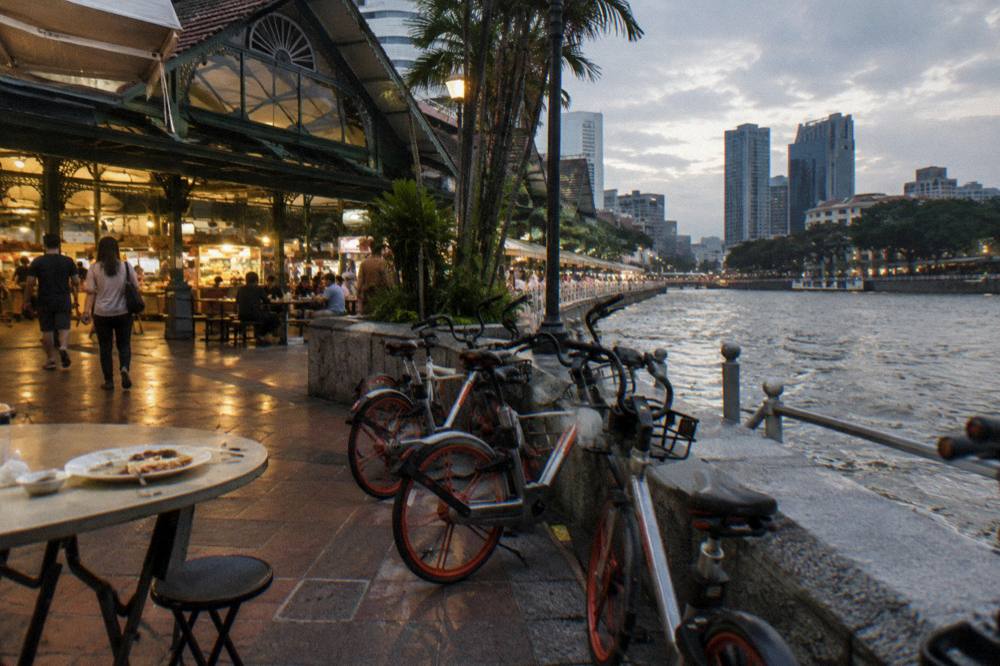
The Bike and Bites ride illustrates the food case cleanly. It runs 3 hours with a licensed local guide and a planned circuit of shared local bites, described by the operator as a cultural introduction rather than a full meal, from $79.24 per person with free cancellation listed. Rated 4.9 across 282 reviews, it sits between the cheap morning formats and the full-day private options, and it removes both the parking question and the where-to-eat question in one booking.
Budget-conscious riders have a third path worth naming: the sunrise format. The Sunrise Ride, Local Breakfast option runs 3 to 4 hours from Punggol Field, capped at 5 riders, with breakfast, bottled water, a helmet, a poncho and a souvenir included, from $48.02 per person. It has 3 reviews so far, but for an early start with everything included it holds its own against longer rides.
Private formats are the other end of the same scale. A private ride such as the 7 to 8 hour Full-Day option with food tastings and lunch included runs from $224.11 per person, and the costs of guided tours break that trade down in more detail. None of these replace a shared bike for a quick errand. All of them replace the parts of a visit where the shared bike leaves you on your own.
Common Questions About HelloRide In Singapore
Is HelloRide Available In Singapore?
Yes. HelloRide is one of the two operators licensed to run shared bicycles in Singapore, alongside Anywheel. Bikes are dockless and unlocked through the HelloRide app by QR code, and every trip must end in a designated parking zone.
How Much Does A HelloRide Bike Cost In Singapore?
The app shows live pricing before each unlock, and that is where to check. The one fixed cost in the system is the $5 penalty fee for parking outside a designated zone.
Can Tourists Use HelloRide In Singapore?
Yes. There is no separate rule set for visitors: tourists follow the same Active Mobility rules as residents. That means 25 km/h on cycling and shared paths, 10 km/h on footpaths, a helmet on roads, and no riding on Pedestrian-Only Paths beside cycling paths.
Do You Need A Helmet On A HelloRide Bike?
On roads, yes, a helmet is mandatory for cyclists under the Road Traffic rules. On park connectors, NParks advises a helmet rather than requiring one. Shared-bike fleets do not generally distribute helmets, so riders planning road time should bring their own.
Can You Ride A HelloRide Bike On The Footpath?
On ordinary footpaths, yes, at up to 10 km/h. On footpaths converted to Pedestrian-Only Paths beside dedicated cycling paths, no: since 1 July 2025 bicycles are prohibited on those sections, with first offences carrying up to $2,000 and/or three months' imprisonment.
What Happens If You Park Outside A Designated Zone?
The operator charges a $5 penalty fee to the account that ended the trip, and repeat offenders can be banned from shared-bike services.