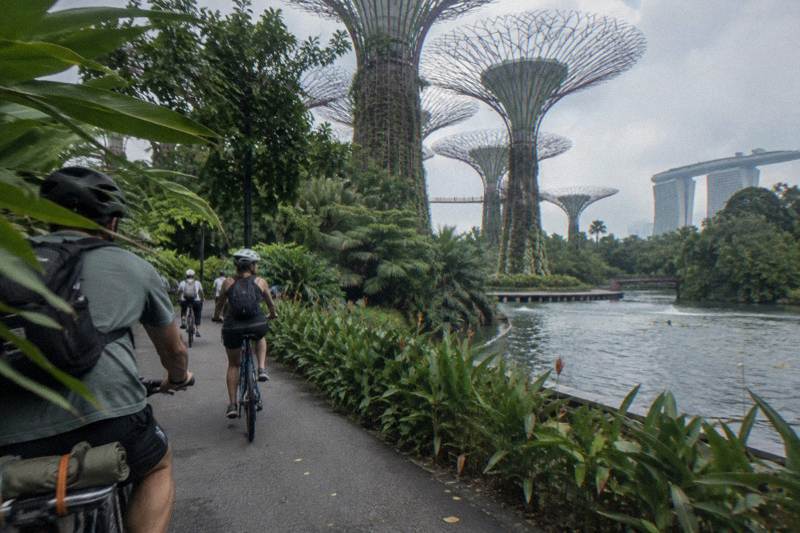
Cycling Sentosa: Rentals, Routes And Beach Stops
Sentosa allows cycling on about 12 km of designated trails and charges cyclists nothing to enter. Here is how rentals work, which trails to ride, and how the island compares to a guided mainland tour.
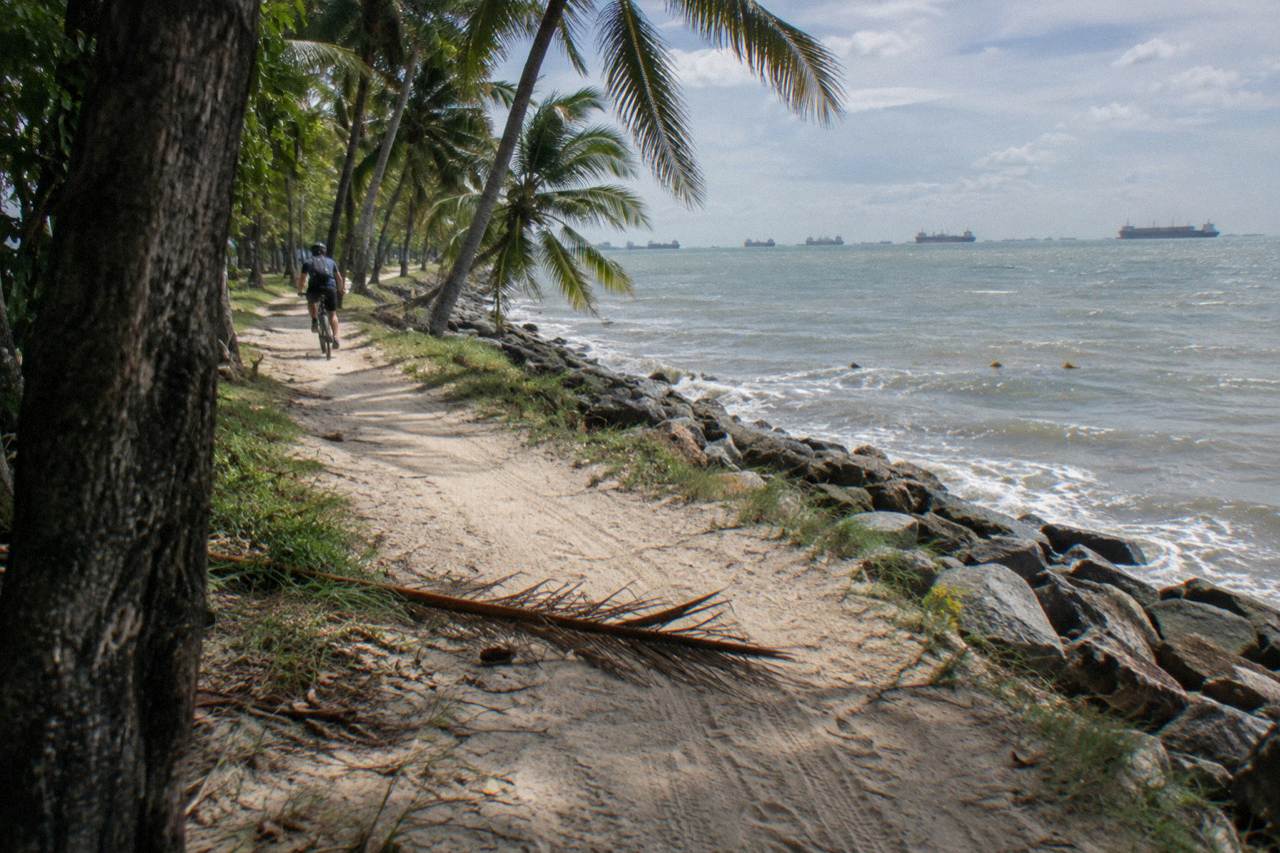
Short answer
Yes, cycling is allowed on Sentosa, on about 12 km of designated cycling trails, and cyclists pay no island admission charge. Rentals come from shared-bike apps or island shops. Guided alternatives all start on the mainland, from $47 per person for a 2-hour river route up to about $93 for a coastal airport ride.
Sentosa runs about 12 km of designated cycling trails between its beaches, resorts and pockets of green, and the island charges cyclists nothing to come in. Riders enter from the Sentosa Boardwalk beside VivoCity, use the designated cycling track beside the boardwalk, dismount once at the underpass along the way, and pedal off toward Siloso, Palawan or Tanjong. It is a small island with real hills, which is exactly why the trail choice matters more than the mileage suggests.
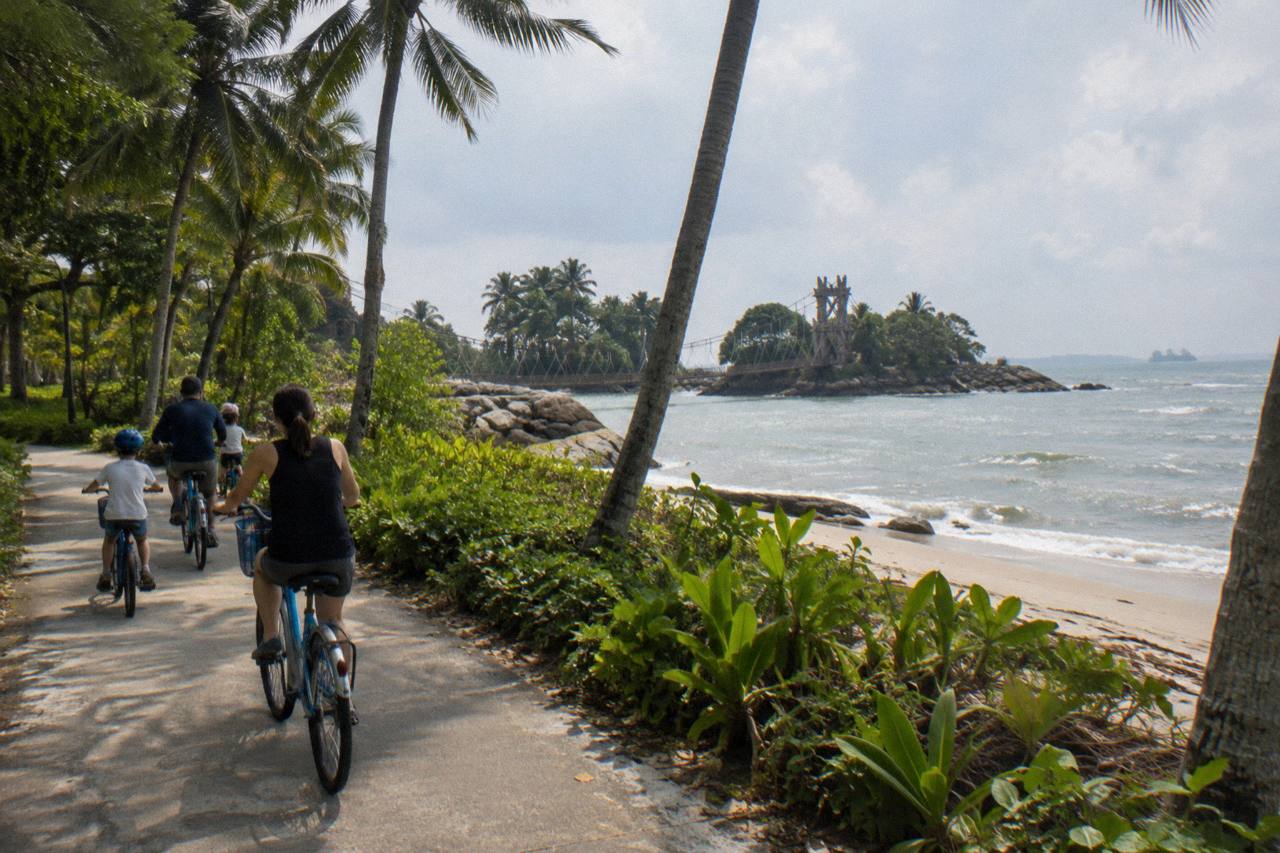
What Sentosa does not have is a guided cycling operation of its own. None of the guided rides covered on Singapore Bike Tours starts on the island; they all meet on the mainland, at points like Esplanade Mall, Punggol Park and Changi Airport Terminal 2. The cheapest of them, the River Route via F1 Track, is a 2-hour guided ride from $47 per person. So the real decision for most visitors is not whether to cycle Sentosa, but whether to rent on the island or book a guided ride elsewhere, and this page works through both sides of that choice: where rentals come from, which of the three official trails suits you, what rules apply, and when the weather cooperates.
Is Cycling Allowed On Sentosa Island?
Yes, cycling is allowed on Sentosa, but only on the island's designated cycling trails, roughly 12 km of them, rather than on every road and walkway. The official island guide lists three waymarked routes. Cyclists pay no island admission charge, enter via the boardwalk at VivoCity, and walk bikes through the single underpass on the way in. Riding on the pedestrian boardwalk itself is not permitted.
The island's own cycling resource, the official Sentosa cycling guide, sets the boundaries plainly. Cyclists arrive with their bikes at no charge, a policy the guide states directly, and from the boardwalk the designated trails take over. The three routes the guide describes are waymarked rather than improvised: they are planned lines through the island's traffic and terrain, which matters on an island where resort roads, shuttle buses and steep internal climbs all share space.
The boardwalk rule deserves emphasis because it is where new arrivals most often go wrong. Riders use the designated cycling track beside the Sentosa Boardwalk, dismounting once at the underpass to push the bike through; the pedestrian boardwalk stays off limits to bikes. The trails begin once you are properly on the island. None of this is obscure or negotiable, so plan the first ten minutes of a Sentosa bike day as walking minutes.
It is also worth being clear about what kind of cycling this is. These are regular, non-motorised bikes on shared island trails, not electric ones, and Singapore's power-assisted bicycle rules make an e-bike rental a poor fit for a casual visitor anyway. A Sentosa ride is a modest, social, beach-framed pedal, best treated as a slow loop rather than a training run. If you'd rather have dirt under your tyres than sand, our guide to off-road trails and rentals on Pulau Ubin and beyond covers where Singapore's proper mountain biking actually happens.
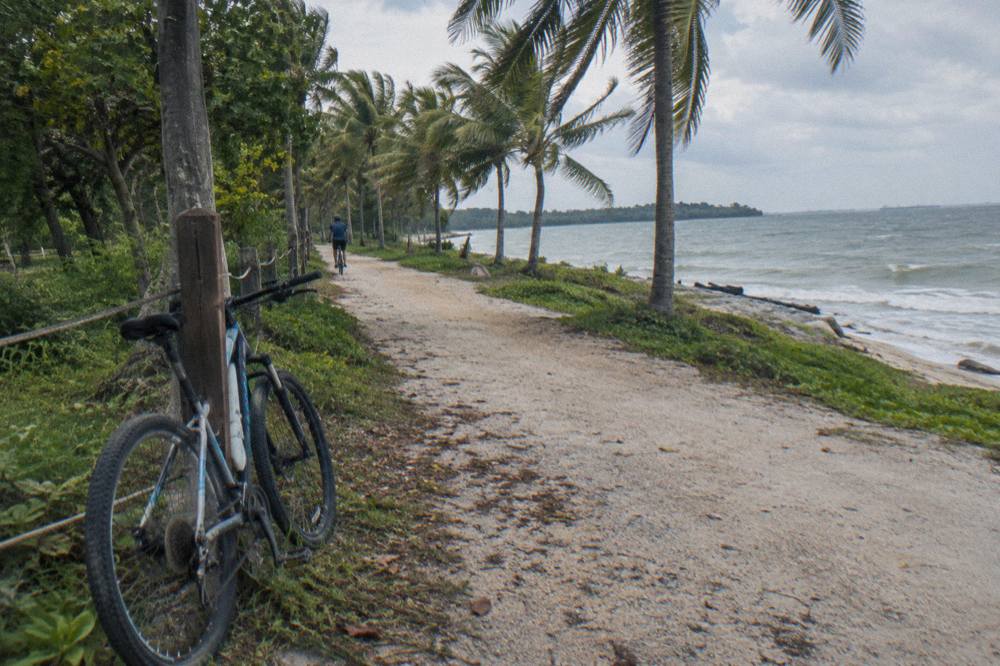
Where Do You Find A Sentosa Bike Rental?
Two routes exist. Shared bikes from Anywheel or HelloRide, the two operators licensed for shared bicycles in Singapore, unlock through their apps and must be returned to designated parking zones. Island rental shops also hand out bikes near the beaches, with rates and hours set shop by shop. Neither option includes a guide, a planned route or support, so trail choice and timing stay with the rider.
The shared-bike route is the most flexible. Both licensed operators run dockless bikes that are located on a map and unlocked by scanning a QR code. Payment happens in the app. The catch is where the trip ends: riders must park inside a designated zone and scan the zone's QR code to close the trip properly, a requirement that applies island-wide and on the mainland alike. The wider system behind these rules, including how the operators police it, is covered in the guide to Singapore's shared bike system.
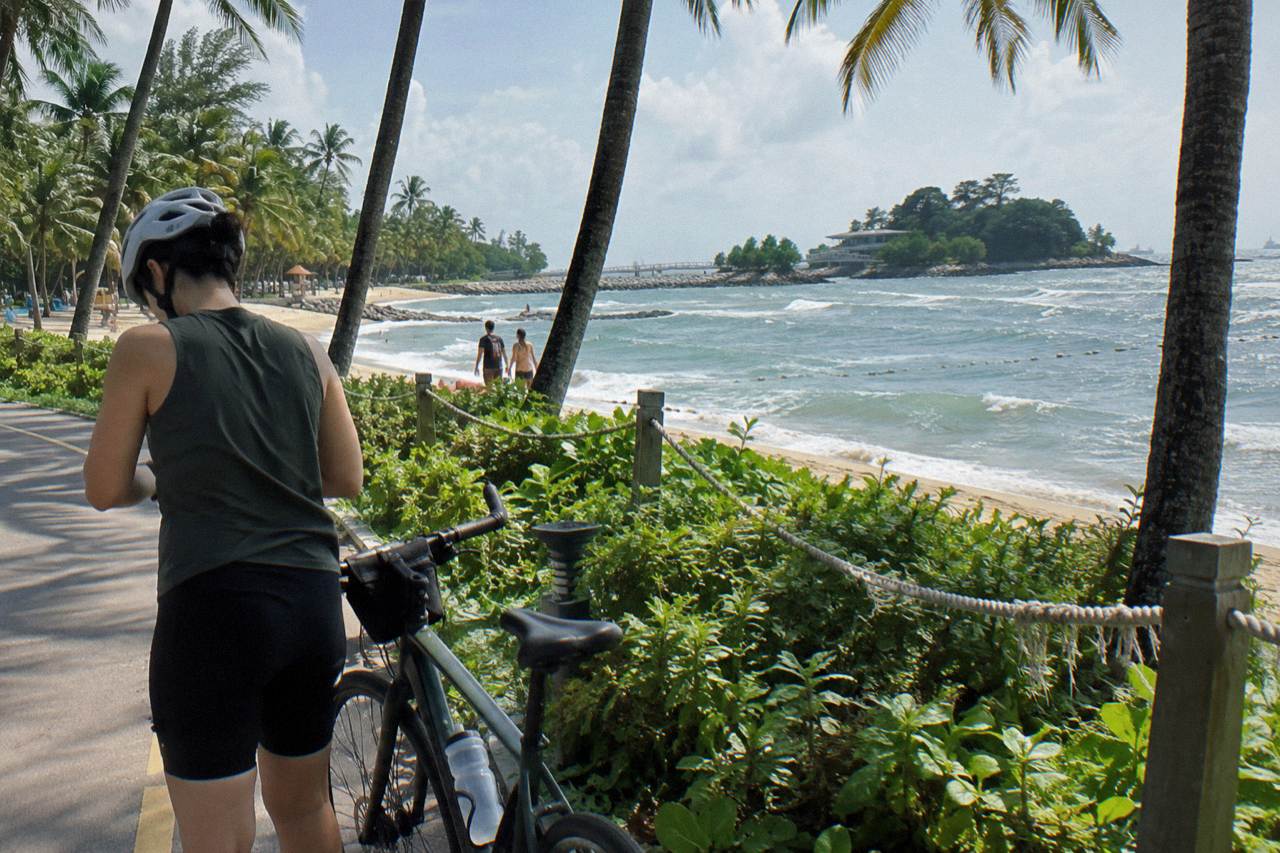
The penalty for ignoring the zones is real but modest. Operators charge a $5 penalty fee for trips that end outside designated parking zones, and repeat offenders can be banned, according to the transport ministry's note on shared-bike parking. The same note reports that about 95 percent of trips already end where they should, so the system works; it just needs riders to check the app map before they lock up.
Island rental shops are the second option, clustered around the beach areas. Their rates and opening hours vary by shop and are not published here, so ask at the counter what the day rate includes, whether helmets come with the bike, and what time the return is due. Shop bikes have one practical edge over shared ones: you keep the same machine all day rather than re-unlocking every couple of hours, which suits a full island loop with swim stops.
| Rental route | How it works | What to sort out first |
|---|---|---|
| Shared bikes (Anywheel, HelloRide) | App map, QR unlock, pay in app | End trips inside a designated zone, or a $5 penalty fee applies |
| Island rental shops | Counter rental near the beach areas | Ask the shop for rates, hours, helmet availability and return time |
| Bring your own bike | Walk it across the Sentosa Boardwalk at VivoCity | Dismount through the underpass; boardwalk riding is not allowed |
The honest summary is that a Sentosa rental buys a bicycle and nothing else. Water, route sense, helmet and the discipline to stop at the right moment all come from the rider. Plenty of visitors enjoy exactly that independence. For anyone who would rather hand the logistics to a licensed guide and spend the pedal effort on the scenery instead, three guided rides frame what the money buys.
How Does A Sentosa Rental Compare To A Guided Ride?
A Sentosa rental buys the bike alone: you pick the trail, carry the water and read the weather. A guided tour adds a licensed guide, a planned route and usually drinks or food, from $47 to $93 per person across the rides compared here. Every guided option starts on the mainland, none starts on Sentosa, and all of them run on regular bikes.
Price is the obvious first difference. The River Route via F1 Track, run by City Scoot from Esplanade Mall, is a 2-hour guided ride from $47 per person, with bicycle, helmet, bottled water and a licensed local guide included, and 14 reviews so far. At the other end of the scale here, the Airport Coastline Ride is a 2-hour coastal route from $93 per person. In between sits the 5-Hour Nature Ride from The Cycle Startup, from $84.04 per person, rated 5.0 across 37 reviews, with group sizes capped at 4, helmet, bandana and bottled water included.
- Bike23 of 23
- Guide19 of 23
- Drinks14 of 23
- Helmet11 of 23
- Meal or food stop8 of 23
A listing that does not mention an item is not counted as leaving it out.
What the extra money actually buys is structure. A guided ride hands over a route someone has already scouted, a guide who can read the group, and inclusions that remove small decisions. The 5-Hour Nature Ride stretches beyond the city into green corridors for a full half-day; the river route covers its highlights in a shorter 2-hour guided window. Neither requires you to plan a thing beyond arriving at the meeting point.
| Guided ride | From price | Duration | Reviews | Meeting point |
|---|---|---|---|---|
| Airport Coastline Ride, 2 Hours | $93 per person | 2 hours | New listing, no reviews yet | Changi Airport Ter 2 |
| 5-Hour Nature Ride | $84.04 per person | 5 hours | 5.0 across 37 reviews | GoCycling @ Punggol Park |
| River Route via F1 Track | $47 per person | 2 hours | 14 reviews so far | City Scoot at Esplanade Mall |
One pairing works particularly well for a Sentosa-minded visitor. The Airport Coastline Ride is a 2-hour guided coastal route that starts at Changi Airport Terminal 2, traces the shoreline, pauses for photos at Jurassic Mile and finishes with a coastal rest stop and a sandwich. It is a new listing with no reviews yet, so there is no rating to report, but the format is the same sea-and-sky riding that draws people to Sentosa, with a guide carrying the planning. Check availability
There is also a practical argument for booking over renting that has nothing to do with comfort. All three of these rides list free cancellation on their booking pages, which means a forecast of thunderstorms costs nothing to walk back. A rental shop bike booked for a fixed afternoon, by contrast, is a fixed afternoon whatever the sky does, and on an island whose trails are fully exposed, that is not a small thing.
Which Sentosa Cycling Trails Should You Ride?
Three official waymarked trails cover the island. Siloso to Palawan to Tanjong Beach runs 3.2 km along the coast and suits a first ride. VivoCity to Sentosa Cove measures under 6 km and the official guide calls it relatively challenging, with long or steep slopes. Sentosa Cove to VivoCity reverses that line. None of the three uses the pedestrian boardwalk.
The beach string is the easy answer. Siloso, Palawan and Tanjong sit side by side along the southern coast, linked by a 3.2 km trail that stays scenic and never far from a place to stop for a swim or a drink. It is the trail to pick for a first hour on the island, for families, or for anyone who wants the postcard version of Sentosa cycling without a climb. Because it is short, it also slots easily around a shared-bike rental window. If you're weighing whether Sentosa is the right pick for your crew, the best cycling spots in Singapore by rider type compares it against other routes around the island.
| Official trail | Distance | Character |
|---|---|---|
| Siloso to Palawan to Tanjong Beach | 3.2 km | Flat coastal riding past all three beaches |
| VivoCity to Sentosa Cove | Under 6 km | Relatively challenging, long or steep slopes |
| Sentosa Cove to VivoCity | Under 6 km | The same terrain ridden in reverse |
The Cove direction is the island's proper workout. The official guide describes the VivoCity to Sentosa Cove route as relatively challenging, a polite phrase for sustained climbing, and its distance, under 6 km, is short enough that the slopes rather than the kilometres are the story. Riders heading that way should expect to work, to want the gears, and possibly to walk the steeper pitches rather than grind through them. Done early in the morning, before the sun is high, it is the most rewarding stretch of cycling Sentosa offers. If the Cove climbs make you question your own bike, the guide to renting or fixing a bike in Singapore covers where to get a better one before you set out.
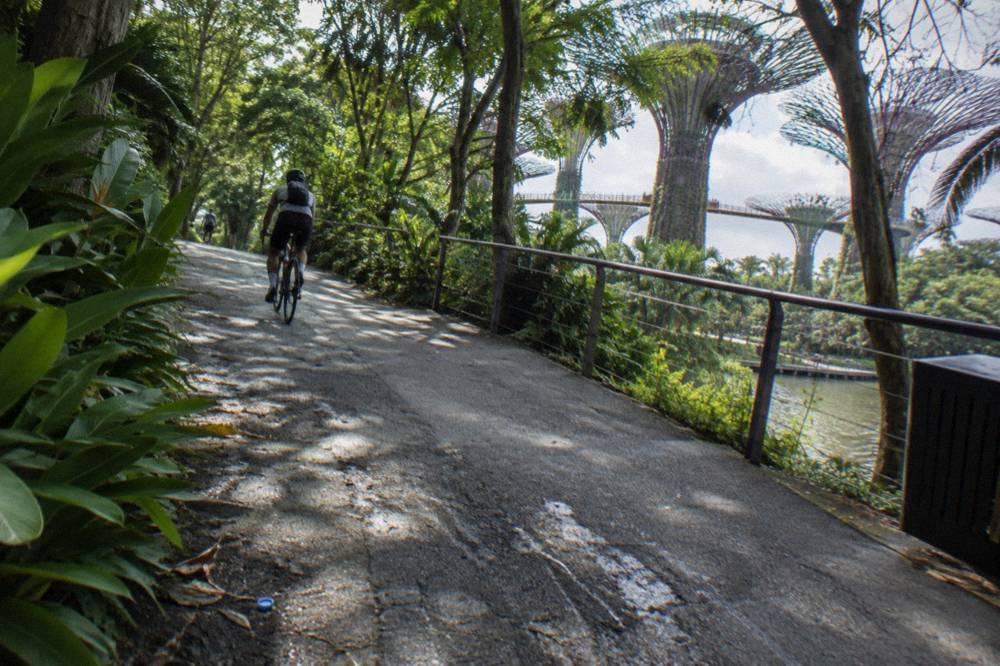
Practical notes hold for all three trails. They are shared paths, so pedestrians, and on busy afternoons plenty of them, have standing, and riders are expected to give way, slow near crowded sections and keep left unless overtaking. None of the trails crosses onto the pedestrian boardwalk, and the designated-trail rule means that the tempting-looking resort roads are not part of the route network. If a trail dead-ends at a beach club, the answer is to walk the bike, not to improvise.
What Cycling Rules Apply On Sentosa And In Singapore?
Sentosa follows Singapore's national active mobility rules. Shared paths and cycling paths carry a 25 km/h limit and footpaths 10 km/h, and a helmet is mandatory when cycling on roads. Since 1 July 2025 bicycles are barred from Pedestrian-Only Paths, where first offences can draw up to a $2,000 fine and/or three months of imprisonment. The island's trails are shared paths, so giving way to pedestrians is the operative rule.
- Jan222 mm
- Feb105 mm
- Mar152 mm
- Apr164 mm
- May164 mm
- Jun135 mm
- Jul147 mm
- Aug147 mm
- Sep125 mm
- Oct168 mm
- Nov252 mm
- Dec332 mm
Rain-days run from 8.5 (driest month) to 19.3 (wettest month).
The limits are simple and worth knowing before the first pedal stroke, because they apply island-wide. The LTA code of conduct sets out the full set: 25 km/h on shared and cycling paths, 10 km/h on footpaths, and on roads the ordinary road speed limit with a helmet on your head. Beyond the numbers, the guidance asks riders to give way to pedestrians, slow down near bus stops and junctions, dismount and push where signs say so, and fit a front white light and a rear red light after dark.
| Path type | Who may ride it | Speed limit |
|---|---|---|
| Cycling path | Bicycles and permitted devices | 25 km/h |
| Shared path | Cyclists and pedestrians together | 25 km/h |
| Footpath | Bicycles permitted | 10 km/h |
| Pedestrian-Only Path | Bicycles not allowed | Not applicable |
| Road | Cyclists, helmet mandatory | Follow the road speed limit |
The Pedestrian-Only Path rule deserves a sentence of its history. Since 1 July 2025, footpaths that run beside dedicated cycling paths have been converted to Pedestrian-Only Paths across parts of Singapore, and enforcement officers act on violations, with first-time offenders facing penalties of up to $2,000 and/or up to three months of imprisonment. That penalty belongs to this specific offence, and it is not a general cycling fine. On Sentosa the practical takeaway is narrower: the island's trails are shared paths, and the conversions mostly concern mainland estates, but a visitor riding to or from the island through the mainland should read the path markings.
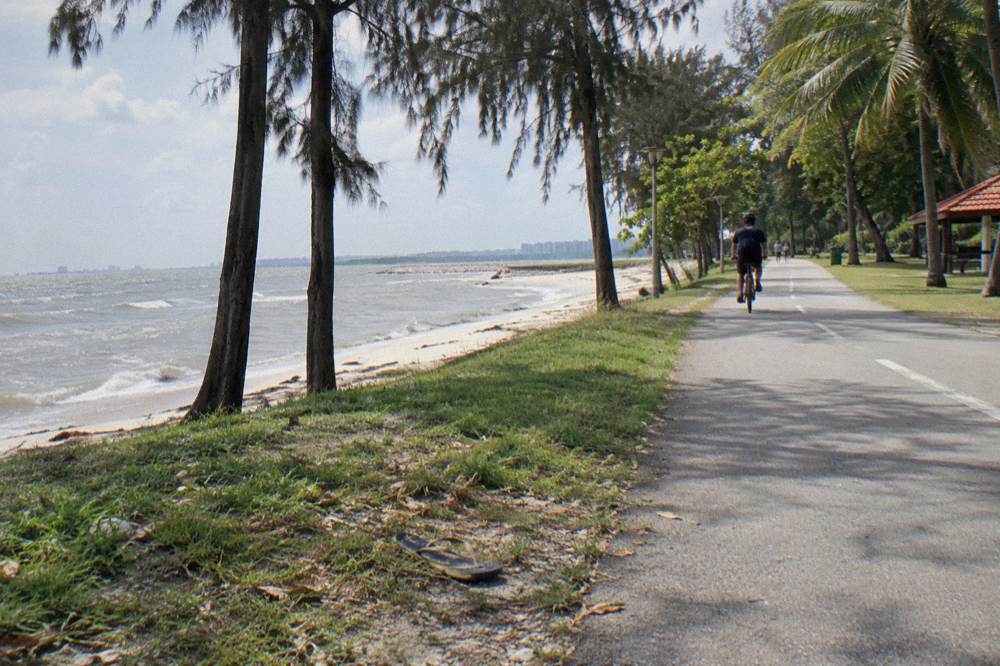
Guided rides are one way to outsource rule-reading entirely. A tour like the Marina Bay Night Ride, 2 Hours, from Lets Go Tour, runs from $48.02 per person with a 4.9 rating across 598 reviews, and puts an English-speaking licensed guide on the front of a group capped at 15. The same is true of the detailed rules for visitors: a guided route keeps a rider on the right paths by design, which is worth something on a first visit. For riders who prefer the river-and-bay scenery over beach scenery, the River Route via F1 Track covers that ground in a compact 2-hour format.
When Is The Best Time To Cycle On Sentosa?
Morning beats afternoon, and February beats everything. Singapore's 1991 to 2020 climate normals for Changi show the wettest stretch from November to January, with December averaging 331.9 mm of rain across 19.3 rain days. February is the driest month at 105.1 mm and 8.5 rain days, and May the hottest at a 24-hour mean of 28.6 C. Early starts dodge both the showers and the midday heat.
The seasonal pattern matters more here than in most cycling destinations because the island offers almost no shelter. The monsoon calendar from the Meteorological Service Singapore climate page runs Northeast monsoon from December to early March, a first inter-monsoon from late March to May, the Southwest monsoon from June to September and a second, wetter inter-monsoon in October to November. For Sentosa's exposed coastal trails, that translates into a simple rule: the November to January window carries the highest chance of a washed-out ride, and the February to March window the lowest.
| Month | Rainfall (mm) | Rain days | Sunshine (h/day) |
|---|---|---|---|
| February | 105.1 | 8.5 | 7.0 |
| May | 164.3 | 14.5 | 6.0 |
| July | 146.6 | 13.6 | 6.1 |
| October | 168.3 | 15.0 | 5.0 |
| November | 252.3 | 19.0 | 4.4 |
| December | 331.9 | 19.3 | 4.3 |
Within any given day, the timing logic is straightforward. Showers tend to build through the afternoon, and the sun is at its most punishing between late morning and mid-afternoon, which pushes serious riding toward the early hours. That is also when the beaches are quietest and the light is best for the photos at Siloso's end of the trail. A rider who starts at 8am has usually seen a full island loop, including the Cove climb, before the sky turns.
Guided operators have read the same calendar. The Sunrise Ride, Local Breakfast is built entirely around the early start: from $48.02 per person, 3 to 4 hours, meeting at Punggol Field, with breakfast, bottled water, a souvenir and a poncho folded in and groups capped at 5. It has 3 reviews so far, too few for a rating to mean much, but the format, pedal through the cool hours and eat after, is the right shape for a tropical morning.
For a fuller treatment of the seasonal question, including school-holiday timing and the monsoon transitions, the guide to the best time of year for cycling in Singapore works through it month by month.
What Should You Pack For A Sentosa Bike Day?
Water, sun protection and a helmet lead the list. Singapore averages 82 percent relative humidity across the year, so riders sweat earlier than they expect, and the Changi normals show 4.3 to 7.0 sunshine hours per day depending on month. Lights matter past dusk, since LTA rules require a front white light and a rear red light after dark. From November to January, add a poncho.
- Up to 2 hours4 tours
- 3 to 4 hours17 tours
- 5 to 6 hours1 tour
- 7 hours or more1 tour
The humidity number is the one that surprises people. At 82 percent on average, evaporative cooling barely works, and a climb that would be trivial in a temperate country turns into a shirt-soaking effort on Sentosa's slopes. Riders should carry more water than feels necessary, drink before they feel thirsty, and treat the beach stops as recovery rather than decoration. The shops along the trails sell drinks, but their hours are their own, and a bottle in the cage beats a plan that depends on a shop being open.
| Item | Why it earns its place |
|---|---|
| Water, more than feels enough | 82 percent average humidity removes the warning signs of dehydration |
| Helmet | Mandatory on roads, and NParks advises one on shared paths and trails |
| Front white and rear red lights | Required after dark under LTA rules |
| Sun protection | Trails are exposed; sunshine averages 4.3 to 7.0 hours per day by month |
| Poncho | November and December average about 19 rain days |
The helmet question comes up on every rental. On Singapore roads a helmet is mandatory, full stop, and NParks advises protective gear, riding in single file and keeping lights on at night for the park connector network that touches the mainland routes around the island. Island trails are gentler than roads, but the advice stands, and a rider who owns a helmet does well to bring it. Shop rental policies on helmets vary, so confirm at the counter rather than assuming.
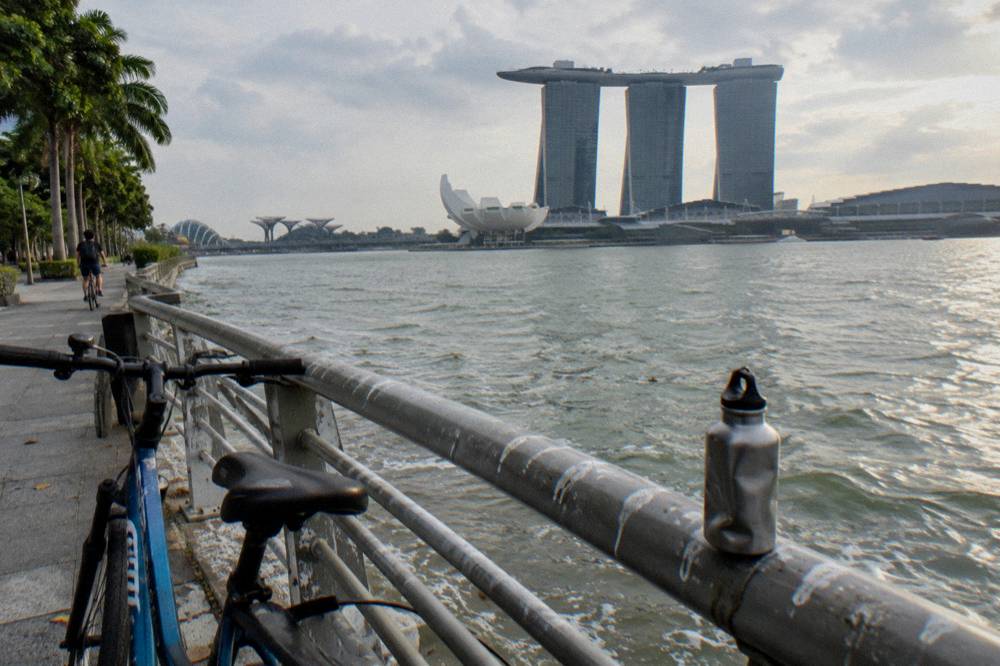
One quiet advantage of the guided alternative is that the packing list shrinks. The Full-Sized Bikes, Small Group ride from Lets Go Tour, from $64.03 per person and rated 5.0 across 1,559 reviews, the most reviewed ride of this set, includes the bike, a licensed guide, a local snack and drink, bottled water and a rain poncho, with bag storage during the ride. Bike and Bites, 3 Hours, from $79.24 per person with a 4.9 rating across 282 reviews, folds shared local bites into the same package. A rider who books one of those carries keys and a phone, and lets the operator worry about the rest.
By the time the packing is done, the shape of the day is usually clear. Sentosa rewards a slow start on the beach trail, an honest effort on the Cove climb, and a swim before the clouds build. For the days when none of that appeals, or when the forecast turns, the mainland guided rides take the whole question off the table.
Common Questions About Cycling Sentosa
Is Cycling Allowed On Sentosa Island?
Yes, on about 12 km of designated cycling trails. Cycling is not permitted on the pedestrian boardwalk, and riders walk bikes through the underpass on the way in from VivoCity. The official island guide lists three waymarked routes.
Do Cyclists Pay To Enter Sentosa?
No. The official Sentosa cycling guide states there are no island admission charges for cyclists, who enter via the Sentosa Boardwalk beside VivoCity with their bikes.
Where Do You Find A Sentosa Bike Rental?
Shared bikes from the two licensed operators, Anywheel and HelloRide, unlock through their apps and must be parked in designated zones, with a $5 penalty fee for trips that end outside them. Island rental shops near the beaches also rent bikes; ask at the counter for rates and hours.
Which Sentosa Cycling Trail Is Easiest?
The Siloso to Palawan to Tanjong Beach trail, 3.2 km of flat coastal riding. The VivoCity to Sentosa Cove route, under 6 km, is described by the official guide as relatively challenging, with long or steep slopes.
Can You Book A Guided Ride That Starts On Sentosa?
No guided ride in the options covered here starts on Sentosa. The guided tours all meet on the mainland, from $47 per person for a 2-hour river route to $93 for a coastal airport ride, and all run on regular bikes with free cancellation on their booking pages.