Singapore Cycling Shops: Where To Rent, Buy Or Repair
Singapore keeps a bicycle culture that most visitors never see: shared bikes on street corners, rental kiosks in the parks, and small independent shops that sell, fit and repair bikes for locals who ride daily. This guide walks through what those shops can and cannot do for a visitor, and where a guided ride with the bike supplied fits in.
Short answer
Singapore has three kinds of cycling shop: licensed shared-bike operators (Anywheel and HelloRide), rental kiosks at parks such as East Coast Park and Pulau Ubin, and independent retailers that sell and service bikes. Guided tours from $47 per person include the bike, and many add a helmet and a licensed guide, which suits most short-stay visitors.
Singapore runs on two-wheel logistics more than most visitors realise. Commuters fold bikes onto trains, food delivery riders pedal through the Housing Board estates, and families ride the park connectors on weekends. Behind all of that sits a network of cycling shops: licensed shared-bike operators, park rental kiosks and independent retailers that sell and service bikes. For a visitor, the practical question is which of those actually fits a two or three day stay, and the honest answer is that a guided ride with the bike supplied is often the simplest option of all.
This guide covers what Singapore cycling shops can do for you, what to ask before you hand over money, and where the shop-free alternative wins. Rental rates vary from shop to shop, so confirm prices at the counter before you commit. A rough range helps you plan, but the exact figure is always whatever the shop quotes on the day.
Where Can You Rent A Bike In Singapore?
Rental in Singapore splits into three channels: app-based shared bikes from the two licensed operators, kiosk rental counters inside the big parks, and small shops near the park connectors. Shared bikes unlock by phone, park counters hand you a bike over a counter, and connector-side shops serve regulars. Each suits a different kind of rider, and none of them works the same way as renting in a European city.
The shared-bike system is the most visible option. Only two operators, Anywheel and HelloRide, hold Land Transport Authority licences for shared bicycles in Singapore. The bikes are dockless, unlocked with a QR code through each operator's app, and paid per trip in the app rather than at a counter. The catch is where you leave the bike: trips must end inside designated parking zones, confirmed by scanning the zone's QR code, and the operator charges a $5 penalty fee for parking outside them. Repeat offenders can be banned across operators. The Ministry of Transport reports that about 95 percent of trips end where they should, which tells you the zoning system works, but also that it is enforced. The bike sharing guide covers the operators in detail.
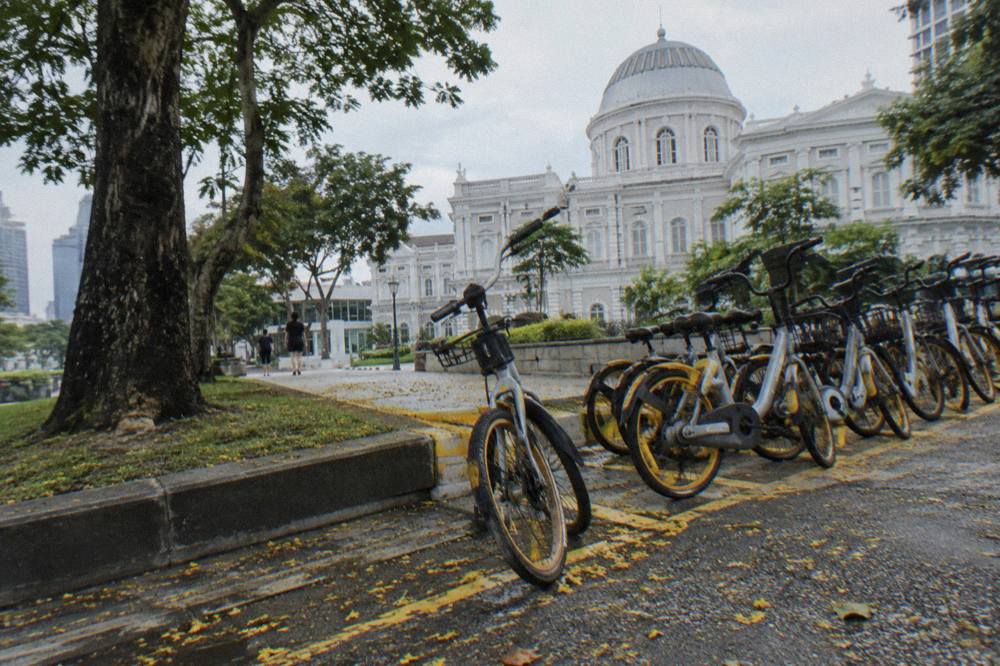
Park kiosks are the second channel, and for most visitors the more natural one. East Coast Park, Punggol, Sentosa and Pulau Ubin all have rental counters where you take a bike for a block of hours and return it to the same spot. The East Coast Park rental guide and the Pulau Ubin rental guide go deep on each. Rates and opening hours vary from counter to counter, so treat them as something you ask about at the counter rather than something you plan around in advance.
The third channel is the independent retailer near a park connector entrance. These shops mostly exist for locals: they sell bikes, fit helmets, true wheels and sell inner tubes. Some rent a handful of bikes out the back, but that is incidental rather than their business. If you are staying somewhere near a connector and want a bike for a full day without the parking-zone discipline of shared bikes, they are worth a look.
One honest note for short-stay visitors: renting only makes sense if you already know where you want to ride. A bike plus a route plus the path rules is three problems at once, and a guided tour solves all three in one booking.
- Bike23 of 23
- Guide19 of 23
- Drinks14 of 23
- Helmet11 of 23
- Meal or food stop8 of 23
A listing that does not mention an item is not counted as leaving it out.
Should You Buy A Bicycle In Singapore As A Visitor?
Buying is the weakest option for a visitor, and the arithmetic rarely survives contact with a return flight. A usable city bike plus a helmet, a lock and lights approaches the cost of several guided tours, and airlines charge to fly a bike home. What buying does suit are expats on multi-year stays, and even they often start on a second-hand bike.
Rental rates differ from shop to shop, so check the price at the counter before you commit. What is verified is the retail landscape: Singapore has proper bicycle shops, from chains to single-owner workshops, that sell city bikes, folding bikes and mountain bikes, and folding bikes in particular are popular because they ride the MRT under the rules for taking a bike on the train.
The problem is what happens after purchase. A visitor who buys a bike owns a bike in a country they are leaving, and shipping a bicycle home by air is neither cheap nor simple. Selling it before departure means finding a buyer in a small market, and leaving it at a hotel is not a plan. For an expat or a long-term resident the calculation flips completely, and a good local shop becomes a genuine asset: they size the bike, service it twice a year and remember your name.
For everyone in between, the per-day cost of cycling in Singapore is worth a look before committing to a purchase, and the bike tour cost guide breaks that down against guided options.
For a visitor passing through, the guided ride wins on every axis that matters: the bike is supplied and fitted, the route is chosen by someone who rides it weekly, and the cost is a single known number.
What Should You Ask A Singapore Bike Shop Before You Ride?
Ask four things: does the bike have a working handbrake and lights, is a helmet included, what are the path rules, and what happens in rain. Device rules in Singapore are legal requirements, not preferences, and a shop that cannot answer them cleanly is a shop to walk away from.
The first two questions are legal ones. A bicycle on Singapore paths must weigh no more than 20 kg, be no wider than 70 cm and have at least one working handbrake on the handlebar. On the road the limits loosen to 130 cm wide and 260 cm long, but the handbrake requirement stands. Lights are front white and rear red, required when riding in the dark, and any bike you rent for an evening ride needs both. All of this sits in the Active Mobility Act rules, published on LTA's code of conduct page.
- Jan222 mm
- Feb105 mm
- Mar152 mm
- Apr164 mm
- May164 mm
- Jun135 mm
- Jul147 mm
- Aug147 mm
- Sep125 mm
- Oct168 mm
- Nov252 mm
- Dec332 mm
Rain-days run from 8.5 (driest month) to 19.3 (wettest month).
Helmets are the question visitors most often get wrong. On roads, a helmet is mandatory, and police issued about 650 cyclist summonses in the second half of 2025 for offences including riding without one. On park connectors there is no law, but NParks advises riders to wear protective gear. A shop that rents bikes without offering a helmet is not doing anything illegal for park use, but it is not doing you any favours either.
| Question to ask | Why it matters | What a good answer sounds like |
|---|---|---|
| Is a helmet included or rented separately? | Mandatory on roads, advised on connectors | Included in the price, or a small add-on with sizes available |
| Does the bike have working front and rear lights? | Required for riding in the dark | Yes, demonstrated on the spot |
| What is the tire and brake condition? | Handbrakes are a legal device requirement | Checked every rental, or a shown service log |
| Where can I legally ride from here? | Path types carry different speed limits and bans | A specific route suggestion, not a shrug |
| What happens if it rains or I get a puncture? | Tours here run rain or shine; shops vary | A clear swap or return policy |
The rain question matters more in Singapore than almost anywhere. The verified climate normals from the Meteorological Service Singapore, the 1991 to 2020 series for Changi, put November at 252.3 mm of rain across 19 rain days, and December at 331.9 mm across 19.3. Shops will not refund a rainy afternoon; guided tours here supply ponchos precisely because they run rain or shine.
The path-rules question is where a shop proves its worth. A shop that knows its local paths will tell you where the shared paths, cycling paths and pedestrian-only stretches sit, and why that distinction matters. If they cannot, the cycling rules for visitors guide covers what you need before you roll out.
If that checklist sounds like work, it is. A guided tour answers all four questions before you ask them, because the operator supplies the bike, the helmet and the route as one package, with free cancellation on the tours featured here.
How Do Repairs And Servicing Work At Singapore Cycling Shops?
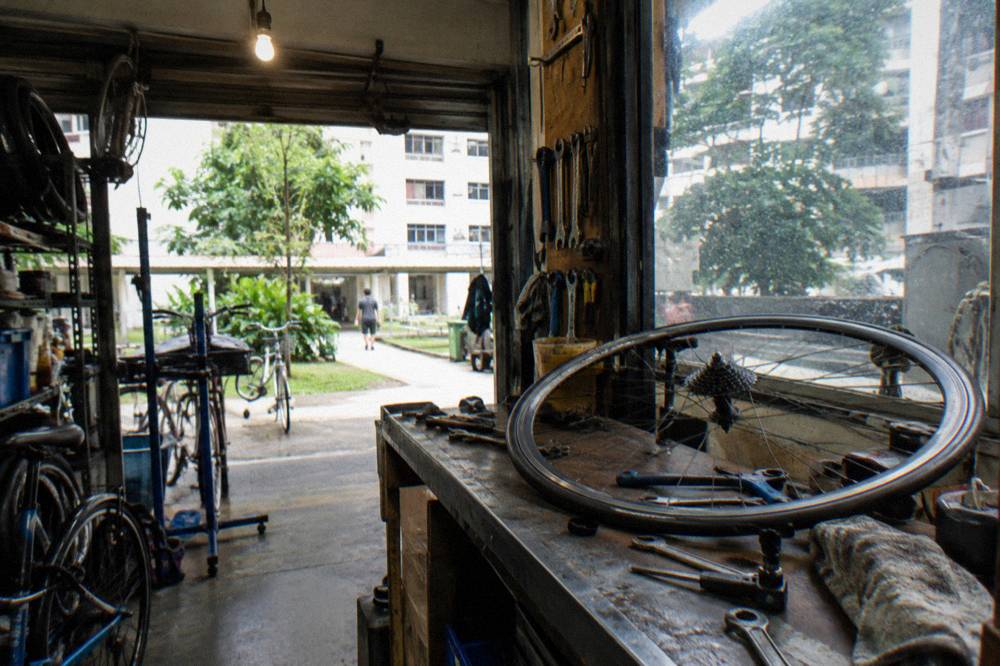
Most independent shops run a walk-in model: puncture repairs and minor adjustments while you wait, tune-ups and full services booked in over days. Visitors rarely need a full service; the realistic scenarios are a puncture, a broken light or a seat adjustment, all of which are same-day jobs.
The repair economy in Singapore is built around commuters, not tourists. A rider whose folding bike carries them to the MRT every morning needs it back the same evening, and shops have adapted: inner tube replacements, brake adjustments, chain fixes and gear tuning tend to be counter jobs, while anything involving wheel building or frame work goes into the queue. The rest of the planning pages sit on Singapore Bike Tours.
What a visitor should take from this is reassurance rather than a shopping list. If a rental bike develops a fault mid-ride, the answer is almost always to return it rather than repair it. Shared-bike operators expect faulty bikes to be reported in the app, and park kiosks will usually swap a problem bike if you bring it back within the rental window. Independent shops are the fallback when neither applies, and a puncture repair from a shop on the connectors is a routine job.
One thing worth knowing is what shops cannot fix on the spot: the e-bike question. Power-assisted bicycles in Singapore are heavily regulated. They must be type-approved, sealed, registered with the LTA with a rear plate, compliant with EN15194, capped at 250W continuous power and 25 km/h assistance, and riders must be at least 16 and have passed a mandatory theory test before riding on cycling paths or roads. That is not a casual rental proposition, and it is not what a visitor's repair question looks like. Every guided tour covered on this site uses a regular, non-electric bicycle, and the Singapore e-bike rules guide explains why that regulatory weight exists.
Repair rates vary shop to shop, so ask at the counter before committing to any work. The one verified number in this space is the $5 shared-bike parking penalty from the Ministry of Transport's shared-bicycle enforcement reply, and that is a fine, not a service.
Which Rules Apply To A Bike You Rent Or Buy In Singapore?
The bike itself barely matters; where you ride it does. Cycling paths and shared paths carry a 25 km/h limit, footpaths 10 km/h, roads require a helmet and traffic-law obedience, and footpaths converted to Pedestrian-Only Paths since 1 July 2025 ban bicycles outright. A rented or bought bike changes none of these rules.
- Up to 2 hours4 tours
- 3 to 4 hours17 tours
- 5 to 6 hours1 tour
- 7 hours or more1 tour
The path system is the thing to learn, and it is simpler than it first looks. Cycling paths, usually surfaced in red or dark grey and marked with a cyclist logo, are the fast lanes. Shared paths carry the cyclist and pedestrian logos together and ask for mutual care. Footpaths, the unmarked strips beside roads and inside Housing Board estates, allow bicycles at 10 km/h. The newest category is the Pedestrian-Only Path: since 1 July 2025, footpaths that run next to dedicated cycling paths have been converted to pedestrian-only use, with bicycles and non-motorised personal mobility devices banned, and enforcement by LTA officers. First offences can draw up to $2,000 and/or three months' imprisonment under the announcement of that enforcement. That penalty belongs to this specific offence, not to cycling generally.
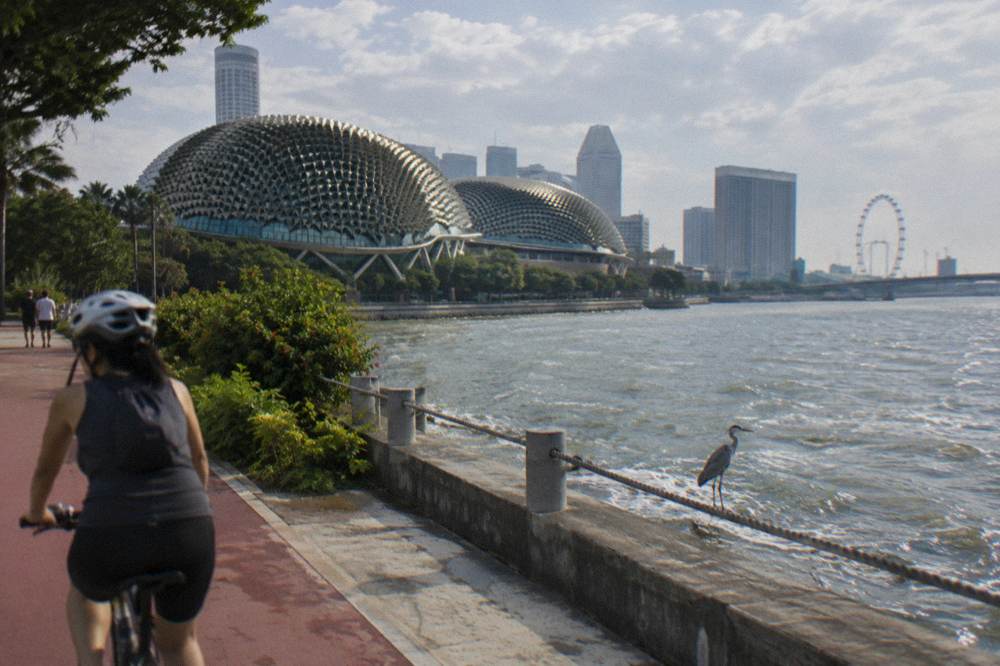
| Path type | Marking | Speed limit | Bicycles allowed |
|---|---|---|---|
| Cycling path | Red or dark grey, cyclist logo | 25 km/h | Yes |
| Shared path | Cyclist and pedestrian logos | 25 km/h | Yes, give way to pedestrians |
| Footpath | Unmarked, beside roads and in estates | 10 km/h | Yes, unless converted |
| Pedestrian-Only Path | Beside a dedicated cycling path | Not applicable | No, since 1 July 2025 |
| Road | Road signs | Road speed limit | Yes, helmet mandatory |
The full path map, including the speed limits by path type, is in the LTA's own where devices are allowed summary, and NParks' guidance on cycling in parks and connectors covers the park-side rules: give way, slow at the red-dotted attention zones near bus stops and playgrounds, keep left except when overtaking.
Where this intersects with a shop purchase is the hardware. A shop bike you buy or rent is legally identical to any other bicycle in Singapore: same 20 kg and 70 cm path limits, same lights at night, same helmet law on roads. Group riding rules apply too: on roads, groups max out at five bikes in single file, or ten riding two abreast where conditions allow, with roughly 30 m kept between groups. A family that buys four bikes and rides on the road together is inside the law; the same family rolling as an eight-bike blob is not.
A guided tour sidesteps the entire rules-learning curve, because the guide rides in front, calls out the transitions and keeps the group inside the law while you watch the scenery. The small-group city ride below caps its groups at ten guests with a licensed guide and a bike supplied.
When Is A Guided Ride Easier Than Renting Or Buying?
A guided ride wins when your time is short, your route knowledge is zero, or you want food, night lights or nature without planning. Guided tours from $47 per person include the bike, and many add a helmet and a licensed guide. Prices run up to $224.11, with free cancellation across the featured options. The shop route wins when you want solitude or a self-directed day.
Consider what a rental actually demands of a visitor: find a shop, get a fitted bike, check the brakes and lights, plan a route that is legal on every stretch, carry water and a rain plan, and navigate in heat that averages 28.6 C as a 24-hour mean in the hottest month. Each of those is manageable. Together they are a working afternoon.
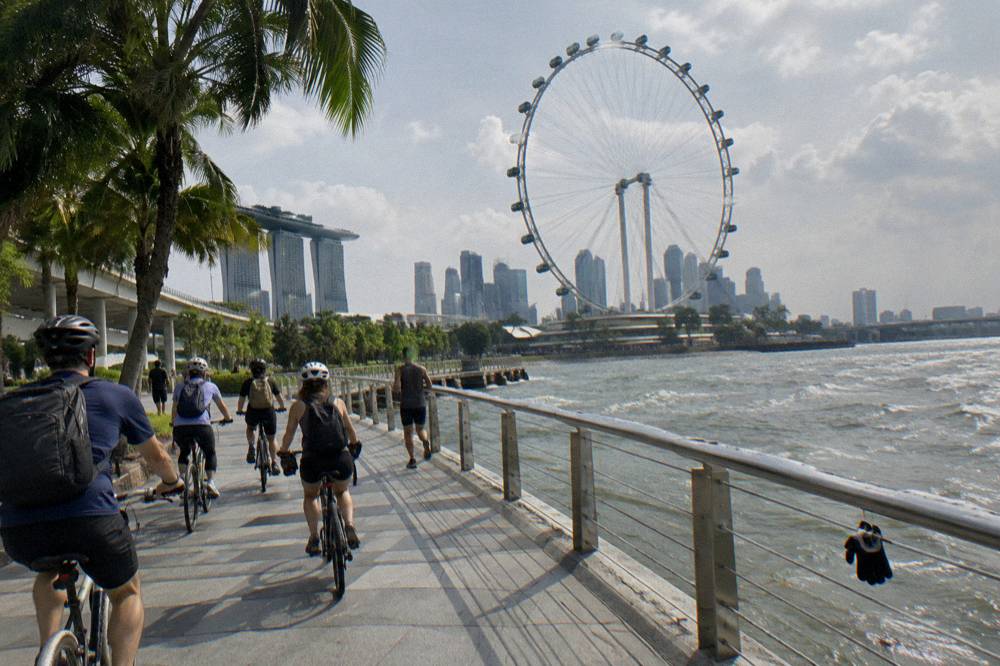
A guided tour deletes the whole stack. The bike is supplied and fitted at the meeting point, the guide is licensed and local, the route is ridden weekly, and rain is handled with ponchos rather than cancellations. The food tours go further and fold a meal into the ride: the Bike and Bites tour from Lets Go Tour runs three hours with shared local bites described in the listing as a cultural introduction rather than a full meal, rated 4.9 across 282 reviews, from $79.24 per person with the total depending on group size.
The comparison is not culture versus convenience, either. The private versus group tour guide goes through the trade-offs in both directions, and for families the answer is often a private ride purely for the pace control. The point of this page is narrower: if you were heading out to find a Singapore cycling shop, check whether a guided ride covers what you actually wanted from the shop, because it usually does, with less friction.
Renting still has real uses. A solo rider who knows the park connectors, a photographer chasing a specific sunrise at East Coast Park, a couple who wants to stop for two hours at one hawker centre: those are rental days, and no tour replaces them. For everything else, the guided ride is the better product.
What Do Guided Rides In Singapore Cost Compared With Shop Rental?
Guided city rides start from $47 for a two-hour river ride and from $64.03 for four-hour daytime tours; food rides run $79.24 to $224.11 with meals included, and private tours from $80 to $224.11, with totals for some depending on group size. Rental kiosks are quoted at the counter, so the honest comparison is tour price versus tour price.
The table below uses the same figures as the tour pages themselves. Every tour listed includes the bike, and all of them carry free cancellation on the listing. Where a total depends on group size, the table says so rather than inventing a per-group number.
| Tour | Duration | Rating | From, per person |
|---|---|---|---|
| Marina Bay Night Ride | 2 hours | 4.9 across 598 reviews | $48.02, total depends on group size |
| Full-Sized Bikes, Small Group | 4 hours | 5.0 across 1,559 reviews | $64.03, total depends on group size |
| Licensed Guide, Poncho Included | 4 hours | 5.0 across 6,579 reviews | $68.03 |
| Bike and Bites, 3 Hours | 3 hours | 4.9 across 282 reviews | $79.24, total depends on group size |
| Sunset Ride, Hawker Food | 3 hours | 5.0, 12 reviews listed | $86 |
| Katong Food Ride, Meal Included | 4 hours | 5.0 across 337 reviews | $96.05 |
| Full-Day Private Ride, Food Included | 7 to 8 hours | 5.0, 9 reviews listed | $224.11 |
Two patterns are worth reading off that chart. First, duration and price track each other loosely, but food is what really moves the number: every ride above $79 includes something to eat. Second, the group-size note on several rows is how those tours are priced; the live booking page works out the real total for your party, so check there before you book.
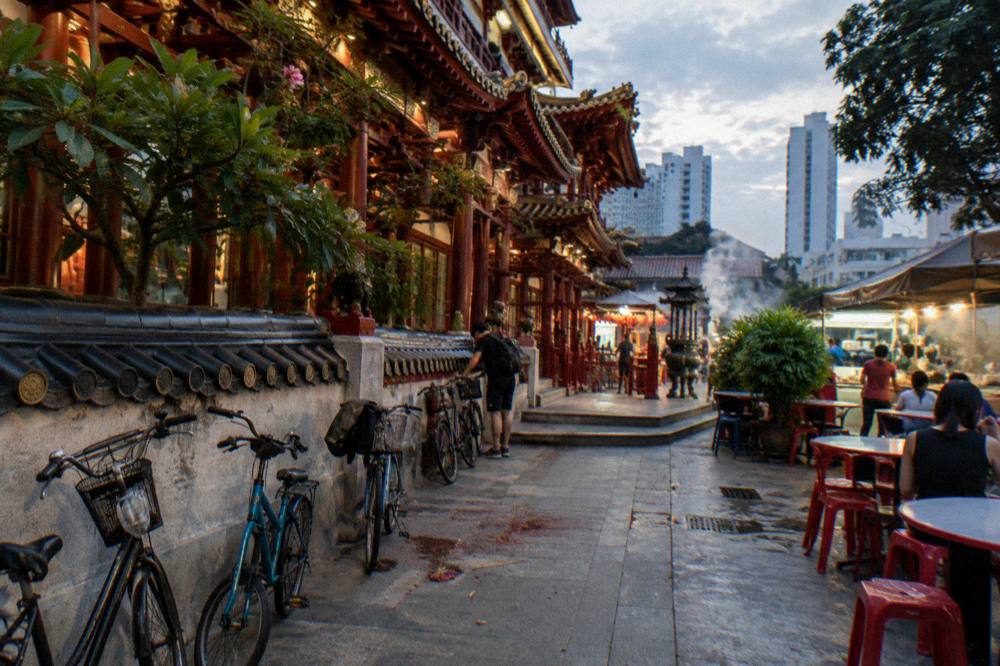
The nature side has its own ladder. The Pulau Ubin Nature Ride from Asian Detours runs four hours on the island, rated 4.2 across 29 reviews, from $84.04 per person, though note that the listing excludes the ferry transfers from Changi Point, which you arrange yourself. The Pulau Ubin cycling guide covers what the island demands of a rider.
- Small group13 of 23
- Private5 of 23
- Group type not stated5 of 23
The through-line of this page is that Singapore cycling shops serve locals well and visitors awkwardly. Renting works if you already know your route, buying works if you live here, and everything else, the short stay, the first visit, the family with kids, points at a guided ride with the bike supplied and a licensed guide who handles the route, the rules and the rain.
Common Questions About Singapore Cycling Shops
Do Singapore Cycling Shops Rent Helmets?
Some shops do and some do not, and rates vary by shop, so ask at the counter before you commit to a rental. What is verified is the rule: a helmet is mandatory when cycling on Singapore roads, and NParks advises one on the park connectors. Guided tours on this site list helmet inclusion on each tour's booking page, so check there before you rely on it.
Can Tourists Rent A Bike In Singapore?
Yes. Shared bikes from the two licensed operators, Anywheel and HelloRide, unlock through an app with payment by card, and park rental kiosks at East Coast Park, Sentosa and Pulau Ubin serve visitors over a counter. The rental overview covers what each channel requires.
Is Buying A Bike In Singapore Worth It For A Short Visit?
Almost never. The cost of a usable bike, helmet, lock and lights rivals several guided tours, and flying or shipping a bicycle home adds expense. Buying suits expats and long-term residents. A guided ride from $47 per person includes the bike, and many add a helmet and a licensed guide.
Can I Rent An Electric Bike For A Guided Tour In Singapore?
No guided tour on this site uses an electric bike; every ride listed here is on a regular bicycle with the bike included. Power-assisted bicycles in Singapore are heavily regulated, with registration, an age minimum of 16 and a mandatory theory test for riders, so they are not a casual rental category.
What Happens If It Rains On My Rental Or Tour Day?
Shops set their own policies at the counter, so ask before you pay. Guided tours on this site generally run rain or shine and supply ponchos, and the verified climate normals show November and December as the wettest months, with 19 and 19.3 rain days respectively, so plan for the possibility rather than around it.
Where Do The Park Connector Rental Shops Sit Relative To The Routes?
NParks places rental at some parks and at pitstops along the Eastern Coastal Loop and the North Eastern Riverine Loop, with the park connector guide mapping the network of over 350 km. Shops near connector entrances mostly serve local regulars, and hours vary, so confirm on the day.