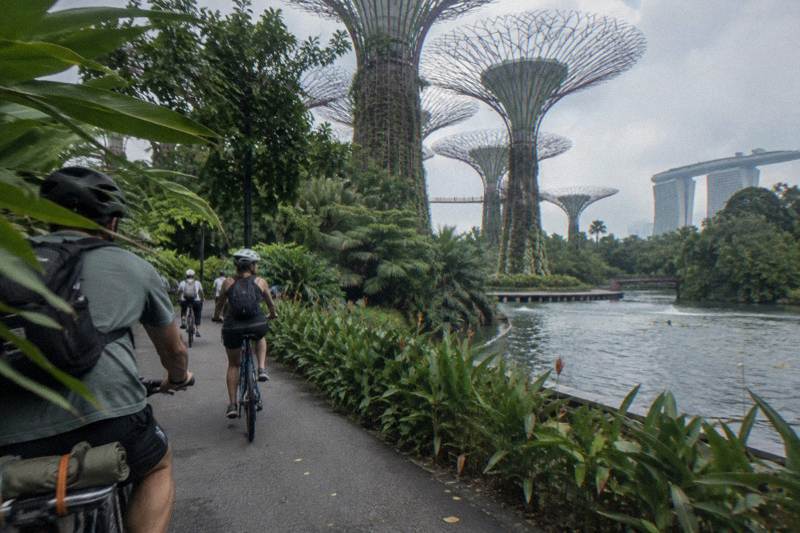
Can Tourists Rent Bikes In Singapore?
Yes, tourists can rent bikes in Singapore. This guide covers where to rent, what terms shops set, e-bike limits, the rules visitors must follow, and when a guided tour is the easier route.
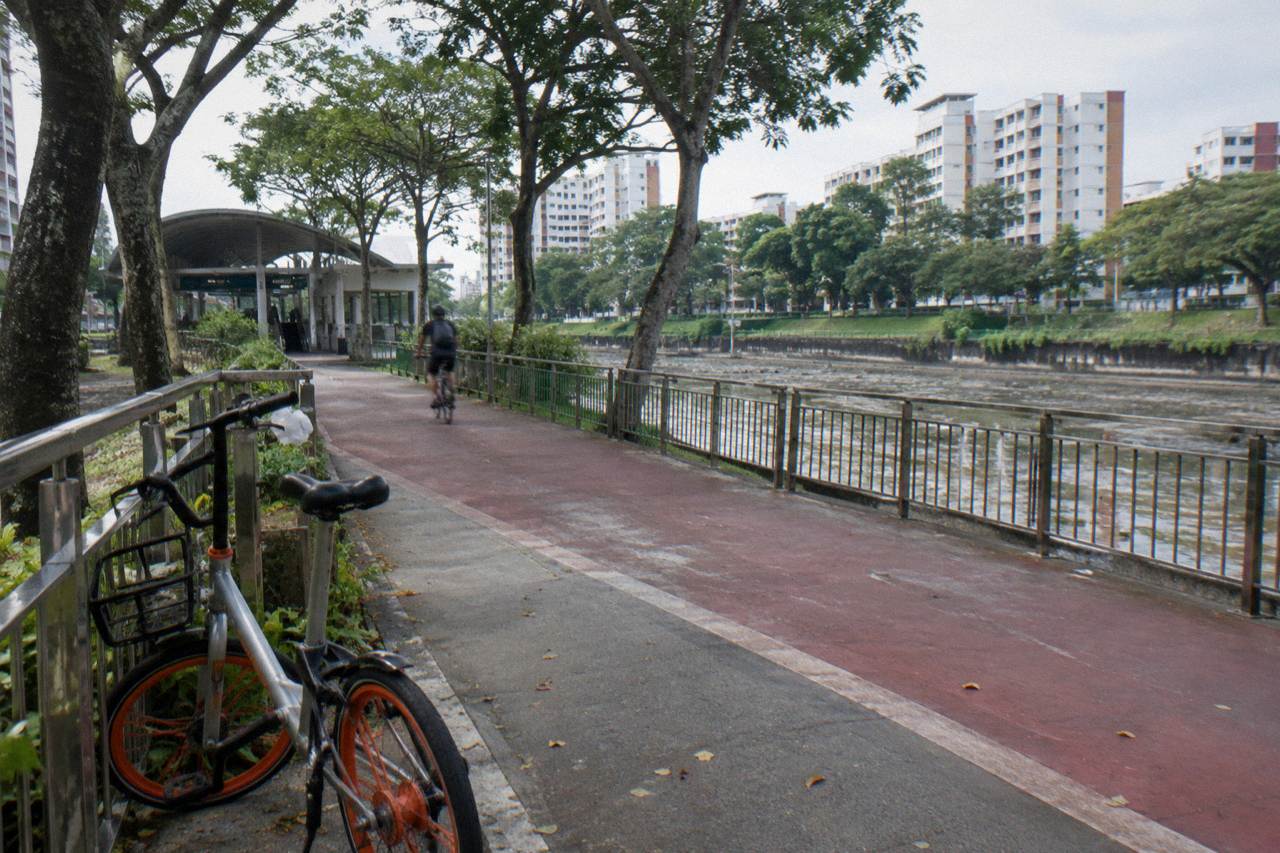
Singapore answers the rental question quickly: yes, visitors can get hold of a bicycle, and they can do it three different ways. Park-side rental shops operate at the main cycling hotspots, two licensed shared-bike apps put dockless bicycles on the street, and every guided tour on this site arrives with a bike in the price. What trips some travellers up is not access but the small print: rental terms vary shop to shop, power-assisted bicycles are a regulated category rather than a casual upgrade, and the cycling rules that apply are the same whether you flew in yesterday or have lived here for a decade.
The practical choice usually comes down to how much of the planning you want handed to you. A traveller who rents independently picks the route, carries the water bottle and works out which paths allow bicycles. A traveller who books something like the Lion City Bike Tour of Singapore, a four-hour guided ride rated 5.0 across 6,579 reviews, gets a licensed local guide, a bike and a poncho in one price from $68.03 per person, and spends the morning looking at buildings instead of a map. This site, Singapore Bike Tours, exists because that second option suits a lot of first-time visitors, but the first option is genuinely available and worth understanding either way.
Yes. Tourists can rent bikes in Singapore without any special licence or residency status, through rental shops at parks such as East Coast Park, Punggol and Pulau Ubin, through two licensed shared-bike apps, or through guided tours that include the bicycle. No rule distinguishes a visitor from a resident: the same Active Mobility Act rules apply to anyone riding a bicycle on a public path or road here.
“Amazing Experience!!! Nicholas and his wife take you on a bike trip though the natural parts of Singapore. Beautiful Sunrise views. Local breakfast that was delicious. Lots of wildlife. We saw various species of birds, snails, a large lizard, turtles, fish, and even a bunch of otters. This was my second time to Singapore and the only tour I did and it was well worth it.”
None of the three routes requires local documents. A shared-bike account needs a phone and a payment card, a shop rental needs whatever that particular shop asks for, and a guided tour needs nothing beyond the booking itself. The tours covered here all include the bicycle, which quietly removes the most common point of friction: a traveller who books the Full-Sized Bikes, Small Group ride gets a well-maintained full-sized bicycle, a helmet and a licensed English-speaking guide from $64.03 per person, and never has to find a shop, negotiate a deposit or check whether the bike meets Singapore's device rules.
The device rules deserve a sentence here because they explain why the rental market looks the way it does. A bicycle used on public paths in Singapore must weigh no more than 20 kg, be no wider than 70 cm and have at least one working handbrake, per the Land Transport Authority's code of conduct. Ordinary rental bicycles clear that bar easily. Shops do not sell power-assisted bicycles to casual visitors because those are a different, heavily regulated category, which this article returns to below.
So the honest framing is: renting is easy, renting the right machine for the right path is easy, and renting an e-bike on a whim is not on the menu. A visitor with a normal bicycle, a helmet and a route that sticks to cycling paths and park connectors has access to one of the most rideable cities in Asia.
Where Can Visitors Rent A Bike In Singapore?
The main rental points are the cycling parks: shops operate around East Coast Park, Punggol, Sentosa and Pulau Ubin, and the two licensed shared-bike operators, Anywheel and HelloRide, scatter dockless bikes across the island. Sentosa charges cyclists no island admission fee, Pulau Ubin is reached by boat from Changi Point, and shared bikes unlock through their apps and must be returned to designated parking zones.
Each area has a different character, and the choice of where to rent is really a choice of what kind of ride you want. East Coast Park is the classic open stretch: sea on one side, food centres at intervals, a broad shared path that links into the wider park connector network. Punggol sits at the quieter north-eastern corner, where the park connectors thread past reservoirs and mangroves; it is also where the 5-Hour Nature Ride starts, a guided option from $84.04 per person with a maximum of four riders, a bike, helmet and bottled water included. Sentosa runs about 12 km of designated cycling trails along the coast, and the island's own guidance confirms there are no island admission charges for cyclists entering via the boardwalk by VivoCity, with one underpass where riders dismount and walk.
- Bike23 of 23
- Guide19 of 23
- Drinks14 of 23
- Helmet11 of 23
- Meal or food stop8 of 23
A listing that does not mention an item is not counted as leaving it out.
Pulau Ubin is the exception in every sense. The island feels like the Singapore of an earlier generation, the shops cluster near the main village where the boats arrive, and the National Parks Board's own cycling page recommends renting a helmet from the shops or bringing your own. Signs mark the steeper slopes for dismounting. None of the guided Ubin rides here enter the section of the Chek Jawa boardwalk that is closed for maintenance until 30 April 2027.
The shared bikes sit somewhere between all of these. Only Anywheel and HelloRide hold licences to operate shared bicycles in Singapore. The bikes are dockless but trips must end in designated parking zones, and the rider scans a QR code at the zone to close the trip properly.
| Where | What it offers | What to know |
|---|---|---|
| East Coast Park | Seafront shared paths, food centres, rental shops | Busiest on weekends; links into the park connector network |
| Punggol | Quieter paths, reservoir and mangrove stretches | Shops near the park; also the start point of guided nature rides |
| Sentosa | About 12 km of designated cycling trails | No island admission charge for cyclists; one dismount underpass |
| Pulau Ubin | Village shops, dirt roads, Ketam mountain bike trails | Reached by boat from Changi Point; NParks advises helmets |
| Shared-bike apps | Dockless bicycles island-wide | Must park in designated zones and scan to end the trip |
Do Rental Shops Ask Tourists For ID Or A Deposit?
There is no single answer, because rental shops in Singapore set their own terms: some ask for identification and a cash deposit, some hold a card imprint instead, and the shared-bike apps work off an account with a payment method attached. Nothing in Singapore's cycling rules dictates rental paperwork, so the honest advice is to expect terms to vary and to check with the shop before you ride.
That is the part of the answer that no amount of searching will pin down more precisely, and saying so is more useful than inventing a standard. A shop at a beach park with high turnover may run a simple passport-and-deposit desk. A shop on Pulau Ubin may handle things with less formality. The shared-bike apps cut through all of it by holding the relationship in the app: download, add a card, scan, ride. The trade is that the bike is not really yours for the day, and the trip has to end in a designated parking zone.
“Our tour with Zac was wonderful! He was very knowledgeable not only about the food we tried but also about Singapore life in general. Would highly recommend this tour to avid bike and food lovers!”
That parking rule has teeth. Shared-bike operators charge a $5 penalty fee for parking outside designated zones, and repeat offenders can be banned, as the Ministry of Transport's own statement on shared-bicycle parking sets out. About 95 percent of trips do end in the right zones, so the system works, but a tourist who abandons a bike outside a hawker centre will hear about it through the app.
A guided tour sidesteps the entire paperwork question. Every tour described on this site carries a "bike included" flag: the operator brings the bicycles, fits them, takes them back at the end. The Small Group, Max 10 Guests ride run by City Scoot even asks riders to arrive fifteen minutes early at the Esplanade shop so bikes can be set up, and its listing includes the bike, helmet, bottled water and a raincoat from $64.03 per person with a 4.8 rating across 74 reviews. For a visitor who wants to spend a holiday cycling rather than administering one, that difference is the whole argument.
- Small group13 of 23
- Private5 of 23
- Group type not stated5 of 23
Can Tourists Rent E-Bikes In Singapore?
Not in the casual sense, no. A power-assisted bicycle in Singapore must be type-approved, sealed and registered with the LTA, its rider must be at least 16 years old and must have passed a mandatory theory test before riding on cycling paths or roads, so a visitor cannot simply walk up and hire one for an afternoon the way they might in Europe.
The rules are explicit. A compliant power-assisted bicycle weighs no more than 20 kg, cuts its motor assistance at 25 km/h or sooner if the rider stops pedalling, carries an orange seal and a rear registration plate, and meets the EN15194 standard. Riders under 16 may not ride one on cycling paths or roads even with supervision. The theory test is a real requirement, not a formality, which is why the rental market here serves casual riders with ordinary pedal bicycles and why every single guided tour on this site runs on regular, non-electric bikes.
This matters for planning because it closes a tempting shortcut. A traveller who imagines an e-bike taking the sting out of Singapore's humidity and afternoon heat has the right instinct about the climate but the wrong machine. The honest alternative is to pick flatter, shadier routes and shorter distances, or to let a guide do the distance-calibration for you. The 5-Hour Nature Ride, for instance, is built around gentle terrain and a small group of four, and the Sunrise Ride, Local Breakfast tour starts early enough that the first hours of riding happen before the day heats up, from $48.02 per person with breakfast included.
The "regular bike" label also deserves a quick note: the guided rides listed here use full-sized adult bicycles, and at least one operator runs its tours on Brompton folding bikes rather than heavy cruiser singles. The Marina Bay Night Ride, a two-hour loop from $48.02 per person rated 4.9 across 598 reviews, uses the same full-sized bicycles and helmets, and the pace matches a sightseeing ride rather than a workout.
What Cycling Rules Do Tourists Follow In Singapore?
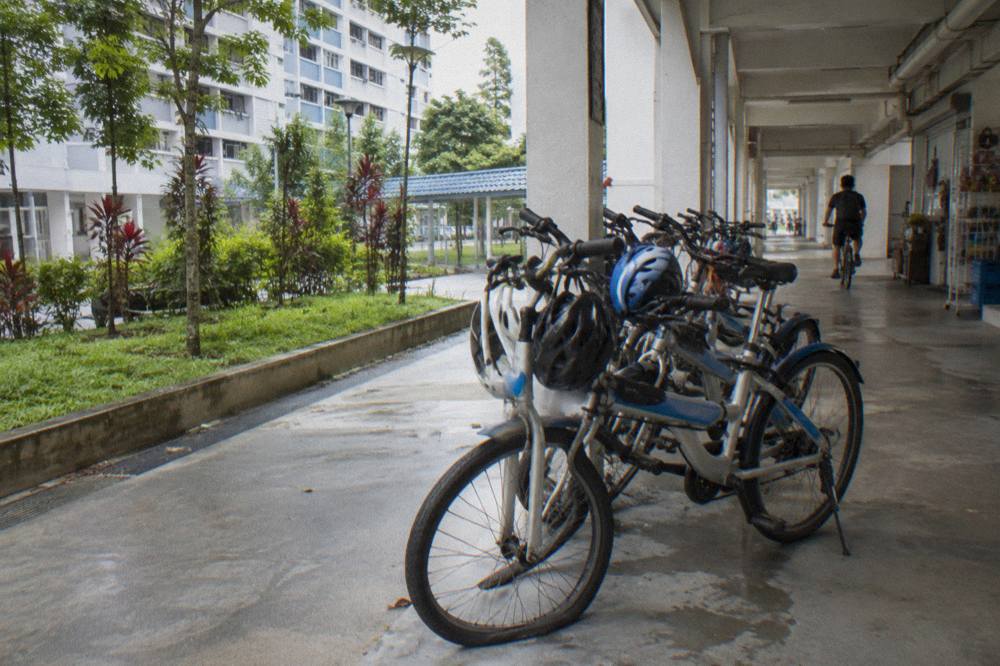
Tourists follow exactly the rules residents follow: a maximum of 25 km/h on cycling paths and shared paths, 10 km/h on footpaths, no riding at all on Pedestrian-Only Paths, a helmet on any road riding, front white and rear red lights after dark, and a bicycle under 20 kg with a working handbrake. Enforcement is real, and ignorance of a path type is not a defence.
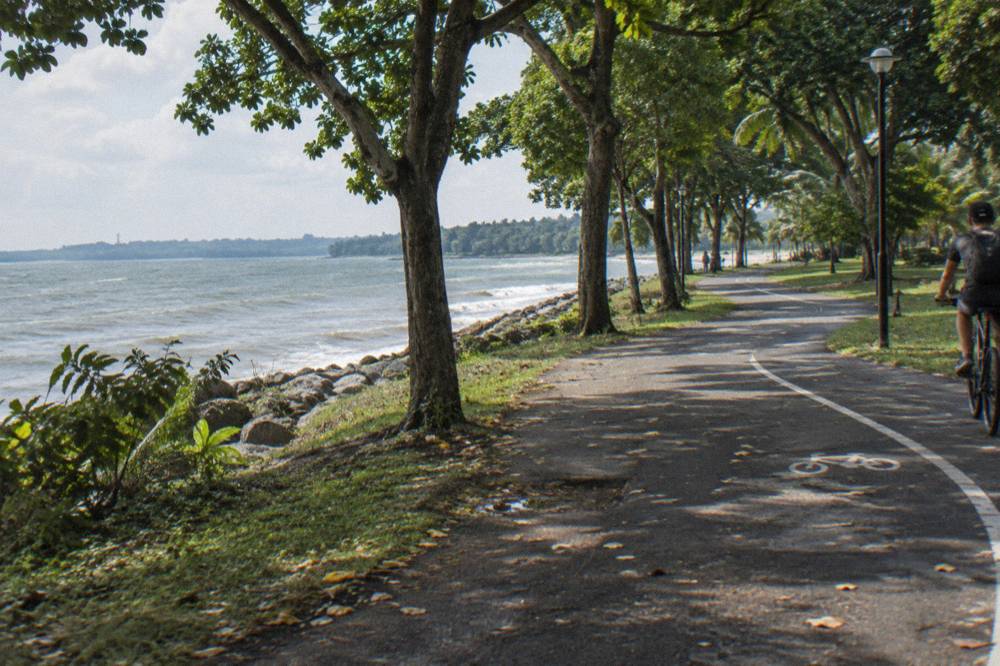
The path system is the part worth learning before the first ride, because Singapore colour-codes its infrastructure. Cycling paths are marked in red or dark grey with a cyclist logo, shared paths carry both cyclist and pedestrian logos, and footpaths beside roads allow bicycles at 10 km/h. Since 1 July 2025, footpaths next to dedicated cycling paths have been converted to Pedestrian-Only Paths where bicycles are prohibited outright, and riding a bicycle on one can draw a penalty of up to $2,000 and/or up to three months imprisonment for a first offence. The LTA's enforcement release describes a measured approach to ordinary riders but zero tolerance for speeding and reckless riding.
| Path or place | Speed limit | Who may ride |
|---|---|---|
| Cycling path | 25 km/h | Bicycles, PMDs, PABs |
| Shared path | 25 km/h | Cyclists and pedestrians together |
| Footpath | 10 km/h | Bicycles permitted at reduced speed |
| Pedestrian-Only Path | Not applicable | Bicycles prohibited |
| Roads (no expressways or tunnels) | Road speed limit | Helmets mandatory, single file on single-lane roads |
Roads bring their own set. Cyclists ride with traffic, keep to the left, travel single file on single-lane roads and during bus lane operating hours, and wear a helmet, a rule the Traffic Police has enforced with summonses. Groups on roads are limited to five bicycles in single file or ten riding two abreast where conditions allow, with roughly 30 m kept between groups. Lights are required after dark: front white, rear red or a rear red reflector.
Inside the parks, the National Parks Board adds its own etiquette on the park connectors, which thread over 350 km of green routes across the island. NParks guidance asks cyclists to give way to pedestrians, slow to a walk at attention zones near playgrounds and bus stops, keep left except when overtaking, and use the designated cycling paths where they exist. Certain places bar cycling entirely: the four gazetted nature reserves, Henderson Waves, the Forest Walk at Telok Blangah, the Botanic Gardens and several boardwalks, including the closed section at Chek Jawa.
Is A Guided Tour Easier Than Renting On Your Own?
For most short-stay visitors, yes. A guided bike tour in Singapore bundles the bicycle, the helmet, the route, the water and the local context into one booking, removes every rental-shop variable, and costs from roughly $48 to $104.05 per person depending on length and inclusions, while an independent rental leaves the route-planning, the paperwork and the rule-reading entirely with the rider.
“Excellent way to see the city and get an overview of the history of Singapore. Fred was excellent and gave extra tips of places to go and must see sites.”
The economics are closer than people expect. Renting is cheaper per hour on paper, but a rental day buys no guide, no route and no backup if something goes wrong mid-ride. A tour concentrates the spend into three or four efficient hours: the Lion City Bike Tour runs four hours from $68.03 per person with a licensed guide and a poncho, rain or shine; the Full-Sized Bikes, Small Group ride covers similar ground from $64.03; and the shorter formats drop the price further, with the two-hour Marina Bay Night Ride from $48.02 and the three-hour Bike and Bites food ride from $79.24 per person, rated 4.9 across 282 reviews.
What the guide actually adds is hard to replicate alone. A licensed local guide knows which shophouse row was which clan association, which hawker stall is worth the queue and which stretch of path turns confusing at dusk. On the food rides that becomes the meal plan: the Katong Food Ride includes snacks and food with a licensed guide from $96.05 per person, and the Downtown Food Ride does the same from $104.05. None of that is available from a rental bicycle and a phone map.
The group-size question is worth a look too. Tour groups here run small, with most listings capping numbers between 4 and 15, so check each booking page for the exact limit. A visitor who imagines a thirty-person convoy will be pleasantly surprised. There is a fuller comparison of the trade-offs in the site's private versus group tour guide, and a deeper treatment of renting a bike in Singapore for riders who prefer to go alone.
The through-line of all of it is that the machine is the easy part. Bikes are available, shops exist, apps work, and the guided rides come with wheels attached. What a tourist should decide in advance is where they want those wheels to take them, because Singapore rewards the decision far more than it rewards improvisation. Guides on cycling routes around Singapore can help with the independent plan too, and the rules are covered in plain terms in the site's cycling rules for visitors page.
Common Questions About Renting A Bike In Singapore As A Tourist
Can Tourists Rent Bikes In Singapore?
Yes. Visitors rent through shops at parks such as East Coast Park, Punggol and Pulau Ubin, through the licensed shared-bike apps Anywheel and HelloRide, or through guided tours that include the bicycle. No residency or local licence is needed, and every guided tour on this site supplies a regular, non-electric bike.
Do I Need A Licence To Cycle In Singapore As A Visitor?
No licence exists for ordinary bicycles. Anyone can ride one on cycling paths, shared paths and footpaths within the speed limits, and on roads with a helmet. A licence and theory test apply only to power-assisted bicycles, which are not a casual rental option.
Can I Rent An E-Bike In Singapore?
Not casually. A power-assisted bicycle must be type-approved, sealed and registered, the rider must be 16 or older and must have passed a mandatory theory test. Rental operators serve tourists with regular pedal bicycles, and so do all the guided tours covered here.
Where Can I Park A Rented Or Shared Bike?
Shared bikes must end their trip inside a designated parking zone, with the zone's QR code scanned to close the ride. Parking outside a zone draws a $5 penalty fee from the operator, and repeat offenders can be banned. Shop rentals return to the shop.
Do Guided Tours Include The Bicycle?
Yes, every time. Each guided ride listed on this site includes the use of a bicycle, and some also provide a helmet, bottled water and a rain poncho. Prices start from $48.02 per person for a two-hour night ride around Marina Bay.
What Happens If It Rains On A Rental Day?
Rain is a routine part of cycling here, with November through January the wettest stretch of the year. Guided tours run rain or shine and hand out ponchos, and several supply one automatically. The shared paths stay open; riders simply slow down and give pedestrians room.